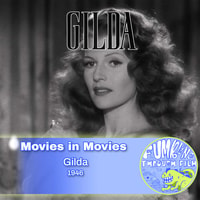
Movies in Movies: Gilda (1946)
The Fumblers get a new job running an illegal casino and running a tungsten mine. To take their minds off of all of their new responsibilities they watch Gilda. One of us tries to put the blame on Mame and it might surprise you to find out which of us it is.
Transcript
Gathered together from the cosmic reaches of the universe, here in this great screening room with comfortable recliners, are the most powerful forces of good ever assembled. Keith.
Speaker B:I will say, yeah, I, I've never watched any movie with her in it before. Uh, every time she is on the screen, it is— I mean, every time, every time she's on the screen, she is the center of attention.
Speaker C:Terry. Give me that tongue.
Speaker A:Derek. But I'm Honest Abe when it comes to this stuff. And the power twins, Zap and Jordan, with their magical lemur snort dedicated Welcome back to Fumbling Their Way Through Movies, one forgotten gem at a time. This week we watch 1946's Gilda, which was a 1994 Shawshank Redemption. This is Fumbling Through Film. I got some news for you, Gilda. He didn't just buy something.
Speaker C:He's in love with you.
Speaker A:Is that so hard to understand? And you're not gonna do anything— I've got some news for you, Johnny. I'm going to do exactly what I please, when I please. I was true to one man once, and look what happened. I made up my mind then that I was— This isn't about us, it's about him. Really? You don't say so. Now get this straight. I don't care what you do, but I'm gonna see to it that it looks all right to him. From now on, you go anywhere you please with anyone you please, but I'm gonna take you there and I'm gonna pick you up and bring you home.
Speaker C:Get that?
Speaker A:Exactly the way I'd take and pick up his laundry. Shame on you, Johnny. Any psychiatrist would tell you that your thought associations are very revealing. What are you talking about? Any psychiatrist would tell you that means something, Johnny. Hello and welcome to another one-of-a-kind genre-defining brand new episode of Fumbling Through Film, the only show that dares to bring together 3 dudes to talk about movies. These However, aren't just any movies.
Speaker C:That's right. I agree with this and I will not hear anything else beyond this.
Speaker A:Well, unclog your ears. Oh, well, you're not Odysseus. Be like Odysseus, Terry, and listen to the siren song.
Speaker C:No, I refuse.
Speaker A:There are, these aren't, these aren't just any movies. These are the ones we've missed, overlooked, or feel are simply worth revisiting. That swath is wide and covers every movie. Any movie falls in there.
Speaker C:Nope. They can't believe it.
Speaker B:Sorry, what? I had some wax in my ears. What are you guys talking about?
Speaker A:Any movies, Keith. That's what we do.
Speaker B:Oh, yeah. 100%. 100%.
Speaker A:Anyway, my name is Derek and I'm a Fumbler. Joining me here on this cursed voyage home Is the Prime Minister of Fumbling and Film, Keith.
Speaker B:Hey, hey, what's up, KG? Fumbler extraordinaire. Uh, tungsten salesman.
Speaker A:Tungsten salesman. Wow, tungsten.
Speaker C:Lucrative.
Speaker A:Yeah, very lucrative. I don't even know what tungsten's used for.
Speaker B:How do you think the Fumbledome runs?
Speaker C:Oh, it runs on tungsten.
Speaker A:We burn tungsten in the tungsten Oven?
Speaker C:Incinerator? Yeah.
Speaker A:Incinerator, yeah.
Speaker B:I've had to make some shady deals, but, you know, it'll be all right. It'll be all right.
Speaker C:Yeah, half the world's supply of tungsten goes funneled straight to the Fumbledome.
Speaker A:Yeah, half the world's supply. The other half goes to Fumbledome West. Whoa!
Speaker C:Oh yeah.
Speaker B:Fumbledome West?
Speaker C:Yeah.
Speaker A:We just haven't gotten over there yet.
Speaker C:Oh yeah, those other 3 guys are doing really good though.
Speaker B:Yes.
Speaker C:They're having a great time over there.
Speaker A:Yep. Anyway, uh, time to reset because that's a lot of editing that's gonna have to happen.
Speaker B:No.
Speaker A:Yes, that's not— no, but what is gold is the Dr. Dre of Kansas, Terry.
Speaker C:Hey everybody, it's me, the real Terry, not West Coast Terry or Larry or whatever Derek said his name was.
Speaker A:I just rotated. I believe your name would be Dairy.
Speaker C:Dairy, yes.
Speaker A:And I'd be Carrick and teeth.
Speaker B:And teeth, yeah.
Speaker C:Teeth. Oh yeah, Teeth is kind of a scary guy.
Speaker A:Yes, he is.
Speaker C:He's all teeth.
Speaker A:You guys, you guys are leaving me with a lot of work to do on this episode.
Speaker C:I'm like, I'm never gonna stop referencing, uh, characters.
Speaker A:Please stop referencing the West Coast Fumblers.
Speaker C:Oh yeah, that's confidential.
Speaker A:It is. Anyway, what do you know what else is confidential?
Speaker C:What? You're even doing it.
Speaker A:This podcast. I know. See, now I got a reference there. I got to leave in just enough, just enough for it to make sense.
Speaker B:I don't— we have a podcast. It really shouldn't be confidential.
Speaker A:I understand.
Speaker C:The West Coast team is confidential. They handle all the dirty work that we don't want to do.
Speaker A:They do. So what we should do, since it may or may not be confidential depending on what the West Coast team does, is tell people what it is we do here. Every week we watch movies, but not just any movie. Every month one of us chooses a theme, a genre, a guiding light, some sort of cane sword.
Speaker B:Oh yeah, that can, that can really just pinpoint right on a specific thing.
Speaker A:Yes, it can. And we all choose movies that adhere to that theme or genre or cane sword. And on the 4th week, we truly fumble by watching a movie that's dished out by a wheel of doom. But this is DTF, Down to Fumble, Y2, year 2, M8.
Speaker B:What's M for?
Speaker A:M stands for month.
Speaker C:Oh, I thought you were just saying mate.
Speaker A:And that is a Keith month. So Keith, tell us what it is we're doing this month.
Speaker B:Uh, we went Inception style and we're checking out movies within movies. And I started everything off by, uh, picking The Street Fighter, which was a movie they watched at the beginning of True Romance. Yes.
Speaker A:So movies that are featured in movies, they have to be visible on screen. I think that was the caveat.
Speaker B:Yeah. So you couldn't pick Excalibur from Batman v Superman. Yeah. Because, you know, you don't actually see it. It's just a shrine for it.
Speaker C:You couldn't pick Batman versus Superman that showed up in I Am Legend either.
Speaker A:No. Nope. Couldn't do that either, which unfortunately that would have been a twist. So W1, Keith gave us the Street Fighter, Sonny Chiba, 1974. W2, Terry gave us—
Speaker C:The Thing from Another World.
Speaker A:The Thing from Another World, which was featured in—
Speaker C:Halloween.
Speaker A:Halloween.
Speaker C:Original Halloween. Yep.
Speaker A:From 1978. And this is— that means this is W3, week 3. It's a me week, and I chose the noir classic from 1946, Gilda, which is featured in The Shawshank Redemption.
Speaker B:In a twist that neither Terry nor I saw coming.
Speaker A:No, not by a million years.
Speaker C:What a curveball.
Speaker A:What a curveball.
Speaker B:And you know what, Derek, I really applaud you for that one because not only do you catch us off guard, but it really brings it up to any movie. Yeah, we weren't expecting it. No, because it could really be any movie.
Speaker A:But it did fall under the umbrella of missed, overlooked, or feel we simply worth revisiting.
Speaker C:Yeah, somehow I missed that one.
Speaker A:The 1946 release. Yeah.
Speaker B:Yeah.
Speaker A:Now, before we talk about our viewing of Gilda, Before I take you closer than you could have imagined in a deep dive, did any of us have any previous knowledge, history, or experience with the movie Gilda?
Speaker B:No.
Speaker C:No.
Speaker A:Neither did I.
Speaker B:I did. I didn't even know that's the name of the movie they were watching during the show.
Speaker A:Me neither. I had to look it up.
Speaker B:I've seen that movie. I've seen that movie a number of times.
Speaker A:Does that shit with her hair. And, uh, I agree. I'm with Red. I'm on, I'm on Camp Red there. Team Red.
Speaker B:Yeah. Tell the guy next to you to shut up and quit talking for a second.
Speaker A:Yeah, she's gonna do some shit with her hair real fast.
Speaker C:Sure, we have to hear every, uh, decibel.
Speaker A:Every decibel of shit with hair. So I guess Keith, Terry, yep, you guys are off the hook. You could relax now.
Speaker C:All right, I'm climbing off of my hook. I'm climbing into my chair.
Speaker A:Yes, that's conveniently shaped like a hook.
Speaker C:Wait, what? My chair's also a hook?
Speaker A:The classic hook chair.
Speaker C:Yeah.
Speaker B:I'm gonna relax over here by the roulette table.
Speaker A:Keith's on the roulette table. Terry's on the hook chair. I'm gonna take you closer than you could ever imagine to the movie Gilda in another patent-pending Fumbler's Deep Dive. All right, Gilda. This son of a bitch premiered in New York City on March 14th of 1970. 1946.
Speaker C:Our oldest film yet. Yes.
Speaker A:Yes. And then it opened across the country over a month later on April 25th, 1946.
Speaker C:Oh, I wonder why it took so long.
Speaker A:I don't know. Probably to make copies or something.
Speaker C:Oh yeah. Back in the day, they did things a little differently. Probably.
Speaker A:They delivered it by stagecoach. Yeah.
Speaker C:They had to put each frame together manually, frame by frame during the filming.
Speaker A:Yep. This movie is rated approved. It's 1 hour and 50 minutes long.
Speaker C:I'm glad it's approved. How many films got rated not approved?
Speaker A:I don't know. They probably did not make it to theaters if they weren't approved.
Speaker B:No, Masters of the Universe made it in theaters. That's not approved.
Speaker C:Yeah, that's not Keith approved, but that's definitely a Terry approved film.
Speaker A:Yeah, I liked it too. A small-time gambler hired to work at a Buenos Aires casino discovers his employer's new wife is his former lover.
Speaker C:Uh-oh.
Speaker A:Gets a 7.6 on IMDb, a 90% Certified Fresh on Rotten Tomatoes.
Speaker B:Wow.
Speaker A:Raked in $10 million roughly on an estimated $2 million budget back in the day. So that's pretty good. That's like a certified hit.
Speaker B:Yeah.
Speaker C:And I mean, the budget's probably pretty low. No CGI or anything.
Speaker A:No CGI. Very limited effects in this movie.
Speaker C:That cane probably cost the most money in effects.
Speaker A:Probably. And those Those masks.
Speaker C:Oh, true. Those masks actually look pretty cool.
Speaker A:In 2011, Peter Bradshaw of The Guardian said this, a real 1940s Hollywood treat.
Speaker C:Okay.
Speaker A:But in 2020, Bosley Crowther of The New York Times said this, despite close and earnest attention to this nigh-on-to-2-hour film, this reviewer was utterly baffled by what happened on the screen. To our average register, register of reasoning, it simply did not make sense.
Speaker C:Interesting.
Speaker A:I thought that as well. Now, I wrote this before watching it, so I was expecting a dumbfounding experience, but we'll see. This movie was directed by Charles Vidor. He was born in Hungary in 1900 and emigrated to the U.S. in 1924, where he earned his living as a singer in Broadway choruses. And with a Wagnerian troupe. And you're like, what's that? Yeah, it's a performing troupe dedicated exclusively to the operas and musical dramas of the 19th century German composer Richard Wagner.
Speaker B:Oh cool, that dude was like, like a very niche podcast.
Speaker A:Yes, super niche.
Speaker C:Yeah, it's like a West Coast podcast type thing.
Speaker A:Yeah, kind of like that. Oh, so I have After that, he got his— he directed 36 movies. Gilda is regarded as his best movie. He got his break with 1932's The Mask of Fu Manchu.
Speaker C:Oh, okay.
Speaker A:But in a stunning twist, he was uncredited for that. No, as the director, he was the director, but he didn't get credit for it.
Speaker C:How does that even happen? Who got credit?
Speaker A:I don't know. I don't know who got the credit, but it wasn't, uh, Charles Vidor. Now, do we know?
Speaker B:Sounds like, sounds like somebody, like, it sounds like he pissed off the producers, probably.
Speaker C:Maybe.
Speaker A:I mean, this is the first one. Maybe he was coming in as a rookie and like, uh, because didn't this happen with Last Week with Yours, Terry, where there was a rookie directing it and they wanted to give the producer like credit? So maybe that's what happened, but the producer was like, yeah, I'm getting credit for this.
Speaker C:Yeah, this time the producer was like, no, no, I will take it.
Speaker A:Yeah, no, yeah, this was all me. He did other things like Love Me or Leave Me, Thunder in the East, Ladies in Retirement.
Speaker C:That sounds very interesting.
Speaker B:Wow.
Speaker A:But in 1957, he directed The Joker Is Wild.
Speaker C:Yes. Okay.
Speaker A:In 1920s Chicago nightclub crooner Joe E. Lewis has his throat slashed by mobsters as punishment for attempting to change jobs. Surviving the attack with permanently damaged vocal cords, Lewis struggles with alcoholism before friends convince him to try stand-up comedy.
Speaker C:Wow.
Speaker A:Stars Frank Sinatra as Joe E. Lewis.
Speaker C:They slit Frank Sinatra's throat?
Speaker A:Fairly so. And then he does stand-up comedy and it gets a pretty good rating too.
Speaker B:the guy didn't want to be a crooner anymore. I want to go do something different.
Speaker A:Yeah. Nope. They cut his throat. Mob's— mob probably owned the, the nightclub, as I'm thinking.
Speaker C:Yeah. Probably trying to—
Speaker A:Joe Louis was a big attraction.
Speaker C:You'll, you'll never sing again if, if you want to quit. Unfortunate.
Speaker B:That's very unfortunate. That seems really kind of like rude though. Like, yeah, you, you want to quit and not do this? That seems— it's gonna cost us money if you go away, but we're gonna make it so you can never do it again. Anyway.
Speaker C:It's just a, it's a little petty, don't you think?
Speaker A:Just a little petty. Just a little. These mobsters, they need a personal space.
Speaker B:I appreciate some pettiness, but that seems like a little much.
Speaker A:A little bit rich in the pettiness.
Speaker B:Yeah.
Speaker C:Yeah. If I was back in the '50s, I'd give them a piece of my mind. I would too.
Speaker A:This happened in the '20s though, so.
Speaker C:Oh, well, I would definitely wait till the '50s when they're old.
Speaker A:Yeah, before they all slit my throat.
Speaker C:Yeah, good luck getting me now.
Speaker A:This movie had 3 writers. E.A. Ellington, Joe Isinger, and Marion Parsonette. E.A. Ellington came up with a story, and this is their best known of 3 story credits. There was like something like Top of the Mornin', Ye Irishman, or something. I don't know. And like, uh, some other like made-for-TV musical thing.
Speaker C:Okay.
Speaker A:Joe Isinger has 28 writing credits in TV and film going back to 1942. He did six episodes of Danger Man.
Speaker C:That's cool.
Speaker A:Nine episodes of The Lawless Years, and movies like The Spider, The Big Bootle, Cold Sweat. But in 1983, he wrote the screenplay for The Jigsaw Man.
Speaker C:Oh!
Speaker A:An MI6 defector's appearance is changed by the KGB before he's sent back to Britain to recover top secret. documents. Stars Michael Caine, Laurence Olivier, and Susan George.
Speaker C:They changed his appearance.
Speaker B:Some young Michael Caine.
Speaker A:Yeah, he's got a mustache.
Speaker C:Is that all they changed?
Speaker A:Yep, they glued a mustache to his face and sent him back. They'll never recognize you with that mustache.
Speaker C:It's true, mustache changes a person.
Speaker A:Yes, it does. And imagine if he had sideburns too.
Speaker C:Oh God, it's like, yeah, there's like— that's— add sideburns and immediately unrecognizable.
Speaker A:Mm-hmm.
Speaker C:How can I see anything but the sideburns? I'm not even looking at your face.
Speaker A:You get those big, those big mutton chop sideburns.
Speaker C:Yeah, they're really—
Speaker A:Oh, the ones that go right into the mustache?
Speaker C:Yes, it grows all the way over there. Mm-hmm. I hope it's a mustache that they grew out really long so it's covering his lips.
Speaker A:It is kind of a big mustache if you look it up real fast, the Jigsaw Man.
Speaker B:I did one of those, uh, I did one of those once.
Speaker C:Like mustache?
Speaker B:I, I did, uh, so one year, like all fall when I was back in Wisconsin, all fall, I let, I let my beard grow specifically so that at Christmas time I shaved it so that I had big sideburns and like a Fu Manchu mustache just for Christmas photos.
Speaker A:Oh, good for you.
Speaker B:But I, yeah, but I, I really let it go so that I could do the whole thing. It's, uh, it's a nice look for a while.
Speaker C:Nice. It paid off.
Speaker A:Paid off when all my family was like, God damn it, what have you done? You're ruining Christmas, kid.
Speaker C:Christmas is ruined.
Speaker B:Oh, mission accomplished.
Speaker A:The 3rd writer for this movie, Marion Parsonette, has 26 writing credits in TV and film going back to 1937.
Speaker C:Wow.
Speaker A:She wrote an episode of Bonanza, an episode of Tombstone Territory, An episode of U.S. Marshal.
Speaker B:Oh God.
Speaker A:An episode of Man Without a Gun. A lot of westerns.
Speaker C:Oh no, what are you gonna do?
Speaker A:If you're a man without a gun in a western, you're shit out of luck. She also wrote movies like Run for the Hills, Live, Love, and Learn, Beg, Borrow, or Steal.
Speaker B:Okay, that's a sequel.
Speaker A:I don't know if it's a sequel, but that's where it is. The Golden Fleecing.
Speaker C:And this sounds nice.
Speaker A:Mm-hmm. But in 1941, she wrote Dangerously They Live. I had to— there was no— well, you know how IMDb sometimes the synopsis is like a 7-paragraph retelling of the movie?
Speaker C:Yep.
Speaker A:I had to go and find an alternative. And so here it is. After a traffic accident involving a taxi in New York City, the Jane Doe passenger is brought into the hospital. She's physically all right, but is suffering from retrograde amnesia from the accident.
Speaker C:Huh.
Speaker A:This movie stars John Garfield, Nancy Coleman, and Raymond Massey.
Speaker C:Okay. Some amnesia, trying to figure out where she came from, who she is, probably. But hate that if that happened to me, I guess I'd never know. It could have happened to me. It could be happening right now.
Speaker A:Retrograde amnesia for Terry. Wouldn't that be something? We met you right after a taxi accident left you with retrograde amnesia. Yes.
Speaker C:You literally met me like fresh, like new personality.
Speaker A:Brand new Terry.
Speaker B:Yeah.
Speaker A:Prior to that, you were some crazed maniac monster slashing throats and singers.
Speaker C:Oh yeah. Yeah. I was hoping maybe like, you know, an acclaimed like surgeon or something, but no, I might've been a maniac with a knife.
Speaker B:Either way, most likely we just make sure nobody comes up and does like a— oh, that'll bring you out of it.
Speaker A:That's a spoiler, Keith.
Speaker C:Bleep it.
Speaker A:I'm gonna have to. Damn it.
Speaker C:Yeah, hopefully. Yeah, like, you know, there's like not a trigger word that I— that activates me and all of a sudden I go on a killing spree. Like, you guys just say the perfect set of words.
Speaker A:Like, anyone's going to put together the perfect Set of nonsensical, unrelated words. It's probably us.
Speaker C:You said retrograde amnesia and my brain just boom.
Speaker A:Or you could be like Jason Bourne, where you just spend the next three movies trying to recover everything that you know.
Speaker C:It would be cool to like. It does make sense now. Like whenever I you know go out and about, I'm using all these crazy kung fu movies for moves. You know.
Speaker A:Yeah, movies.
Speaker B:That always bothered me though. That like that was the whole point was like him figuring out who did this to him and.
Speaker C:Whoa, spoiler.
Speaker A:That is a spoiler as well.
Speaker C:I didn't know that. I didn't even know that.
Speaker B:Okay, again, have you never seen all of them?
Speaker A:No, I've only seen the first one. Yeah.
Speaker B:Oh shit, I'm sorry guys. I thought you guys had seen all of them.
Speaker A:It was next month was gonna be—
Speaker C:I was gonna do Born Month.
Speaker A:Dang it.
Speaker B:I'm just gonna have to—
Speaker A:and then I was gonna do Born Again Month.
Speaker B:I think, I think he's supposed to be doing another one of them.
Speaker A:Yeah, I hope it's called Born Again.
Speaker C:Yeah, it has Daredevil. I hope so.
Speaker A:But not just any Daredevil, it's got to have, uh, Ben Affleck Daredevil.
Speaker B:Oh, oh yes.
Speaker C:Oh yes, Matt Damon.
Speaker A:Yeah, exactly. This movie stars Rita Hayworth as Gilda, the titular Gilda. Dancer, singer, actress. She never won an Oscar, but she did win a Golden Globe.
Speaker C:That's nice.
Speaker A:And was the 1948 and 1952 Golden Apple Awards winner of Least Cooperative Actress.
Speaker C:Golden Apple Award?
Speaker B:Is that like the Razzies?
Speaker A:I'm assuming it means she wouldn't sleep with her co-stars. That's because it's like—
Speaker C:How do you get that award?
Speaker A:Yeah, well, they probably wouldn't sleep with the directors, so, or the producers.
Speaker B:You're difficult to work with.
Speaker A:I, I think she was, she was a bit of a bear, but I think most people are sometimes. But not enough to get an award. So I, I, if it feels very whatever.
Speaker C:Yeah, who knows?
Speaker A:She has 68 acting credits going back to 1926, and Gilda is probably her best known, thanks in part to Shawshank Redemption.
Speaker C:Yeah, well, that's a cult classic, so not many people—
Speaker A:It is. Yeah, but she was Jerry Wheeler in Convicted, J.G. Bliss in Homicide Bureau.
Speaker C:Whoa.
Speaker A:Sheila Winthrop in You'll Never Get Rich. Oh, she played the titular Miss Sadie Thompson in Miss Sadie Thompson.
Speaker C:Nice.
Speaker A:But in 1970, she played Helen Golden in The Naked Zoo. This is nothing like We Bought a Zoo. It has nothing to do with zoos, I don't think.
Speaker C:Or Naked Gun.
Speaker B:The Naked Gun, We Bought a Zoo crossover.
Speaker A:A seductive matron lives in Miami with her wealthy wheelchair-bound husband. Frustrated, she beds a young author. The gravy train abruptly derails when her husband finds out and murder ensues.
Speaker C:The gravy train. Does it literally say the gravy train?
Speaker A:The gravy train.
Speaker B:The gravy train derails is a great phrase.
Speaker C:Yeah, sure.
Speaker B:In fact, I think that's a, that's a good name for an album. I think there's—
Speaker A:The Gravy Train Derails.
Speaker B:Yes.
Speaker A:Steve Oliver, and we're gonna get a little, uh, multimedia on this one here. So these were the top, you know, IMDb puts the top 3 actors, billed actors, right? Stars Rita Hayworth, Steve Oliver, and Canned Heat as themselves.
Speaker C:Canned Heat?
Speaker A:So you're like me, I go, what the fuck is Canned Heat? Well, Canned Heat is an American blues rock band that was formed in Los Angeles in 1965. Their music has appeared on 81 soundtracks in TV, film, and video games going back to 1968. Most notably Spider-Man: Homecoming, Meet the Flockers, and Skate 3.
Speaker C:What?
Speaker A:So now hold on. Here's where I'm going to share the screen because you have to hear it and you'll be like, oh, Canned Heat.
Speaker B:Canned Heat and their key album, The Gravy Train Derailment.
Speaker C:Yes. Oh yeah, I think I'm getting some words here.
Speaker A:So that song, and then you'll know this one too. So that's Canned Heat.
Speaker C:His voice is very, uh, high pitch.
Speaker A:It's very unique. And as soon as I heard the, uh, On the Road again, it's like, oh, I know that song.
Speaker C:Yep. Well, good for them. Yeah.
Speaker A:Good enough for them to be the third, the third build on Naked Sue as themselves.
Speaker B:Wow.
Speaker A:Finally, this movie stars Glenn Ford as Johnny Farrell. He has 110 acting credits in TV and film going back to 1937. He did an episode of Shower of Stars, which I hope— I don't think it was like they used to do Circus of the Stars, like Battle of the Stars. I don't think Shower of the Stars is like TV and movie stars in the shower, but it'd be awesome if it was.
Speaker B:However, that is a, uh, that seems like a genius premise right there.
Speaker C:Shower genius.
Speaker B:Like, like, it's, it's great, you know, it's It's obviously like the, the shower, like glass or whatever is, is grayed out. So you can't actually see, you know, any of the naughty parts or anything like that. But so I'm taking a shower.
Speaker A:This is genius, Terry. Genius. But here they are.
Speaker B:Well, no, no. Like there's, but there's like a host. I'm ready for that. But there's a host as well. And the host asks them questions while they're taking a shower.
Speaker A:The host is in the shower with a loofah scrubbing their back?
Speaker B:No, no. The host is like in a bathtub. Like right next to the shower. And so then they ask him questions and maybe they make him sing a song or something like that.
Speaker A:Maybe. Well, there's the singers.
Speaker B:And there's like 3, and there's like 3 different— everyone sings in the shower. And so there's like 3 segments and they bring out like, you know, 3 different people.
Speaker A:Well, there you go. The Shower of Stars.
Speaker C:Yep.
Speaker A:He did 24 episodes of Cade's County where he played Sam Cade. 10 episodes as Reverend Tom Holbeck in The Family Holbeck.
Speaker C:The Family Holbeck?
Speaker A:Holbeck, which sounds dirty too. Genius. And then he was Charlie in Blondie Plays Cupid. He was Professor Bentley Bassett Jr. in The Return of October. He was Jim Canfield in The Secret of Convict Lake.
Speaker C:Oh, I do want to know what the secret is.
Speaker A:There's convicts there. He played David G. Standard in Ransom! There's an exclamation point at the end. He played Dave the Dude in Pocketful of Miracles.
Speaker C:That sounds cool.
Speaker A:He played Sheriff John Danaher in Border Shootout. But in 1978, he played Pa Kent in Richard Donner's Superman. Oh, oh, an alien orphan is sent from his dying planet to Earth where he grows up to become his adoptive home's first and greatest superhero. Stars Christopher Reeve, Margot Kidder, and Gene Hackman.
Speaker C:Yes, that's a, that's a classic, Superman.
Speaker A:Yeah, I thought that was A fun one to end on and lead into fun facts. You guys ready for some Gilda fun facts?
Speaker C:Yep.
Speaker B:Absolutely.
Speaker A:Don't have as many as I normally do, but buckle in. In 1946, the U.S. military painted Hayworth's image and the name Gilda onto an atomic bomb tested at Bikini Atoll. Oh, wow.
Speaker B:Results of Godzilla, right?
Speaker A:Yes. But here's the thing. When I originally wrote her, I wrote dancer, singer, actress, and American bombshell. And then I took that off because I realized that the term bombshell probably comes from the painting of women on bombshells.
Speaker C:Yep. You know, I didn't even—
Speaker A:they never made that connection.
Speaker B:No, never.
Speaker A:But it wasn't until I saw that. She was a literal bombshell painted onto an atomic bomb.
Speaker C:How do you think she felt about that?
Speaker A:I don't know. Probably loved it.
Speaker B:It's like at the time, that's like one of the highest forms of flattery right there.
Speaker A:Yeah, probably. That's true. That and imitation.
Speaker B:Yeah.
Speaker A:Yeah.
Speaker C:The 2 most finest forms, you know? Yeah.
Speaker A:Getting imitated and getting painted onto an atomic bomb.
Speaker B:Yeah.
Speaker C:Your image being imitated onto an atomic bomb and exploding. Oh yeah.
Speaker A:That's the truth. In 2013, the United States Library of Congress selected Gilda for preservation in the National Film Registry for being culturally, historically, or aesthetically significant.
Speaker C:Nice. Wow. What an honor.
Speaker A:Second only to being painted onto a bomb.
Speaker C:Yeah, it's like the 3rd highest form of flattery.
Speaker A:Yep.
Speaker C:Imitation, bombs, and then getting into being preserved by the Film Preservation Registry.
Speaker A:Rita Hayworth wore a corset while shooting Put the Blame on Mame, as she had given birth to her first daughter, Rebecca Wells, months before filming.
Speaker C:Hmm.
Speaker A:So she had to maintain her bombshell figure.
Speaker C:I see.
Speaker A:After just giving birth. Remarking on her varied successes at dating, Rita Hayworth once stated, they fell in love with Gilda and woke up with me. So apparently she might just be a difficult person or difficult with relationships.
Speaker C:I don't know. Gilda seemed kind of difficult too, not gonna lie.
Speaker A:That's true.
Speaker C:I don't know. I think I'd rather have Rita Hayworth. I don't know.
Speaker A:Yeah, probably. Gilda was an inspiration for the character of Jessica Rabbit in Who Framed Roger Rabbit.
Speaker C:Really? That's cool.
Speaker B:I can see that.
Speaker A:Humphrey Bogart declined the role of Johnny Farrell in what was to become a classic film noir and huge box office hit. He reasoned that with gorgeous Rita Hayworth playing Gilda, audience wouldn't look at anyone else.
Speaker C:Oh, he wanted more attention.
Speaker A:Mm-hmm.
Speaker B:Yep.
Speaker C:Classic Bogart right there.
Speaker A:So in the scene when Gilda is brought back to Argentina by Tom, she slaps Johnny hard across both sides of his face. In reality, Rita Hayworth's smacks broke 2 of Glenn Ford's teeth.
Speaker C:Oh my God!
Speaker A:He held his place until the take was finished.
Speaker C:Wow!
Speaker B:Dedicated actor right there.
Speaker A:That is dedicated. That's also like in Slither when Michael Rooker dislocated his shoulder or whatever in that scene, and he kept filming.
Speaker C:That's crazy. My tooth goes cracked after filming. I'm just gonna scream in pain.
Speaker A:What the fuck? The first thing that comes out of my face, followed by chunks of teeth.
Speaker C:Yeah, my teeth are just gonna start flowing out.
Speaker B:He's probably worried that if he said anything, they'd have to like. Cut and retake. She knocked more teeth off. Yeah, yeah.
Speaker A:So I'd written this down before I watched the movie, and I was waiting for that scene. And he gets slapped, and the camera pans down because she drops to her knees to plead for— for her to beg, whatever. You see his fists, they're clenched hard.
Speaker C:He's in pain.
Speaker A:Mm-hmm.
Speaker C:Yeah, you see like little drops of teeth falling down from above.
Speaker B:She's probably actually apologizing for slapping him like that. Yeah. They're like, just keep rolling. Keep rolling.
Speaker A:Pain to break your teeth.
Speaker B:Or did I? This is great. Keep going. It's so natural.
Speaker A:Yeah. Wow.
Speaker C:His rage, his pain. I mean, that is method acting in some ways.
Speaker A:Yeah. It's very Jared Leto.
Speaker C:Yeah. There's that guy who did rip his teeth out for me. What was that movie? Fury?
Speaker A:No.
Speaker B:Oh, Shia LaBeouf.
Speaker A:Shia LaBeouf, like Shia LaBeouf ripped out teeth for what?
Speaker C:Yeah, for Fury.
Speaker B:Fury.
Speaker A:Yeah.
Speaker C:Why?
Speaker A:Because I guess because he's got millions of dollars to get his teeth replaced, no problem.
Speaker B:And it's what he thought his character would do.
Speaker A:He thought his character would rip out his own teeth.
Speaker B:Oh, I think he thought his character was gonna like have a tooth missing or something like that. So he wanted—
Speaker C:he thought it would make a really cool character choice.
Speaker A:Yeah. All right.
Speaker C:I mean, it paid off. That film stood up.
Speaker A:I've never seen it. I gotta add it to the list though because it got mentioned.
Speaker C:Oops. It's not bad. I actually kind of like that movie.
Speaker A:Yeah, that, that's done by, uh, Ayers, right?
Speaker C:Yep. Suicide Squad.
Speaker A:Yeah, The Beekeeper. One of the worst movies I've ever seen in theaters and didn't walk out on. Suicide Squad.
Speaker C:Yeah, he's got some hits and he's got some misses, that's for sure.
Speaker A:Yeah, he also did that one on Netflix with Will Smith and the orcs.
Speaker C:Yes.
Speaker A:Cops, right?
Speaker C:Yeah, that movie was despairable.
Speaker A:Well, I remember they, they advertised that as like from the director of Suicide Squad. I'm like, that doesn't sell shit.
Speaker C:No, nobody's interested.
Speaker A:Don't put that on there. It's the next Star Wars. Final fun fact. Martin Scorsese counts the 1946 classic noir Gilda as one of the greatest films ever made.
Speaker C:Wow, that's really high praise.
Speaker A:He frequently highlights the movie's intense destructive power dynamics.
Speaker C:That's that's great. I should whoever you know what's his what's his face the director should feel honored.
Speaker A:Yeah. Oh wait, and one more Charles Spidore is no longer he's in the ninth dimension. I think all members of this movie are in the ninth dimension.
Speaker C:All of them?
Speaker A:Oh, I think all of them.
Speaker B:Can I add one more fun fact?
Speaker A:Yeah.
Speaker B:This is in the— everybody's book, The 1,001.
Speaker A:Oh, this is in The 1,001s?
Speaker B:Yes.
Speaker A:Movies to see before you die? Man, we're just chipping away at that list, aren't we?
Speaker C:You've seen most of those by now.
Speaker A:Feels like it. Wow. We did it. 1,001. I can't believe we're that much closer. To cover that whole list.
Speaker C:We'll get there.
Speaker A:One day. One day. Will it make the films to fumble before you tumble into the grave?
Speaker C:That's the better question.
Speaker B:That's the list that really counts.
Speaker A:We'll see. We shall see, shan't we?
Speaker C:Yep. Soon. Very soon. In a few months, we'll all discuss this.
Speaker A:We are getting disturbingly close.
Speaker B:It is flying by.
Speaker C:Spasmodically. You know, a lot of people worry about Oscar season, but we're thinking about fumble season.
Speaker A:Fumble into the grave. Tumble into the Grave season.
Speaker C:I'm, I'm just thinking about it all the time.
Speaker A:Yes, constantly existential dread.
Speaker C:I don't know what movies I'm gonna steal from you guys because my picks are not very great.
Speaker B:I mean, last, last year it was like a last-minute thing that we put together as like a way to close out. Now this year we've had a whole year and there's like pressure.
Speaker A:And, and we have fired so many blanks into the sky.
Speaker B:Oh, I thought you were gonna say we fired so many like interns who were helping us with this.
Speaker A:And fired interns as well because they These movies they're picking is the interns have been picking really bad movies.
Speaker C:Guys, listen. Sometimes you don't have enough time to pick a movie yourself. We throw the interns at it, and do they pick some good ones from time to time? Cat in the Hat, great. But sometimes they just do other things that are like, why? Why would you do jujitsu?
Speaker A:Yeah, yeah. Intern Greg, why would you do such a thing?
Speaker C:Now, gonna cage month was a great idea, intern Kyle.
Speaker A:But we still fired him anyway.
Speaker C:We fired him because that was— I felt bad for not firing all of them, you know.
Speaker B:We, we each get one intern firing a cycle, an episode, and, and every single one of them was fired during the Nic Cage thing.
Speaker A:Yep, for the theme, for jiu-jitsu.
Speaker B:Who suggested Ghost Rider 2?
Speaker C:You're out. Yeah, yeah, whoever did that, it was Kyle's replacement. Lyle.
Speaker A:Who looks suspiciously like Kyle, but he's got a big mustache.
Speaker B:He has a mustache.
Speaker C:And some button chops.
Speaker B:Yeah. He looks cool. Actually, actually, uh, actually, Lyle didn't get fired. We shipped him out to Fumblers West. It wasn't, it wasn't, it wasn't his fault that the wheel, you know, helped Terry out again.
Speaker C:Yeah. Yeah. Well, there was an intern in my ear saying, just use the, use the veto.
Speaker A:Yes.
Speaker C:Yeah, but the good news is we are hiring, and anyone's looking to join our—
Speaker A:It's unpaid internships.
Speaker C:Yeah, it is. It's about more about exposure for us. Yes, you know, but we credit the interns after every episode. You get so much exposure.
Speaker B:Just make sure, just make sure that any movie you pick is actually good.
Speaker A:Interns have been failing us. All right, well, what we need to do now, boys, Is we need to talk about our viewing of the movie Gilda from 1946.
Speaker C:Yeah, I think we should.
Speaker A:This movie, I thought, was the predecessor to the movie Casino.
Speaker C:Mm, yes.
Speaker A:And if Scorsese says this is one of his favorite movies, there is a huge Gilda influence in Casino.
Speaker C:It makes perfect sense.
Speaker A:Yeah.
Speaker C:I mean, you said that Scorsese loved this. I was like, yeah, I I see it. I see why. It's totally up his alley.
Speaker A:I mean, this the story of Casino kind of mirrors Gilda in a way.
Speaker C:It does. It does. There's the like scam artist guy who becomes a casino runner, and yeah, he's working with the criminals. There's a lady that kind of like is just irresistible for some reason to everybody.
Speaker B:Oh yeah, peak peak. Peak Sharon Stone is definitely—
Speaker A:Smoke show.
Speaker B:Yeah.
Speaker A:Rita Hayworth's smoke show too.
Speaker B:I will say, yeah, I, I've never watched any movie with her in it.
Speaker C:No.
Speaker B:Before. Uh, every time she is on the screen, it is— I can understand why, uh, what's his name, uh, Humphrey Bogart.
Speaker A:Oh yeah.
Speaker B:I, I clearly see his reasoning. I mean, every time, every time she's on the screen, she—
Speaker A:If you're worried about not getting attention, then yes.
Speaker C:But I would I'd take the role.
Speaker A:I'd take the role too. Yeah.
Speaker B:Well, yeah, I'm, I'm desperate for acting jobs, but I didn't see even this. Like, she's amazing looking.
Speaker A:Yeah.
Speaker C:Yeah. And she's a good actress. Yeah, she did such a good job.
Speaker B:And super talented by being able to do all the singing and stuff like that too.
Speaker C:Yeah, she does a little bit of everything in this— dancing, singing.
Speaker A:So her first, like, how many credits did I say she had? She had like 100 and— or no, 60-something credits. Her first like 15 Are— she's all dancer in them. Oh, so it wasn't until later until she actually broke out into actual acting roles. She was always like dancer, uncredited dancer, dancer in this. So, and her parents were dancers too. Ah, like in real life, not just in the movies.
Speaker C:Oh, they didn't— did they not get credited in movies?
Speaker A:No, but like all of her movie parents are always dancing.
Speaker B:They're uncredited as her parents.
Speaker A:Every role she has, her parents are dancers.
Speaker C:Every role she's ever played.
Speaker A:It's in her rider. Yes.
Speaker B:Gotcha.
Speaker C:Script has to have some sort of dancing connection. I don't care if it's just my character's parents.
Speaker A:They have to have dancing parents. They have to appear like in a dream sequence.
Speaker C:And they have to be dancing when they appear.
Speaker A:They have to be dancing. It has to happen.
Speaker C:All right.
Speaker A:So I have a thing with old, old movies. Like this movie is 80 years old, right? And I have it in my mind. that they're all stiff and, like, overacted. Kind of like The Snake Pit was.
Speaker C:Oh, yeah.
Speaker A:Right? Like, I have that in my mind as like, oh, early Hollywood, they're more stage actors than they are film actors because film's only been around for, like, a couple decades, right? And so they project weird, and they say their lines in odd ways, and they're very— overly emotive and non-natural ways. I, and I had this in my brain that like every old movie's like that. This is not one of those movies. I was actually pleasantly surprised at how well acted this movie was and how like the script wasn't— there wasn't like a ton of exposition and it was actually kind of interesting. It actually— I thought it very interesting at times, right?
Speaker C:So A little darker than I expected. Like, yeah, because I think to these old movies, they don't want to— they don't never go quite as far as you think they should. Yeah, this one does go like in some places I was like, wow, this is kind of like a psychological, like, dark movie. Yeah, yeah, I agree. I, I feel like there's a point— I can't remember what actor was credited with this, but like, there's like, yeah, there's that stylistic shift between the stagey acting to like more naturalistic Anyways, yeah, I, I have that kind of vibe too. And I think this movie, like, I can— you mean it's an old movie, but like, you really— it does a good job of like keeping your attention. I mean, it's mostly talking, but that's not like they're like, um, yeah, overexplaining or doing anything, um, excessively. It's all like kind of interesting character moments and stuff like that.
Speaker A:Yeah.
Speaker B:And, and I, I understand that like the heart of the movie is their relate— her and Johnny's relationship. She's kind of trying to get back at him, you know, for I guess leaving her at some point in time. And then it's just his back and forth with them both. Like at the end when you know he's trying to apologize, she's like, "Neither one of us has to apologize. We're both crappy to each other." Mm-hmm. But there is like a plot thing going on throughout part of the movie that the whole tungsten thing like that doesn't really. I don't know. It doesn't. Not that I guess need to be fully resolved, but like. It just seems like there's a lot of like open-endedness with, with that that kind of took me a bit out of the rest of the story because I was like, okay, we're getting there. There's kind of some like extra mystery going on along with this like relationship thing that's there. And they, it just kind of, they figure out how to arrest everybody. I—
Speaker C:Yeah, it does get resolved.
Speaker B:But without, but without like really explaining, like, like they barely explain what the whole thing's about. Like the whole like tungsten thing is about, but they, it's a very key part of the whole thing. And like the guy who comes in and he bets on a number 2 and wins all the time until they decide, ah, we're done with that. And he's like, I can't sell to anybody else. So they're like, yeah, we know this whole point. Uh, there's like that whole thing going on and that's, it's a secondary thing, but it also had me in like interested, like, oh, well where's this gonna go? Like this, there's gotta be some other kind of It's— they're— all the things are going to come together at the end. And I— and just the fact that like, oh yeah, we caught the German guy, he's given us all the information.
Speaker C:What?
Speaker B:What?
Speaker A:Yeah, there's some— to me, it's the tungsten is like a hat on a hat, right? Because he's already got a casino.
Speaker C:Yeah. And it's already kind of like an illegal casino.
Speaker A:Yeah. Does he need a tungsten front for the casino as well? Where he—
Speaker B:Because like the first time that guy's there, he's like, oh, you paid these people off. Yeah, they had the casino, and that seems like it would have been just like enough of like the, of the, of the setup of like them getting in trouble and stuff like that. It didn't seem like they need a whole bunch of other stuff because he— does he use the term cartel at some time? Is that—
Speaker C:Yeah.
Speaker B:Yeah, and he's explaining what a cartel is to him and stuff. Like, it seems like you could have done that all just with the casino. You didn't have to have anything else tied into it. And you've got— yeah, Derek, like you said, there's a head on the hat. There's like this layer that's not necessary.
Speaker A:Yep.
Speaker B:Because I'm— because I'm also now invested in like, ooh, what's gonna happen with this?
Speaker C:I like the mob angle. I think it's interesting. It's just— yeah, the— because it could add a lot of tension, but a lot of times I'm kind of like, it feels like it's adding it, but we don't know enough about it to like feel super invested. Like the guy shows up with like the gun and stuff, but I'm like— but like at first it's interesting, but then it's like the way they resolve it, it's kind of lame where like the the old guy who's running the casino and also part of the cartel, he like fakes his own death and then he comes back.
Speaker B:He pulls a Batman.
Speaker C:And then yeah, he comes back and he just dies and everybody gets away scot-free. I, I feel like these 2 characters, the, um, they need to— they're both really not that great of people. They should have to like— they shouldn't get away scot-free. I feel like there's something should have happened to like punish them or You know, like one of them dies or something. You know, they're in too deep is what I feel like. And it feels like they just get away so easily.
Speaker B:Well, I mean, I think maybe them being stuck together is the eventual punishment. I mean, they're, they're made for each other and nobody else, but they're also probably going to be awful to each other even after they leave that place.
Speaker A:Yeah, true. To me, the movie is most interesting when it's dude, dude, and girl.
Speaker C:Right?
Speaker A:Yes. When there's that dynamic between the, the, the 3 of them where Balin, Johnny, and Gilda, those 3 together. Johnny and Gilda, there's something, there's a past between them clearly, but it's never said really, right? It's alluded to and there's like, and then Munson, Balin— Balin Munson, which is a bizarre name— is piecing it together by watching their interactions. But then there's also a weird tension between Johnny and Balin, right? There's a power dynamic there that has like this— I don't know, there's just something to it, right? Like it's, it's like threesome-y.
Speaker C:Yeah, there's like a tension of he's trying to do his job, but he like He's trying to, like, he's trying to play off this, uh, Gilda thing, but he— it's obvious that they know each other. And like, he's, you know, once he— I think he's in a good spot and really likes his job and he likes his boss, but his feelings are starting to interfere with his, his work.
Speaker B:Yeah, even after he thinks the boss is dead, he marries Gilda just to kind of keep her locked away.
Speaker A:Yeah, where he had— where she has to look at a painting of Munson on the wall every day, which is, which is really weird. Like, Johnny is not a good person in this movie.
Speaker C:No. Yeah, but it's like this guy like pulled him out of his old life of being kind of pathetic gambler guy who almost got killed for it, and now he's like actually like successful and good at his job. So I feel like that's like kind of— it's like it's almost his mentor a little bit, you know?
Speaker A:Much, much like Robert De Niro in Casino.
Speaker C:Exactly. Yeah. Yeah.
Speaker A:The ending, because we talked about where they all get off scot-free because Balin fakes his own death and then comes back and gets stabbed in the back by his best friend, the cane, the cane sword that he called his best friend at the beginning. And he was worried he was getting stabbed in the back by his best friend, Johnny, but he wasn't because Johnny was trying to keep the ship upright. And only married Gilda to— so he could have control of everything.
Speaker C:Mm-hmm. Yeah. The kiss of death.
Speaker A:Yeah.
Speaker B:He, he came back, he probably would've handed everything back over to Balin in a heartbeat, except Balin was like, nah, I'm gonna—
Speaker A:I'm gonna kill y'all.
Speaker B:Yeah.
Speaker A:And then he got stabbed in the back.
Speaker B:But let me put down this, this cane thing that I've been, you know, having with me the whole time. It's helped me out a bunch of times. Let me just set it down here while I continue to walk forward. Yeah.
Speaker A:Well, then it gave Uncle Pio the chance to be the earner. Yeah.
Speaker B:I liked Uncle Pio a lot. No matter what Johnny did, he just kept—
Speaker A:Calling him a peasant.
Speaker B:Yeah. Johnny, I think, tipped him nicely the first time too, and he's like, yeah, no.
Speaker A:Yeah, but for a secret casino tip? No, probably not.
Speaker C:Tries to fire him and he won't accept it. He's like, no, I'm not fired.
Speaker B:Yeah, I'll be here long after you're gone.
Speaker A:I wanted that to come back because it's like, I hear things, I know stuff.
Speaker C:Yeah, he's gonna reveal some sort of info.
Speaker B:I, I kind of thought that like maybe we were gonna find out that Uncle Pio was like actually the guy, the guy running the whole thing.
Speaker A:Yeah, that would have been cool.
Speaker B:And, and Balin was just his, you know, his right-hand man, and then Johnny was his right-hand man.
Speaker A:Yeah, yeah. I think the character stuff in this movie is, is top-notch. I think it's really good. I think the story is a little muddy and Could have been tightened up, but, uh, yeah, I do like the personal relationships.
Speaker B:Just get rid of the tungsten part and just make it about a legal casino, and this is— it, it flows together, you know, better throughout the entire thing.
Speaker C:And yeah, I was kind of waiting for like the mob to show up and just like take over or something, you know, anything. The Germans, because they got this whole like angle with World War II, or like—
Speaker A:Oh yeah, the, the German stuff too.
Speaker B:They didn't have, like, it wasn't like an actual mob mob. It seemed like it was like all these different countries and stuff that had all like chipped in to help him get these tungsten rights and stuff and use the casino as a cover for the whole thing. It wasn't like the traditional mob that we, that we think of like with casino or, or, you know, like a, like a drug cartel or anything. It seemed like it was like multinational, like setup between things.
Speaker A:But then it was also like anti-monopoly US agency, right? Like, like stopping the monopolization of the tungsten market. There was too many things. Yeah.
Speaker B:And I, I think that's, that might be what holds me back a little bit from this is like, I got done with the movie and I'm like, what just happened?
Speaker A:Oh, so you're like the second reviewer?
Speaker B:Yeah. Like there, like there's like, and it just, there's just too much. I mean, I'm like the, the relationship part between them is really good and I, and their chemistry is really good between the whole thing and all. But I'm just like, at, at a certain point I'm like, Huh?
Speaker C:What?
Speaker B:I'm like, I'm missing something in the— there's something missing in the plot here and closing out all the things that they, that they've been threading through this whole thing.
Speaker C:It's a little confusing, but I think the, the main thread of the characters, uh, yeah, Johnny and Gilda are like— it's just like very weird. And like, yeah, the way they seem to self-sabotage each other and themselves even. Yeah, it's like, like they love to hate each other.
Speaker B:Yeah, they're both mad. They're both madly in love with each other, but whatever happened prior, it was bad. Yeah.
Speaker A:Yeah.
Speaker B:And nowadays we would get a big flashback scene of the whole thing, or, or that's how they would, they would start the movie with showing this and then they would jump ahead to—
Speaker A:But I like this because someplace I, I don't need to know what happened. I just know that it happened.
Speaker B:Oh yeah.
Speaker A:Yeah.
Speaker B:No, I'm just saying like modern day movies would add like another 20-minute scene someplace in there explaining. you know, exactly what happened.
Speaker C:Like, well, we'd probably get a prequel. We'd probably get the— this— the Gildaverse. I think we'd get a prequel. Yeah, we get the spin-off with the uncle guy.
Speaker A:Yeah, Uncle Pio.
Speaker C:Yeah.
Speaker B:Um, yeah, the, the prequel is just Johnny or something like that, or, or Johnny and Gilda.
Speaker C:JVG.
Speaker B:Oh yeah, yeah, Johnny versus Gilda.
Speaker A:And Johnny gets on the boat to Argentina. That's how that— the show ends.
Speaker C:You're like, oh wow, that explains so much, and it'll make my next viewing of the film so much deeper.
Speaker A:Yep. He probably comes from like some rich tungsten family too.
Speaker C:Oh, he has a tungsten connection, of course.
Speaker B:Yes.
Speaker C:Yep, yep. He's like, I thought I got out of this life and now I'm back in it.
Speaker A:I tried to get out of the tungsten. Buenos Aires is in Argentina, right?
Speaker C:Yeah, uh, probably.
Speaker A:Yeah, I think so. And isn't that where all the Nazis were supposed to have gone after World War II?
Speaker C:Argentina?
Speaker A:Um, I think so.
Speaker C:Yeah, it sounds— maybe.
Speaker A:So that's what I thought was happening with the Germans, but they just turned out to be German businessmen.
Speaker C:I don't know. They might have been also Nazis.
Speaker A:Yeah, well, I would assume so. Okay, so I there's a point where I had to rewind, and I'm gonna run it by you guys and tell me what you think. Because this movie, it's another hat on the hat. It's a hat on a hat on a hat on a hat on a hat. There's the point at the end where the police officer tells Johnny basically that Gilda was in on it at all. Like the things you thought she did, she didn't. Oh no! And you were the rube that fell for it. Sort of thing.
Speaker C:She was never. I think for cheating on.
Speaker B:Yeah, it's more about like the cheating and stuff like that. that, like all the stuff. Because, because he says he's got her like, you know, locked away or whatever in that like penthouse apartment or whatever it is.
Speaker A:Yeah.
Speaker B:And when she comes to see him and like knocks his teeth out, she's like, how long am I gonna have to stay there? And he's like, until you tell me every, you know, all the stuff. Like he wants to know about all the guys she's been with since then, whatever it is. And, and the detective comes through, he's like, yeah, she didn't Hasn't done anything. She just married Ballin and that was it.
Speaker C:Oh, she's been putting on a show, but she hasn't actually yet done anything.
Speaker A:I thought that she was like an informant for the U.S. government. Oh no, I don't think so. An antitrust monopoly tungsten— that's kind of thought what— what I was like, what? And I rewound it and watched it again. It's like, what?
Speaker B:So, so my only My— I guess my only leftover question was like, does she marry Balin specifically because she knows Johnny's there? Like, does— like, does she do that on purpose? It's the only part that I, I don't think—
Speaker A:I don't know. That first time she sees him is not a look of like, there you are. Yeah, because she covers up her shoulder and is not— because that's a, who, me? And then she sees Johnny and it's like, oh, fuck. Well, did we do it, boys?
Speaker B:Yeah, I think so.
Speaker A:Did we get through Gilda from 1946?
Speaker C:Yep, I believe we did.
Speaker A:What'd we think?
Speaker B:I liked it more than I thought I would. I was like, going into it, I was really like, I really can't believe we're watching this movie. Uh, like, I really, you know, caught off guard by the selection of it. I was like, this really doesn't seem like anything. Plus, I was Like, man, the last time we went back into the '40s, it did not work out well for us. But like, there are some really, really good strong performances here. And, uh, you know, the chemistry between Johnny and Gilda is really good. And like, like Rita Hayworth, I mean, she steals every scene that she's in. But like, there's just those story plot lines that are just there, like, like the why and stuff. So I, I think it's really good but not amazing.
Speaker C:Yeah, I liked it quite a bit. I think the— yeah, the strong stuff's strong enough for me to forgive a lot of the weaker plot elements. Um, yeah, like tungsten stuff, I don't— the mob stuff or whatever, the cartel, it's just not as interesting as the characters. Um, and honestly, the movie doesn't even really focus on it that often, so it doesn't pertain too bad. Um, yeah, I think the acting's all great in this movie. I like the drama and the kind of tension between all the characters. It's really well done, I think. I liked it quite a bit.
Speaker A:Yeah, I liked it as well. I thought it was well done. Like, I didn't think of the tungsten stuff while watching it until Keith brought it up afterwards. I was like, oh, I guess it was a lot, right? Like, that's the truth. I was like, it's a hat on a hat, tungsten. Like, if it had just been Casino, I think Casino was more than enough to carry the premise of them being all together, right? The power dynamic between dude and dude and girl, right? Yeah, Balin, Johnny, and Gilda. And we didn't even talk about the swimming scene. We went swimming. And then that interaction between Balin and Johnny is like, did you teach Gilda how to swim? I taught Gilda everything she knows. Which, there's a— I think there's a weird sexual tension between Johnny and Balin as well. I'm just throwing it out there.
Speaker C:It's possible.
Speaker A:I think it was there. I think it was, uh, the prequel. This is the predecessor to that movie with Zendaya, the tennis film. That's what it was.
Speaker C:Yeah, The Challengers. Yeah, sitting there making out in front of her.
Speaker A:Yeah, yeah.
Speaker B:I— one other thing that I think just— and it's no, it's not the movie's fault, but that, you know, for me Like being growing up in like the more modern age of movies, you know, sometimes it's just these older black and white ones, like no matter what it is and what's going on, like it's just kind of like, yeah, it's a little like, because it's not like the stuff that we're used to seeing, like the amazing stuff, like even like The Odyssey that we've just recently seen, like it's not this just like giant amazing—
Speaker A:Well, this isn't like a blockbuster movie.
Speaker B:That's what I'm saying. But that's what I'm saying. But like, I I've grown up during this whole time of like these bigger, larger movies. It's kind of like the same thing of the movie we watched last week where like part of it is because it's just, it's a 19, you know, movie from like the 1940s, 1950s that just, it's, it's just a little too old at some point in time. Like there's great stuff in it, but it still like just doesn't fully connect with me only because I'm just like, wow, this is, I'm, I'm just so much more used to the movies that I've grown up watching.
Speaker A:Okay, compared to that, you prefer green screen theatrics too?
Speaker B:No, not, not just green screen stuff, but just like any of the stuff that like over like, you know, my lifetime has all been like this, like much more modernized film and stuff and, and huge advancements in technology stuff that, you know, part of me watching this is, okay, I like it and I get it and I understand why it was popular at the time. It was really well reviewed at the time, but also it's just It's not necessarily my, my cup of tea at this point.
Speaker A:Well, we know what we thought.
Speaker B:True.
Speaker A:What did the internet have to say? Well, on August 25th, 2012, Pwnycny, P-W-N-Y-C-N-Y, all caps, had this to say. Rita Hayworth at her best. When one talks about hot, as in pure sexual, then one must be referring to Rita Hayworth's performance in this movie. She is hot.
Speaker C:Okay.
Speaker A:I didn't preview this one. I just went right into it. This entire movie revolves around her and her character. Even Glenn Ford cannot match Miss Hayworth's presence on the screen. As a leading lady, She is the total package. Man, this Pony CNY is really all about Rita Hayworth. Uh, very horny review. And in addition, she can act. Nothing about this movie is corny, hokey, or dated. The dialogue is snappy. I agree. The plot engrossing. And the cinematography catches the mood of the story. I will say there was that one shot where, uh, Uh, Balin is in the foreground and he's like a silhouetted shadow smoking a cigarette.
Speaker B:That's the—
Speaker C:that's the swimming scene.
Speaker A:The swimming scene, yeah. And then Johnny leaves. I know, it was just really well shot. I liked it.
Speaker C:It looked really good. Like, the lighting, like, kind of like it gives it like this weird, almost dreamlike vibe sometimes. Or like, it was like the lighting on Rita's face, it's like, wow, like, it just looks really cool.
Speaker A:Yeah, done well. Their chemistry between Miss Hayworth and Glenn Ford is intense and immediately apparent. The supporting cast is wonderful and all deliver outstanding performances, especially George MacReady, whose performance should have earned him accolades. Yet, the success of this movie boils down to the presence of Rita Hayworth. The final scenes showing her in the Jean-Louis dress are sensational.
Speaker B:Okay.
Speaker A:This is a great movie and is certainly well worth watching. Two found it helpful. Two not so much. Ten out of ten.
Speaker C:Big Rita Hayworth fan.
Speaker A:Loved Rita Hayworth.
Speaker B:Look, she's she's gorgeous. Yeah. And and like he talks about like you know the dresser like just even with just her face. Like she's just just with her face alone is amazingly beautiful.
Speaker A:Keith is pony CNY.
Speaker C:Well well well we finally got him.
Speaker B:Now I gotta make another burner account.
Speaker C:Keith acts like he's never seen this before.
Speaker A:I was surprised. Like, PonyCNY was basically typing with one hand while he did that.
Speaker C:Oh, come on.
Speaker A:He was. Come on.
Speaker B:Yeah, you're right.
Speaker A:I assume he. I'm gendering PonyCNY.
Speaker C:Either way.
Speaker A:Uh, but not to be outdone, on April 17th, 2007, Syl Dean H had this to say. Incredibly boring. Oh, I can't imagine how this film gets such good reviews. Yes, Hayworth is beautiful, but even a beautiful woman needs a plot. This film doesn't have one. Well, maybe it does, but not in the first hour I was able to endure before giving up.
Speaker C:Oh God. Well, boo. I already hate it.
Speaker B:Okay, like, see, now that's BS because the first, like, hours before Before they really get into the tungsten, like, yeah, addition thing there to where it is just the basics of like, oh, we're just, you know, we're paying off somebody here so we can have this illegal casino. Yeah. And it's very straightforward until they add that extra layer of stuff on. So I don't— this person is ridiculous.
Speaker C:It's really the midpoint when everything changes, when the tungsten—
Speaker A:How do you know what tungsten does? But it changes everything.
Speaker C:It's a very compact metal.
Speaker A:Is it?
Speaker B:That's what I've heard.
Speaker A:Okay.
Speaker B:Some people call it the midpoint of metals.
Speaker A:Yeah.
Speaker C:I would say, you know, it's probably useful for like radiation shielding or like fishing sinkers, like armor piercing ammunition. That's really good because it's so dense, you know.
Speaker A:Oh my God, really?
Speaker C:Yeah. Um, yeah, there's lots of cool stuff that I off top of my head I could think of it could do.
Speaker B:Um, but no, so you— so, so that part of the movie you were really like, oh, I understand.
Speaker A:Terry is all about the—
Speaker B:I see why you'd want to Yeah, I'm—
Speaker C:I, I was excited. Yeah, I was like, ah, finally something that I can really just hone in on.
Speaker A:Yeah, Terry's known as a tongue bro.
Speaker C:Yeah, they call me that sometimes. That's true.
Speaker B:Tongue bro Terry.
Speaker C:Tongue bro Terry.
Speaker A:Because it's all about the tungsten.
Speaker C:Anyway, give me that tongue.
Speaker A:Oh, come on. Yuck. Uh, Um, before giving up, I don't see how I can write 10 lines about this travesty. Oh, it's one of these too. But I'll try in order to spare others the torment of having to watch it. The characters are totally uninteresting. Something like The Departed, though without the violence. So he didn't like The Departed either?
Speaker C:No, this guy's just got bad taste. Uh, no offense, of course.
Speaker B:I don't really like The Departed that much either.
Speaker C:Oh dear.
Speaker A:I haven't seen it. But in this case, it might have prevented one from falling asleep. Boy, this site would be a lot more useful if it didn't insist on 10 lines. Maybe it's only for the movie mavens who can appreciate the pretentiousness of Gilda. I didn't find Gilda pretentious at all.
Speaker B:Or how about you just learn how to write nicely and you can come up with 10 lines pretty easily.
Speaker A:This person didn't even make it through the damn movie. Too bad. I need real people's reactions, not critics.
Speaker C:What?
Speaker B:Hey, we'll watch the whole movie instead of 8 lines. You'll come up with 10.
Speaker C:Yeah, then you might— maybe there's the last half of the movie might give you a little bit more to talk about.
Speaker A:Yeah, see him getting stabbed in the back by his best friend. Yeah, 17 found this one helpful, 36 not so much. 1 out of 10.
Speaker C:Yeah, I hate it when the reviewer says they didn't finish the movie. That drives me crazy.
Speaker A:And while I normally appreciate the, I guess I have to write 10 more words to fill out the thing, this guy was too much. Yeah, he's still Dean H. Go away.
Speaker C:We're done with you, dude.
Speaker A:Totally done.
Speaker B:I think it's about a burner account.
Speaker A:I almost want to do that now. Go, whatever the next movie is, go on IMDb, write a good review and a bad review for 2 different burner accounts.
Speaker C:And read them and see if we can tell it's you.
Speaker A:And from today as well, not to be outdone.
Speaker C:They're both written today.
Speaker B:You could do that and then just like put whatever date. It's not like me and Terry are expecting you. That is true.
Speaker A:But I'm Honest Abe when it comes to this stuff.
Speaker C:That's true. That's what they say about you. I might be the, uh, tongue bro.
Speaker A:Terry's tongue bro.
Speaker C:I'm Honest Abe. I wish I could be Honest Abe, honestly.
Speaker A:Instead of a tongue bro?
Speaker C:Yeah, I feel Tongue Bro might be— it's not catchy, you know.
Speaker B:I don't like to say it out loud a lot of times. Yeah, yeah.
Speaker A:I cannot tell a lie, this review key was on April 17th, 2007.
Speaker C:I can't get enough of that tongue.
Speaker A:Stin.
Speaker C:Stin. Yeah, I have to be clear. When you see a Tongue Bro, you know though.
Speaker B:You can just tell. You know what's even worse though is when you get that crossover, you get the Tongue Bronies.
Speaker C:Oh no. Oh yeah. Well, they're surprisingly really nice people. They are.
Speaker A:They just really like tungsten and My Little Pony.
Speaker B:Thanks for adding that in there.
Speaker A:It makes sense.
Speaker B:Yeah.
Speaker A:All right, boys, we did it. We got through 3 weeks of movies and movies.
Speaker C:Incredible.
Speaker A:So you know what that means?
Speaker C:Wheel time.
Speaker A:Yeah, we gotta bust out that wheel. So what we each did was we each picked a movie that was mentioned during our 3 previous episodes. Well, the 2 previous and this episode. And we put them on the wheel to be spun. So Keith, what did you choose since this is your month?
Speaker B:Based off of the thing from Planet, Airplane was mentioned during that. we're gonna go with the comedy.
Speaker C:Airplane!
Speaker A:Airplane!
Speaker C:Yuck. I can't believe I even brought it up.
Speaker A:One of Terry's favorites, all-time favorites. Terry, what'd you choose?
Speaker C:Well, I picked an all-time favorite of mine, uh, Hellraiser: Bloodlines.
Speaker A:Is it really an all-time favorite of yours?
Speaker C:No, but I do like Hellraiser generally.
Speaker A:Okay. And I chose John Carpenter's The Thing.
Speaker C:Yes, now that is an all-time favorite of mine.
Speaker A:So I, I'm gonna be real honest, I don't know if I've seen all of it before. Wow.
Speaker B:It's been a long time since I've seen it.
Speaker A:So like, I'm kind of hoping it lands on that just because, uh, it's, it's one that like I need to— like RoboCop, I need to right a wrong on that one.
Speaker C:Yes, yes. It's kind of ironically like one movie on the wheel is one I want to watch and it's not even my own pick.
Speaker A:That's all I thought that was, that because, you know, look, a peek behind the curtain. Keith goes, before we even Went to the sidebar, Keith says, I have my pick, and I assumed it was The Thing. And then Terry, I assumed you were gonna pick The Thing. And then when neither of you picked The Thing, I was like, well, I have to pick The Thing.
Speaker C:Yes, you did.
Speaker B:I'll be honest, I had Airplane locked in since Terry mentioned it.
Speaker C:As soon as you heard it, I was like, oh, this is it.
Speaker B:And the only thing that really was— that I gave thought to was Superman.
Speaker A:See, and that was my backup in case one of you guys picked The Thing. I was gonna pick Superman. All right, well, can you guys see the wheel? I took those 3 and then I added a spin again. I doubled them up a couple times so it looks like a big full robust wheel, but it's really just The Thing, Hellraiser: Bloodlines, and Airplane! and spin again. So there's a 1 in 4 chance of it landing on your movie. All right, so I will click to spin once one of you says go ahead and spin.
Speaker B:Go ahead and spin.
Speaker A:There it goes. There it goes. Oh, yes, yes. And we landed on John Carpenter's The Thing.
Speaker B:Yes.
Speaker C:Perfect.
Speaker B:I didn't, I didn't, I didn't have to waste it. I didn't have to waste the veto yet.
Speaker C:Oh, me neither. I was really worried I was gonna have to.
Speaker A:Well, that means we're all— we have, we have full vetoes going into Terry month next month.
Speaker C:You might need it.
Speaker B:Oh, I will, definitely.
Speaker A:I look forward to it. All right, boys, this is exciting. Look at that, we got through movies and movies and we're landing on The Thing.
Speaker B:I'm excited. I was, regardless of whether it came up, uh, via the wheel or not, I was going to give that a watch. I I actually held off because I was like, oh, if it pops up on the wheel, we can— I'll watch it as part of this thing.
Speaker A:I was gonna watch it too, but I was like, well, what if it's on the wheel? I don't— well, I mean, watching it twice in 2 weeks wouldn't be that bad, but, but I wanted to have like prime watch reaction for sure.
Speaker C:It was fresh.
Speaker A:Fresh. All right, well, we did it. I guess That leaves us with nothing to do but end the story and everything.
Speaker C:Indeed. You put it together yourself.
Speaker A:All you need is me, Allen Wrench. Hehehe, he's named after what he is.
Speaker C:Cool costume!
Speaker A:It's not a costume. They found me inside a meteor. Excuse me, where are your hamper lids? Hamper lids, uh, 3rd floor.
Speaker B:Help!
Speaker A:I need tungsten to live. Tungsten! Thanks for listening to Fumbling Through Film. New episodes drop every Thursday. Got feedback or questions? Email us at [email protected]. You can see our films to fumble before you tumble— into the grave— and other musings on Letterboxd at Fumble Through Film. The through is T-H-R-U. You can also follow Keith on Instagram @kg3030lives and on Letterboxd at kg3030. Terry is on Letterboxd at Terry2099. Derek is on Letterboxd at Derek, the number 9, and then the word 9. All original music is done by the Dr. Dre of Kansas, Terry, so hit him up for them bangers. Our new podcast logo is done by the delightful and talented Sanjay Vicky Nayak. You can find her on Instagram at Einkstein. That's Einstein with a K in there. We'll see you next week as we keep on fumbling.
Episode Theme: Movies in Movies
The Fumblers get a new job running an illegal casino and running a tungsten mine. To take their minds off of all of their new responsibilities they watch Gilda. One of us tries to put the blame on Mame and it might surprise you to find out which of us it is.
Gilda 1946 - Approved - 1h50m
A small-time gambler hired to work in a Buenos Aires casino discovers his employer's new wife is his former lover.
- Director: Charles Vidor
- Writer: E.A. Ellington, Jo Eisinger, Marion Parsonnet
- Stars: Rita Hayworth, Glenn Ford, George Macready
Thanks for listening to Fumbling Through Film. New episodes drop every Thursday. Got feedback or questions, email us at [email protected]. You can see our Films to Fumble Before You Tumble (Into the Grave) and other musings on Letterboxd at FumbleThruFilm
You can also follow Keith on Instagram @kg3030lives and on Letterboxd at kg3030
Terry is on Letterboxd at terry2099
Derek is on Letterboxd at derek9nine
All original music is done by the Doctor Dre of Kansas, Terry
Our new podcast logo is done by @einkstein
See ya next week as we keep on Fumblin’!