Childhood Ruined?: Dreamscape (1984)
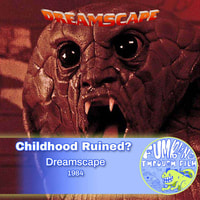
The Fumblers find themselves in a magical dream world that is one of our nightmares and to help calm us down we watch Dreamscape. One of us is afraid of rubber snake masks and which one of us might surprise you.
Transcript
Gather together from the cosmic reaches of the universe. Here in this great screening room with comfortable recliners are the most powerful forces of good ever assembled. Keith.
Speaker B:Uh, Mr. Horsehead, can you please leave? We're trying to film here. That's all right, I'll be back.
Speaker C:Terry. Big Candy would never allow a 4th Musketeer. It would just ruin branding. Derek.
Speaker A:Silk over cotton over Nerf over a cloud. And the power twins, Zap and Jordan, with their magical lemur snort dedicated Welcome back to Fumbling Their Way Through Movies, one forgotten gem at a time. This week we watch the 1984 reality-bending sci-fi thriller Dreamscape. This is Fumbling Through Film.
Speaker B:Play a little game.
Speaker C:All right, it's your party.
Speaker A:Let's pretend that a man, with a little help from science, could psychically project himself inside the dream of a sleeping Okay, let's pretend that. Then pretend that once inside the dream, it could become an active participant in it. It could actually be there, right in the middle of it. It could feel the dream, experience it, even shape and alter the dream itself.
Speaker C:Hmm?
Speaker A:What would you say to a notion like that?
Speaker C:That it's crazy.
Speaker A:You see, we've done it, Alex. Not once, but 3 times. Using 2 men with abilities in telepathy just similar to your own.
Speaker C:Going into another person's dream? I might have to see that to believe it.
Speaker A:Hello and welcome to another one-of-a-kind, genre-defining, brand new episode of Fumbling Through Film. The only show that dares to bring together 3 dudes.
Speaker C:What? It sounded like Hulk Hogan. Sorry.
Speaker A:Yeah, brother.
Speaker C:I was just impressed by your, uh, your cadence there. It was cool.
Speaker A:The only show that dares to bring together 3 dudes to talk about movies. Yeah, that's more Macho Man.
Speaker C:Oh, sorry.
Speaker B:Okay.
Speaker A:These aren't just any movies. They aren't. They're the ones we've missed, overlooked, or feel are simply worth revisiting.
Speaker C:Hmm.
Speaker A:They are. Any movie. That's any— it's any movie, Terry.
Speaker C:It's, I would say, a fair amount of movies. Yes.
Speaker A:It is virtually any movie.
Speaker C:Virtually, but not physically.
Speaker B:I gotta say, I mean, I still feel like there's always an asterisk because there's, there's got to be something that we're missing in the qualification, but it is genuinely almost any movie.
Speaker A:I guess the, the subsection that isn't, that isn't part of the movie, the possibilities are the ones that we feel are simply not worth revisiting.
Speaker C:Exactly. Thank you.
Speaker A:But it's still pretty much any damn movie.
Speaker C:It's like any movie we'd kind of sort of want to watch at all.
Speaker A:I think the 3 of us, any movie comes across that we've seen before, one of us will say we should rewatch it.
Speaker C:Yeah, there's very little that I would be willing to not rewatch, to be honest.
Speaker A:Exactly.
Speaker C:Especially for the show.
Speaker A:And the rest falls on Keith.
Speaker B:Thank you.
Speaker A:He'll say yes. I think we should watch that again.
Speaker B:Oh no.
Speaker C:Why not?
Speaker A:Anyway, my name is Derek and I am a fumbler. Joining me here in the Fumbledome, our reclaimed planetarium that we got at police auction, is the world's only Prime Minister of Fumbling and Film, Keith.
Speaker B:Hey, hey, what's up, KG, fumbler extraordinaire? And yeah, you know, nostalgic movie ruiner, I guess. I don't know.
Speaker A:Nostalgic movie ruiner. He ruins the movie. It's like he waits for the movie to fall asleep and then he jumps into it while it's dreaming.
Speaker B:Oh, that would be the movie's dreams. Yeah.
Speaker C:Oh, okay.
Speaker B:I know I got— I realized I'm gonna have to do a lot of explaining with this this week. Okay.
Speaker A:It's— no, this— you watched it as a kid. This, this is a movie if I saw as a kid. We'll get there. Anyway, where we're getting to now is that other guy that's ruining dreams and nostalgia.
Speaker C:That's right.
Speaker A:It's the Dr. Dre of Kansas, Terry.
Speaker C:I'm just over here sitting in our little special room, authorized personnel only. I'm, uh, I'm laying in the chair next to a DVD of, um, Rocketeer.
Speaker A:You're gonna enter that Rocketeer's dreams?
Speaker C:Yeah, yeah, I'm really trying to get, um, I'm trying to get in there and like, you know, solve its problems, like fear of heights and shit.
Speaker A:Sure.
Speaker B:Now that would be an amazing technology if you could link up to a movie and be able to go into it and like fix the flaws in it.
Speaker A:Oh yeah, in, in that movie's dreams. That would be amazing. Be a lot of good, a lot of, lot of fun. Yep.
Speaker C:Sometimes the movie just has to confront what it's scared of most, and then it'll, it'll heal. Yeah.
Speaker A:Yeah. It's an easy way to make it heal. Most of the movie—
Speaker B:most of the movies I pick would, would, would just be you going in there and it's staring at the wheel.
Speaker C:Yeah.
Speaker B:Realizing they weren't gonna get picked.
Speaker C:Some of these movies, I go in there and I just like spawn some like shards of glass for fingers and just slice it open.
Speaker A:And then they— Ah, is that glass? We'll get to it. But what we should get to now is what we do here. People have made it this far. They gotta know. I mean, they kind of know what we do here. They're like, what's this, any movie? Not any movie? What?
Speaker B:There's no way they do actually any movie each week.
Speaker A:Well, let me tell you, every month we watch a movie. We watch not just a movie, but many movies. And not just any movie. One of us picks a, a theme, a genre. Some jeans to wear.
Speaker C:Oh yes, a pair of jeans, one for each leg.
Speaker A:Sassoon or—
Speaker C:Fancy in here.
Speaker A:See, this old-ass movie we watched today has got me in that '80s mood, right? So anyway, we do that and then each of us picks a movie that fits within the hip pocket of those jeans. And then on the 4th week, we spin a wheel that gives us a random movie. We watch that right now. This month is the first month of the new year, and the order has been reestablished by our Wheel of Death. And that means it was a me month, a Derek month. And so I said, we don't want to watch any movie. We want to watch movies we've seen before as children, but haven't seen since we were kids. And we're going to rewatch now in a month I'm calling Childhood Ruined? I like to just say it with a question mark at the end. And the first week I chose a movie from 1991, which means I was in high school, but I was not driving yet. And that was The Rocketeer.
Speaker B:Yes.
Speaker A:This week is a Keith week and he chose the movie Dreamscape. Which he watched as a child at some point.
Speaker B:Yep. Multiple times.
Speaker A:Multiple times, but hasn't seen since then.
Speaker B:Yeah, sometimes probably since I was a teenager, probably that would have been the last time I've seen it.
Speaker A:Okay. Well, before we talk about our viewing of Dreamscape, before we do a deep dive on Dreamscape, Terry, did you have any— well, we already know Keith had experience with this. Terry, did you have any previous knowledge or experience of Dreamscape?
Speaker C:No, I did not know this existed at all. Um, yeah, completely fresh. No idea.
Speaker A:Yeah, I'm gonna second that emotion. I—
Speaker B:Okay, so I was thinking, Derek, uh, that maybe after you watched it, it would jog your memory a bit.
Speaker A:No.
Speaker B:But still no memory of it?
Speaker A:Heavens no. I'd never heard of this movie. Never seen it. I don't even recognize— I got the DVD here in front of me. I don't even recognize the COVID art, and the COVID art leads me to believe it's like an Indiana Jones adventure.
Speaker B:Yeah, yeah. I, I just kind of noticed— I just noticed that today because I was looking at, uh, some tagline stuff, and I looked at the, the poster for it, and I was like, what the fuck is up with this? Like, he doesn't carry a torch ever in this entire movie. Like, what?
Speaker A:Hello?
Speaker C:He does.
Speaker B:He does.
Speaker C:He's in the dream world at one point. Doesn't he fight the snake with the torch?
Speaker B:Oh yeah, yeah, you like, uh, he lights up and then walks out there. Yeah, that's right. Okay, but yeah, it's very misleading of what—
Speaker C:Yeah, I mean, it's a very small part. It's not integral at all.
Speaker A:Yeah, very misleading. I think it's also funny that, that Dennis Quaid has a bit of a Harrison Ford quality to him in this. He looks a lot just like him, doesn't he?
Speaker C:Yeah. He's even got like the jacket like that. Yeah. Yeah.
Speaker A:Okay. Well, enough, enough of this. What we need to do now is we need to get closer to Dreamscape than we ever dared dream. Oh, 'cause Keith's gonna take us there in another Pet Peeving Founders Deep Dive.
Speaker C:He'll dive into our dreams and show us.
Speaker A:Oh my God. Keith.
Speaker B:Oh, wow. Did you, did you finish saying all the, you know, jargon? Okay, excellent. All right. Well, yes, uh, we are doing, as we mentioned, Dreamscape. This, uh, we already talked about the poster for it, a cool looking poster. I will say that it is cool looking, but it really kind of misleading there. And I actually think the description that I saw on both Box Office Mojo and IMDb is a little I think it's a little misleading. Um, it gets down to it, but it, it, I think it misses a bit of it. It's a man who can enter and manipulate people's dreams, recruited by a government agency to help cure the president of the United States of his nightmares about nuclear war, but stumbles upon an assassination plot. And he's not really a guy who can enter and manipulate people's dreams. That's not when they recruit him in to try to get him to do that. He's a His other skills, telekinesis and, I don't know, clairvoyance of some sort. I don't know. He's a gifted dude, but he's a psychic.
Speaker A:I don't—
Speaker B:yeah. And, but that's, you know, they brought him in to, to try this and then he's good. He's not, that's, he's, he's not there manipulating people's dreams on purpose, which is I think what that description, uh, makes it sound like.
Speaker A:And he's not there to do it for the president at all.
Speaker B:Yeah, no, no, he's just like a side plot.
Speaker A:That's like the B story, maybe in the C story that becomes the end of the—
Speaker B:yeah, we'll get there.
Speaker C:Yeah, it's kind of like episodes of a TV show a little bit.
Speaker B:It is.
Speaker A:It feels like 3 episodes smashed. It's like a— yep, it's a dreamscape.
Speaker B:Oh, this came out August 17th, 1984. It is 1 hour and 39 minutes. Now IMDb lists this as rated R, but then all their trivia talked about how it was a PG-13 movie.
Speaker A:Yeah. On the back of the DVD says PG-13, 'cause I did not forget it. Yeah, really?
Speaker B:Yep. And that would explain how I, uh, probably saw it a bunch of times.
Speaker C:Like, did it change? Did they— I think it got changed.
Speaker A:I feel like it got changed over time.
Speaker C:Yeah. Some, some guy from like the, the ratings board, like 20 years later, he's like, man, I wanna rewatch this. I remember this as a kid. I watched it. And then he rewatched it like, oh my God.
Speaker A:I think it was an R when it was in theaters. This is my guess. I'm, I'm just guessing. Was that R was in theaters because the PG-13 hadn't really been established yet.
Speaker B:Because this is the same year as, uh, was it Temple of Doom and Gremlins, which really pushed it? And also, uh, Red Dawn pushed it as well.
Speaker A:Yeah, it hadn't really been established yet, so I'm saying, so it came out as an R, and then later on when it got released for home video or maybe even DVD, they reevaluated the ratings and made it PG-13.
Speaker C:So it started off more extreme and then it chilled out a little bit. Yeah, that makes sense. That makes more sense. I would not call this a hard R at all.
Speaker A:No, I wouldn't even call it a very— it's a very soft R.
Speaker C:Yeah, like a, like a silk, silk R.
Speaker B:Like silky R.
Speaker A:Silk over cotton.
Speaker C:Oh yeah.
Speaker A:Over a cloud.
Speaker C:Oh my God, that's such a soft R.
Speaker A:So soft.
Speaker B:Uh, enter a world beyond your wildest imagination where anything can happen.
Speaker A:And is that the tagline?
Speaker B:That's what it says on the poster. Uh, and also another one that they have is, whatever goes, whatever goes on in your dreams is no longer for your eyes only.
Speaker A:Whatever happens in your dreams stays in your dreams.
Speaker C:Yeah, that used to be the case. Not anymore.
Speaker A:Not anymore.
Speaker B:Again, this movie came out in 1984, which I think is by a lot of people's opinion, maybe one of the biggest years of movies ever.
Speaker A:Okay.
Speaker B:Karate Kid, Ghostbusters, Gremlins, Red Dawn, a whole bunch of things came out in 1984, including this one. This was towards the end of summer. It opened with $2.257 million in its opening weekend. I could not find the actual budget for this movie. I'm assuming it wasn't very much.
Speaker A:I bet you it was more than you think, because there's a couple parts that I really liked, and I'm sure you know what they are, but it's probably something with good Foley work. $6 million budget.
Speaker B:Okay, so $6 million. It made $2.257 million opening weekend. It was the number 9, uh, rated movie that, that week. This is also the highest it would reach.
Speaker A:Oh, at 9?
Speaker B:Yeah, at number 9, uh, that week. Ghostbusters was in at number 3.
Speaker C:Uh-huh.
Speaker B:Uh, it dominated the entire summer.
Speaker A:Yes.
Speaker B:Uh, number 2 was Red Dawn. Uh-huh. Which I will say was a consideration as well for Childhood Ruined. I really like that. I really like that movie. And number 1 was Tightrope, which is a, uh, Clint Eastwood—
Speaker A:I, I do not know that movie.
Speaker B:Yeah, I, I don't remember that one either, but it's about a guy who's, um, on a tightrope. There's a— no, there's a, uh, it's a circus freak. No, there's a stalker who's dressing up like a cop and killing women and dropping them off of buildings while he walks on a tightrope. Clint Eastwood has to hunt him down and stop him.
Speaker C:Yeah, this killer's got a very specific— he's got very specific rules he has to follow. First, he has to murder a woman, then he has to go walk across a tightrope across some skyscrapers and throw them.
Speaker A:He uses the woman as that balancing pole.
Speaker B:Hey, boss, I think we got the same MO. How do you know? Well, there's a tightrope and there's a tightrope involved.
Speaker A:And she fell 30 stories.
Speaker B:Yeah.
Speaker C:Okay. And he's still trying to get down. He's been up there for a while.
Speaker A:He's up there. He's hanging for his life. Yeah.
Speaker C:He's not very good at this. Yeah.
Speaker A:He threw his balancing pole over the—
Speaker C:yeah.
Speaker B:Let's see. This movie directed by Joseph Rubin.
Speaker A:Okay.
Speaker B:A couple other key things Joseph Rubin has done.
Speaker A:Sandwich.
Speaker B:Guess he created the Reuben sandwich.
Speaker C:Wow.
Speaker A:Excellent. I love this guy.
Speaker B:Uh, he's, uh, he— maybe his finest contribution to cinema was making the sandwich to eat while you watch the movies.
Speaker C:Yes, exactly.
Speaker B:Yes. Enjoy a nice Reuben while you watch Sleeping with the Enemy, which is something that he, uh—
Speaker A:I remember that movie. That— isn't that the one with, uh, Julia Roberts?
Speaker C:Yeah.
Speaker B:Uh, yeah. It's basically she's dating the guy who's also the fucker killer.
Speaker C:The B-Enemy?
Speaker B:Yeah.
Speaker C:Oh no.
Speaker A:Literally sleeping with it.
Speaker B:Which also then Chris Berman would go on and refer to Colorado Buffalo and eventually offensive coordinator Eric B-Enemy.
Speaker A:Eric B-Enemy.
Speaker B:Eric sleeping with the B-Enemy.
Speaker A:Yeah.
Speaker B:That was always a good nickname. Uh, he also directed Money Train, which was, uh, when they brought Woody Harrelson and Wesley Snipes back together. And this time, instead of playing basketball, they were trying to rob a train.
Speaker C:Okay.
Speaker B:But in 1993, he directed The Good Son. A young boy stays with his aunt and uncle and becomes friends with his cousin, a boy of the same age who shows increasing signs of violent and psychopathic behavior.
Speaker A:I remember this.
Speaker B:Yes. This stars Macaulay Culkin and Elijah Wood. Uh-huh. I did not remember Elijah Wood being in here, but I do remember Macaulay Culkin because this was like him trying to get out of that—
Speaker C:he was evil in this one, right?
Speaker B:Yeah, he's still real young, but he's trying not to be, um, uh, was it My Girl or, uh, Home Alone? Home Alone.
Speaker A:Yeah, Kevin Lannister.
Speaker B:He's trying to be, uh, Kevin McCallister, the Whatever his name is. The Lannisters, they always pay their debts.
Speaker A:That's true. I am listening to the Game of Thrones. I'm on the 3rd book right now, so maybe that's why Lannisters in my head.
Speaker C:Yep. Yeah, a guy at work was telling me about this movie a while back.
Speaker B:Really?
Speaker A:The Good Son?
Speaker C:Yeah, I never heard of it. I never heard of it.
Speaker B:I hadn't thought about that movie since I saw it in theaters.
Speaker C:Is this another pick that you thought about?
Speaker B:No, no, not at all.
Speaker A:He hadn't thought about that movie, Terry.
Speaker C:Oh, until now?
Speaker A:Yeah, no, until just now.
Speaker C:Yeah.
Speaker B:Dang.
Speaker A:Okay.
Speaker B:All right, writers of this, uh, David Lorre. He did the story and screenplay. Um, he also did, uh, story and screenplay for Star Trek V: The Final Frontier.
Speaker A:Ooh.
Speaker B:And Money Train.
Speaker C:Oh.
Speaker B:Uh, he did the 1993 Three Musketeers, which was, uh, the one that had Charlie Sheen, Kiefer Sutherland, And Oliver Pratt or Oliver Platt as the main 3 Musketeers. And then Chris O'Donnell comes up as who's like whatever the 4th one that they bring in eventually.
Speaker C:Oh yeah, they bring in a 4th Musketeer.
Speaker A:Bucky Musketeer.
Speaker B:So yeah, some— somebody wants some— there's like a kid who like wants to like join their ranks or something like that. Not kid, but younger guy.
Speaker A:Yeah, I never saw it, but I had no idea.
Speaker C:I feel like that's just— you can't have a 4th Musketeer.
Speaker B:No, I guarantee I saw it once.
Speaker C:They're gonna have to kill one of the other ones if they're gonna get a new guy.
Speaker A:Yeah, because yeah, there's a whole candy line based upon this premise. Yeah, if you brought in a 4th Musketeer, what happens? You put peanuts in that thing?
Speaker C:No thank you. Big Candy would never allow a 4th Musketeer. That'd just ruin brand.
Speaker B:Yeah, uh, I used to like 3 Musketeers a lot when I was a, uh, kid, the candy bar, but I've had them recently and they're not as good.
Speaker A:Yeah, that could be Because I think, I think they're missing that 4th Musketeer. Peanuts. Yeah.
Speaker B:Yeah.
Speaker A:What are the other 3? Nougat and chocolate.
Speaker C:Nougat counts for 2.
Speaker B:And I was gonna say the wrapper, the wrapper around it.
Speaker C:Oh yeah.
Speaker B:And then chocolate.
Speaker C:Yeah.
Speaker B:Yeah.
Speaker C:Okay.
Speaker A:Yeah.
Speaker B:Very light, very light candy bar.
Speaker A:That's why I like them. They're my favorite when the kids go I almost said candy shopping, but that's not true. Trick-or-treating. And they get, and they come back with like the little miniature, like little, yeah, like 1 inch by 1 inch bites.
Speaker C:Yep.
Speaker A:Those are the best. Three Musketeers.
Speaker B:Just American.
Speaker A:Yeah.
Speaker B:So at work somebody bought like, you know, or got candy around, you know, Halloween time for the office. Yeah. You know, and they, they dump a bunch in a bowl at a time and, uh, every time everything else gets taken except for Three Musketeers.
Speaker A:Really?
Speaker B:Those were all left at the bottom. Yeah.
Speaker A:Wow, got a bunch of snobs.
Speaker B:Mhm, including me, apparently. Yeah. All right, uh, also written, uh, also worked on writing this movie, Chuck Russell.
Speaker A:Good guy, Chuck Russell.
Speaker B:Yeah, yep, Chuck Russell wrote and directed A Nightmare on Elm Street Part 3: Dream Warriors.
Speaker C:Uh, people love that one.
Speaker B:Yeah, a psychiatrist familiar with the knife-wielding Dream Demon Freddy Krueger helps teens at a mental hospital battle the killer who is invading their dreams.
Speaker A:Yeah.
Speaker C:Oh, it's kind of similar. Yeah.
Speaker B:So, so Chuck Russell has a thing for people dream doing things in dreams.
Speaker C:Yeah, they probably watch Dreamscape and were like, dude, we know the guy who can do this.
Speaker A:Yeah, he's got a dream movie on his resume.
Speaker C:Yeah. Who else?
Speaker B:Yeah, they brought him in as an expert on like— David Laurie's like, man, I really can't figure this out, but let me find another guy who knows about Battling in Dreams, and we'll go get him in here.
Speaker C:Now, I bet he was like a consultant on Inception as well.
Speaker A:Probably.
Speaker B:Probably he'd have to be. Now, again, he—I saw that he wrote Nightmare on Elm Street 3: Dream Warriors. I really didn't recognize much of the other stuff that he wrote on, but he did direct a handful of other things, including Eraser, which was Arnold Schwarzenegger. Yeah, Arnold Schwarzenegger and. Vivica Fox, maybe? No. Uh, no. Who, uh, who, uh, Vanessa Williams was in that one with him. Yeah. Uh, he directed The Scorpion King.
Speaker C:Oh boy. Interesting.
Speaker B:Yeah. Yeah. And he— The Scorpion King. And he directed Jim Carrey in The Mask.
Speaker C:I am the mask. I am the mask. Don the mask.
Speaker B:Get in the chopper and put on the mask down before I erase you. He's yelling at the dog.
Speaker C:He's trying to put the mask on. I think any movie would be better with Arnold in it, or just Arnold doing the voice. Yeah, just like overdub like one iconic line in the movie with Arnold.
Speaker B:Yeah, well, because he did that— it's, it's not a chopper— and then later on it's not It's not a tumor. Like, he just constantly has to say things. It's not a something.
Speaker A:Yeah, it's not a mask.
Speaker C:Yeah, but it is clearly a mask. No, it is.
Speaker A:Yeah, it's, it's the title of the movie, Arnold.
Speaker C:Whatever, whatever. Think what you want. Time to go.
Speaker A:Walked off screen. That's it. He's not even on screen because he's doing the voice.
Speaker C:He's just in the back. He's like, he's voicing a background character. You don't even get to see him.
Speaker A:You hear, you hear footsteps and the door open and close in the movie as a voiceover.
Speaker C:Yeah. Jim Carrey turns, he's like, who are you? Put the mask down.
Speaker B:He's just on set that day. Like, he's just at the studio that day and he's just walking through.
Speaker A:Like, he's just, he's screaming off set.
Speaker C:Yeah. Somebody just picked him up.
Speaker A:I said, Kenny, put the mask down.
Speaker C:He thinks it's real.
Speaker A:It's your— it's going to be your dream and your worst nightmare. Don't do it, don't do it.
Speaker C:It'll change your life forever.
Speaker A:You can get the girl with your own charms. Just hit the come with me if you want to leave. I love the idea of Schwarzenegger going to a movie set knowing what movies are because he's been in movies, but still acting like it's real.
Speaker C:He thinks it's real. Well, he's not in it, so he doesn't know. You might think all the movies he's in are real too. I love the Terminator.
Speaker B:Ice to meet you. I love it.
Speaker C:Hasta la vista, Cattery. Uh, Mr.
Speaker B:Schwarzenegger, can you please leave? We're trying to film here. That's all right, I'll be back.
Speaker C:Oh no. I think any movie would be improved. Yeah, but just Arnold's voice yelling, yelling off, and they keep it in the edit. Yeah.
Speaker A:Yep.
Speaker B:There we go. That's what they need to do. They need to get, um, You know, Arnold's getting up there in age, so they need to get an AI voice of him. No, no way. There's plenty of people that can do an Arnold Schwarzenegger voice. They can use forever. Yeah, there's 3 of us right here.
Speaker A:Yeah, we could all do it.
Speaker C:We're all so good at it.
Speaker A:There were points where I thought there was legitimately Arnold Schwarzenegger on microphone here for a minute.
Speaker C:He's known for doing that. He might just pop into the recording.
Speaker A:He's in the room with one of us screaming at us.
Speaker B:He's got a couple of his donkeys with him and he's, you know—
Speaker A:He's got donkeys?
Speaker B:Yes. See, Arnold has donkeys that hang out with him.
Speaker A:Is he known for having donkeys?
Speaker C:He's hanging out with his donkeys?
Speaker B:There's videos of him and like the donkeys are walking through like the kitchen with him and stuff.
Speaker A:Oh my God. And you mean like actual hee-haw donkeys?
Speaker B:Yes, I do. Yeah.
Speaker A:People, they're like hee-haw donkeys.
Speaker B:Yeah. Okay.
Speaker C:This is my donkey Lawrence.
Speaker A:Why is this donkey named Lawrence? And why is he shortened into Larry? Come on, Arnold. Yeah. All right, Keith, continue.
Speaker B:Uh, all right, all right. This movie has, uh, Max von Sydow in it. Mm-hmm. He's got 164 acting credits, including, uh, some, uh, very key things here. Uh, he was king Osric in Conan the Barbarian. Oh, speaking of that, that's Conan's father, right? I don't know.
Speaker A:I never seen it. Really?
Speaker C:Okay. Yeah. Have you? Have you? Like, I haven't actually listened to it, but I've heard that the commentary track—it's supposed to be amazing. It's supposed to be amazing for that. Where Arnold's just like basically like speaking with.
Speaker A:Ah, I remember that.
Speaker C:There I am swinging a sword.
Speaker A:I don't even remember.
Speaker B:Now I'm jumping down a cliff. Oh, I remember. I didn't remember jumping down the cliff. Yeah. Uh, he was Blofeld in Never Say Never Again. Ooh, Bond. Very, very iconic Bond villain. Is he? Yeah. Blofeld. Blofeld is one of them. Yeah.
Speaker A:I don't know who Blofeld is.
Speaker B:Blofeld came, was in one of the new ones that they just did as well.
Speaker A:I'm sorry, I don't know who Blofeld was.
Speaker B:In which movie? Blowfield? That's, um, uh, that's what, what's his name is, um, Christoph Waltz. That's who he's playing.
Speaker C:Yeah, I remember this.
Speaker B:They bring him around because he's in charge.
Speaker A:He's the guy who's in, uh, the cat that's based— that Dr. Evil's based off of. I had no idea. I'm not— not—
Speaker C:I haven't seen, I haven't seen very many Bonds.
Speaker A:I've seen a couple. I've seen a handful, but I don't I'm not like a Bond historian.
Speaker B:Yeah. Neither am I, but I, I do know he's one of like their key, like villains.
Speaker A:Keith. I like Keith mentioned something we don't know it. He just indignant, just like, what? How can you not know this?
Speaker B:Well, 'cause it seems like a basic knowledge thing, but that's right. GoldenEye.
Speaker C:GoldenEye. I know him. Isn't that a guy? GoldenEye?
Speaker B:I don't know. Anyway, Derek, you might be a little more familiar with this one though. Okay. He's Father Merrin in The Exorcist.
Speaker C:Yes. And also The Exorcist 2. Exorcist 2 is a horrible movie. It's so weird.
Speaker A:Exorcist 3, underrated classic.
Speaker C:It's good. I like that one a lot. 3 is awesome.
Speaker A:2 awesome jump scares in that movie.
Speaker B:I do believe we've talked about that either last year or on a previous podcast.
Speaker C:Yes.
Speaker B:Yeah. In addition to this movie, which I very much remembered him being in, he was also in another big movie that I liked as a kid, then had given some consideration if I hadn't just watched this movie last year, uh, with the '80s years. Flash Gordon, he's Emperor Ming.
Speaker C:Oh, okay. Yep, I've seen that.
Speaker B:Oh, and one other movie that did pop into my mind for this, uh, he is, uh, Brewmeister Smith in Strange Brew. Uh, it's Canada's most famous hosers, Bob and Doug McKenzie. They get jobs at Elsinore Brewery, only learn that something is rotten in the state of it.
Speaker A:Oh.
Speaker B:Stars Rick Moranis and Dave Thomas as their characters, Bob and Doug McKenzie.
Speaker C:Is it made with like human flesh or something?
Speaker B:They're doing something for like mind control or something like that.
Speaker A:Yeah.
Speaker C:Oh.
Speaker B:Yeah. And I— this is like one of my favorite movies. I love Stranger Things.
Speaker C:Really? Stranger Things?
Speaker A:I love how it's one of your favorite movies, but you're just like, what are they doing? I don't know. Doing something maybe with mind control.
Speaker B:didn't want to spoil it for people if they hadn't seen it.
Speaker A:No, but it's a 45-year-old movie.
Speaker B:But for Terry.
Speaker A:Okay.
Speaker B:I don't know. I, I, I really, uh, enjoy this movie. I have it on Blu-ray as well. It's one of my favorite movies from being a kid. Now, uh, female lead in this movie is Kate Capshaw. Uh-huh. Yep. She is, uh, probably best known as Willie Scott. In Indiana Jones and the Temple of Doom. Okay. Oh yeah, okay. Hangs out and walks down that weird bug path. Yeah, one of the creepiest things I remember is she's walking down there, she's like, oh, I broke a nail, and she like turns it over and it's like this giant like millipede is all on her finger. And like, nope.
Speaker C:Yeah, nope.
Speaker A:No, I, I really like that because Indiana Jones hates snakes, but he doesn't give a shit about like A 10-foot centipede, he just tosses it around like it's nothing.
Speaker C:Yeah, that's— I feel like they're like the same.
Speaker A:I'd feel like at that point, yeah, at that point it's, it's basically a snake with legs.
Speaker B:Like, you know, which is like in Raiders. In Raiders when he's got, uh, the dude's got all the tarantulas on him and he's just like casually brushes them all off. Yeah, all that creeps me out.
Speaker C:Uh, it's worse than snakes for me, I think. Yeah, I don't know, it'd be a tough call. Not for Indiana Jones though.
Speaker A:No.
Speaker B:Uh, Kate Capshaw also played Andy in Space Camp.
Speaker A:Oh, I have— that was a movie since this— that's not part of Terry's childhood. That was the movie that was on my list of possibles for this.
Speaker B:Really? Oh, interesting, interesting. Um, I've thought about rewatching that one before. I'm pretty sure that's not gonna hold up.
Speaker A:Oh God, it's got to be terrible, Keith. It's got to be terrible.
Speaker B:Yeah, it's got to be absolutely awful. Even by my standards. Uh, in 1987, she played in a TV movie called Codename Dancer.
Speaker C:Oh, that sounds cool.
Speaker B:Yeah, she plays Annie. Kindergarten teacher Annie lives the ideal yuppie lifestyle with her BMW-driving husband. Her boring life is suddenly upset when she receives a mysterious phone call at work telling her the dancer is locked in the candy store.
Speaker C:Oh my God. So like awaken her, like hidden orders.
Speaker B:It's like her Winter Soldier commands. Yep. Yeah. And, uh, but in 1991, she, uh, was in the role of a lifetime. She married Steven Spielberg.
Speaker C:Whoa.
Speaker A:What's that for her?
Speaker B:And they're still married today.
Speaker C:Really? Good for them. Wow. Yeah. They're going strong. Mm-hmm.
Speaker B:Yep, it's on the wheel. I'm gonna put, uh, The Wedding of—
Speaker A:Yep, I was just writing that down.
Speaker C:Steven Spielberg marriage, their videotape. I'm sure he filmed it.
Speaker A:Oh, I bet you they did.
Speaker C:I think he directed it too. Steven Spielberg.
Speaker A:They probably did a really nice edit of it too. No star wipes or anything.
Speaker B:Took all— they took it all over to, uh, George Lucas.
Speaker A:Take it over, see if we didn't pick it up to release it.
Speaker C:Yeah, I had a limited release, I think, on a few screens.
Speaker A:And the thing that was beautiful about it too, they don't show the monster until the end.
Speaker B:Oh God.
Speaker C:Yeah. Yeah.
Speaker A:They just give you a hint of it early on.
Speaker C:Yes.
Speaker A:They show a fin, they show an eye, you know, and then—
Speaker B:Part of a wedding dress.
Speaker C:Part of a wedding dress.
Speaker A:Yeah. And then at the end, boom.
Speaker C:It is kind of annoying, you know, uh, they keep going back and like remastering it, adding little things in it, and it just keeps getting—
Speaker A:They replace all the guns in the weddings.
Speaker B:With walkie-talkies.
Speaker A:Can you—
Speaker C:everybody's got walkie-talkies now, and I'm pretty sure I saw a big CGI, like, Yoda guy walking back in the background trying to fill out the screen.
Speaker B:Yeah. All right, this— the lead in this movie though is Dennis Quaid.
Speaker A:Uh-huh. Okay, we haven't done Dennis Quaid yet. All right.
Speaker B:No, no. Um, he has been in a, uh, a lot of things, uh-huh, uh, that I've seen, a lot of things I haven't seen. Uh, as well. He's got, he's got a ton of movies, but, uh, one of the— one movie that I really remember seeing in theaters because it was a 3D movie.
Speaker A:Oh my.
Speaker B:Yeah, he played—
Speaker A:Jaws 3D?
Speaker B:Yeah, it was.
Speaker C:It was?
Speaker A:Was it really?
Speaker B:Mm-hmm. He plays, uh, Mike Brody, so it would have— he would have been the now grown-up son of, uh, Chief Brody. That was just a wild guess.
Speaker A:Really? You saw that in theaters?
Speaker B:Oh yeah, with my family.
Speaker A:Yeah, we went.
Speaker B:Yeah. Oh my goodness. Wow. Had the blue and red.
Speaker A:That was a big deal when that came out.
Speaker B:Yeah, it was huge. Yeah, it was a packed theater down there in Bradley, Illinois.
Speaker C:I've only seen the first Jaws. I've not watched any of the sequels.
Speaker A:You're fine. Just stop right— just slam on the brakes and you're good, Terry.
Speaker B:In fact, that's what they probably should have done. Well, there is a book of Jaws 2 also, so I guess they could have at least made the sequel.
Speaker A:Was there a Jaws 3 book?
Speaker B:There was not a 3D book. No. Well, I mean, Jaws was a novel first and then the movie, and then they also wrote Jaws 2 right after. And then, so I guess they could have done both of those. It would've made sense 'cause they were books. But after that, you don't need anything.
Speaker C:Jaws 3D, the novel.
Speaker B:There's probably a book.
Speaker A:It's a pop-up book. Yeah. That's what I was thinking.
Speaker B:Yeah. Uh, he played, uh, Jack Cap Rooney in Any Given Sunday. Is it the, uh, old quarterback who, uh, you know, it's kind of like on his last legs?
Speaker A:I never saw it.
Speaker B:They keep wanting— like, he wanted to, uh, replace with— I think that is, uh, Jamie Foxx's, uh, Steaming Willie Beeman's character.
Speaker A:I don't know, maybe.
Speaker B:Yeah. Uh, now I get clips all the time on YouTube when I'm scrolling through for, uh, clips from the movie American Underdog. The Kurt Warner story.
Speaker A:Oh yeah. Does he play Kurt Warner in that?
Speaker B:No, he played Dick Vermeil.
Speaker A:Oh, he plays Dick Vermeil. Okay.
Speaker B:Yeah. And I actually just watched the clip from that movie just like a few days ago. It popped up because I was like, let me see what this part is about. And his Dick Vermeil is very weird.
Speaker A:Who plays Kurt Warner in that?
Speaker B:Shazam.
Speaker A:Oh no. Shazam. Oh no, Zachary Levi. Yeah, that's a death kiss right there.
Speaker B:Mhm. He did play Mike in the Academy Award-winning movie Breaking Away.
Speaker A:I have no idea what that is.
Speaker B:A working-class Indi— Indi— a working-class Indiana teen. A working-class Indiana teen obsessed with The Italian cycling team vies for the affections.
Speaker C:What? He's obsessed with the Italian cycling? Is he Italian himself?
Speaker B:No, he's not. No, he's not.
Speaker A:Uh, he's an Indiana teen obsessed with Italian cycling.
Speaker B:He's— his friend is. He's not. His friend is. Anyway, um, a working-class Indiana teen obsessed with Italian cycling team vies for the affections of a college girl while searching for life goals with his friends.
Speaker C:What? What's all this to do with each other?
Speaker B:This movie called Breaking Away, it was nominated for Best Picture, Best Director, Best Music, Best Supporting Actress, and then also then it won the Best Original Screenplay.
Speaker C:Wow. Really? Yeah.
Speaker A:I've never heard of this movie.
Speaker B:Uh, I've heard of it. I've never seen it.
Speaker A:What year was it?
Speaker B:19—
Speaker A:Okay, man, I definitely don't remember that.
Speaker C:There's like a couple of those elements that like, yeah, okay, okay, that makes sense. But then there's like this one strange element of that plot summary that I'm like, why is this part of the plot? Like, why, you know, Italian bicycling? Why are we obsessed with this?
Speaker A:It's so weird.
Speaker B:It's not this— that, that description of it is almost like the, um, the Lone Wolf McQuade. Like, you know, both like kung fu and are into the same— into the same—
Speaker A:Girl and martial arts. Okay.
Speaker C:Yeah. We're gonna, you know, figure out what we're gonna do with the rest of our lives. I've got a crush. There's young love. Oh, and oh, by the way, I also really love Italian bicycling. I love—
Speaker A:I mean, you gotta have something that defines the character, I guess, and there it is.
Speaker C:Everybody's got to have hobbies. Why not Italian bicycling?
Speaker A:Why not? Obsession with Italian bicycling.
Speaker B:Now, uh, real quick, couple more movies he was in because they were on my short list of things to watch.
Speaker C:Oh, okay.
Speaker A:For this month or just in general?
Speaker B:Yeah, for this month. So in 1985, he was in a movie called Enemy Mine. Uh-huh. Uh, during a long space war, the lives of 2 wounded enemies become dependent on their ability to forgive and trust. Uh, co-stars Lou Gossett Jr. Basically, they both crash on this planet.
Speaker A:I remember this movie. Yeah.
Speaker B:Or survive, they have to like work together. Yeah. And in 1987, A test pilot is miniaturized in a secret experiment, but then accidentally injected into the hapless into a hapless store clerk. Yep. Inner space. Yep. Martin Short and Meg Ryan directed by Joe Dante.
Speaker C:A pilot gets injected into a human.
Speaker A:Yeah, he gets shrunk down and then put into a body.
Speaker C:Oh, like Osmosis Jones?
Speaker A:Like Osmosis Jones.
Speaker B:Yep. But they put him in just like a random dude.
Speaker C:Reenlarges if I'm not mistaken. Oh my god! Wow, those are some high stakes.
Speaker A:High stakes. Yeah. Now, did he die?
Speaker C:Would they both die? They'd probably both die, right, if he enlarged?
Speaker A:No, I imagine if you're miniature and you're inside something, you just become unminiatured and then everything else just explodes around you.
Speaker B:So you stay alive, but whoever—
Speaker A:He was in a ship too, so the ship would have like been—
Speaker C:Oh, the ship would protect him. Yeah, yeah.
Speaker A:And the other person would just become, you know, goo.
Speaker C:Yeah, yeah. a quick death though. That's nice. Maybe. Unless it's a really slow—
Speaker A:it depends how fast or slow you re-expand.
Speaker C:Yeah, it expands like a couple inches every hour.
Speaker B:Now, because we want to get as close to this movie as possible—
Speaker A:oh God, so close.
Speaker B:Deep dive. Yeah, yep. Uh, just— we can get into it more as we go, but what, uh, what were your thoughts on the music? The, the The composition for this movie.
Speaker C:Uh, it's very '80s. Not happy thoughts.
Speaker B:Yeah, I, I, I felt like there was like, um, definitely something that like Stranger Things theme was a little influenced on at times. I never seen Stranger Things. But then all— but then also there's like a weird like carnival type— that carnival song is stupid. Yeah, I did not like that. Yeah, uh, real weird. So I did a little deep dive on this because I was like, man, this music is weird and we're probably going to talk about it. Maurice Jarre, J-A-R-R-E, I'm assuming it's Jarre, is the composer for this. And I was like, man, it's really weird music for this movie and it's kind of fitting of it, but also it's just super strange. Well, Maurice is a 9-time Oscar nominee.
Speaker C:Wow.
Speaker B:3-time winner. Uh, he won for A Passage to India, he won for Doctor Zhivago, he won for Lawrence of Arabia.
Speaker C:Oh wow.
Speaker B:Um, he was nominated, uh, for, uh, Gorillas in the Mist. So they're one of the ones that he was up and nominated for. And so also Witness with Harrison Ford.
Speaker C:Oh wow.
Speaker B:The ones he was nominated for. Things he wasn't nominated for that he worked on: Enemy Mine, Okay. Uh, Mad Max Beyond Thunderdome and, uh, Dead Poets Society.
Speaker C:Wow. He has done quite a bit.
Speaker B:Yeah. I, I, I was just like, you gotta be kidding me.
Speaker A:Like the guy who did this, he might be one of the most, uh, acclaimed people we've deep dived.
Speaker B:Yeah. I'm like the guy who did the music for this also did Lawrence of Arabia. That's, yeah, that's crazy.
Speaker C:I've never seen Lawrence of Arabia, but I can only assume there's some crazy carnival music in there.
Speaker B:Yeah, that carnival music is weird because it doesn't really fit anywhere in that in that movie.
Speaker C:So it's like he wrote that; he just had that thing around, and he was like, "Oh, it's just for Dreamscape." I'll just throw this give here, take whatever.
Speaker B:Quick fun facts here: Dennis Quaid was the first and only choice for Alex Gardner. The only choice after losers loved his dedication for the role and the project during its. Pre-production stage.
Speaker A:What was he like a method actor? Did he do a lot of dreaming while he was?
Speaker B:Yeah, he was just always sleeping.
Speaker A:Amazing. It was his dream role.
Speaker B:Now, here's one that I really thought would have really been weird for the movie. Kevin Costner was offered the role of Tommy Ray Gladman. Oh, that would be awesome. But he turned it down because he didn't want to play a supporting role.
Speaker A:And wait, which character was that? Was that the villain?
Speaker B:Yeah, the bad guy.
Speaker C:Other dreamer guy. The dreamer.
Speaker B:Like, I really can't picture Kevin Costner in that role. I would love that. Yeah, man, I think that'd be awesome. When Alex plays the saxophone in his apartment to the tune, which I kind of like— he's not actually playing that, right? No, no, yeah, no, no, he's trying, but like there's budget notes playing.
Speaker A:His mouth is even on it.
Speaker B:But he plays a tune similar to Once Upon a Dream from Sleeping Beauty in 1959, but the melody is changed just enough to avoid, uh, infringing copyright. Yeah.
Speaker C:Don't you think they should have added that in the summary of this movie? Like, a man, psychic man, it gets involved with a dream assassin and all this stuff. And also he's a saxophone player.
Speaker A:Like, what is the point of the saxophone?
Speaker B:Nothing.
Speaker A:There is no point. Yep. Except for it lends to the scene where assholes in his room blowing on the saxophone.
Speaker B:Yeah.
Speaker A:If I'm that dude, I get out of the shower, I'm like, what the fuck you doing with my saxophone?
Speaker C:You're blowing in my saxophone? Yeah, that's like a— don't put your mouth on that.
Speaker A:That's a big no-no, man.
Speaker B:Yeah. And you know, you know what it leads to? It leads to me watching this movie in the morning, I have to quickly turn the volume down that scene because—
Speaker C:Yeah, that screeching went on way too long.
Speaker B:It was so damn loud.
Speaker C:And the, and the screeching look like he's never played saxophone, obviously, this new— this villain guy. But like, you— it's almost like so bad that it's intentional, you know? Like, it's like even a beginner can't make all those crazy sounds that he's making.
Speaker B:Yeah. Yeah. And finally, uh, writer David Lowery hated the final result of the movie and just— and disowned it.
Speaker A:He just owned— he disowned it. Wow. Yeah.
Speaker B:Wow. Though ironically, when he was brought on to co-write Star Trek V: The Final Frontier, William Shatner, who had directed and co-wrote that entry in the series, was initially quite skeptical of his writing talents but changed his mind upon viewing Dreamscape.
Speaker C:Wow. Shatner liked Dreamscape.
Speaker A:Oh goddamn! That was so close, Keith.
Speaker C:Can I can I shout out one movie I saw Dennis Quaid in recently? Oh sure, we're doing sounds now. He was in The Substance. Oh, was he really? Yes, which is really good. I really like The Substance. He played like the slimy like producer guy. Nice. Yeah, he did a good job. It was a really good movie, so good on you.
Speaker A:I've heard it's very good. It's on my watch list.
Speaker B:That's it. So close.
Speaker A:Oh yeah, so very, very close.
Speaker C:That was so close. Like it went into my mind straight into my subconscious. But it pulled away at the last second before—
Speaker A:Yep, onto a train. Lots of trains.
Speaker C:Before I had a heart attack, it pulled away. It pulled out its little knife fingers, but then it just like stopped. It was like, yeah, just kidding, and left.
Speaker A:Well, we need to do it. We need to talk about Dreamscape and all of its glory.
Speaker C:Yep.
Speaker A:And our viewing of it.
Speaker C:That's true. We should. I think we should.
Speaker B:So let me, let me preface that.
Speaker A:I— Okay, Keith, give us the setup for Dreamscape here.
Speaker B:I'm gonna say, just in my picking this movie, it was on a list of my things I really wanted to rewatch anyway. Because again, I haven't seen it for a while.
Speaker A:Really wanted to rewatch it.
Speaker B:And it came, you know, you came up with the subject of childhood ruined, and I was like, you know what, this is now a good time to give this one, give this one a shot. Yep. And I kind of already knew the things that Would be a problem with this movie. Oh, like upfront, I because I I've I had seen them and I remembered enough of it. That was like you were there.
Speaker A:I problems.
Speaker B:Listen, there's I know the I know the problems of it. Okay, it's uh it this like special effects stuff is especially like from the opening like that like nuclear bomb scene and the wife getting killed off.
Speaker A:I audibly said Keith, what have you done?
Speaker C:I know, I watched that too and my mouth dropped. And it's giving me strong Terminator vibes. I thought Arnold's gonna be like, get down!
Speaker A:Oh no, the world's blowing up!
Speaker C:You've got to run!
Speaker B:Um, but the main reason, like, the main reason I wanted to rewatch this is I wanted to see how, like, the, the overall story and, like, the, the, the idea, if it's still held up.
Speaker C:Okay.
Speaker B:Which, which I think that, like, this is a movie that I think would be awesome for like a, a remake of, like, because I think all the— I think all the pieces are there for it.
Speaker A:They made Inception. Well, which is essentially the same concept.
Speaker B:Yeah, I guess to some extent. Yeah, yeah. What do you mean to some extent?
Speaker A:It's literally the same Well, they're trying—
Speaker B:well, they're in— I guess in that one, in that one they're— well, in that one they're not, um, they're not interacting with the dream itself.
Speaker A:Yeah, they are.
Speaker B:No, no, they're going through different layers and they're trying to put an idea deep inside the person's mind.
Speaker A:Yeah, but they're interacting with the dream. I mean, so—
Speaker C:Don't they like spawn guns and stuff?
Speaker B:Well, no. Yes, but, but they're trying to stop like the person's like internal defenses that pop up, not like whatever like the person's dreaming about and you want to help them like stop whatever's causing their nightmare. Okay, I get, I get what you're saying. It's, it's, it's similar. Yeah, it's— they're, they're adjacent to each other.
Speaker A:It's, it's an over—
Speaker B:like, like, like you're, like you're going, like you're going down one street and then you just turn the corner and they're like right there at the corner.
Speaker C:And there's Dreamscape Avenue and then there's Inception.
Speaker A:It's almost like Inception where the avenue flips over and it's right above you and it's the same thing. It's like a 90-degree—
Speaker B:yes, yes, it's a directly above you.
Speaker A:It stays—
Speaker B:But I'm talking about like an actual, just a remake of like this actual concept.
Speaker C:This idea specifically.
Speaker B:I mean, and the idea of like somebody going in and like— Inception really is.
Speaker A:Inception is ultimately the recreation of this concept but done better.
Speaker B:Well, they're not trying to assassinate anybody in that movie. They're trying to like, they're trying to steal, uh, they're trying to steal a code.
Speaker C:That's true.
Speaker B:And so I like, I like the concept that they've come up with for this movie. Yeah. And I, but I thoroughly remembered things about this movie. That they're trying to have somebody go in and assassinate somebody, and so they bring in Alex, and Alex has to go into the dream, stop that assassination. But they're also like, they're actually interacting. They're interacting. No, this is coming. Well, no, he— no, he doesn't know that's coming. He eventually figures out, but I'm saying they're going in there actually.
Speaker A:The concept is going—
Speaker B:They're interacting with the— no, they're interacting with the actual dream itself like that. Yeah, like when he— like he's going in, he has to stop the monster thing from—
Speaker A:What do you think happens in Inception?
Speaker B:They don't go in with the, uh, with the idea of, hey, we're going to stop a specific thing from going on.
Speaker A:But they interact in the dream. I don't understand what you— what the problem is.
Speaker B:The goals are different, but they're, they're moving through different levels of, of that dream and doing stuff, but they're not like, hey, that guy's having a dream about like falling off of a, off of a skyscraper he's working on, and so we're gonna try and catch him and hold onto him, make sure he doesn't fall. Like, they're not doing like a very specific, like, hey, here's the one-off thing. And they're definitely not going in like just killing people off in Dreams.
Speaker A:All right. I guess.
Speaker B:Yeah. They're very, very similar in concept. I do understand. I get what you're saying with that, but I'm talking about this idea of like—
Speaker A:And by very, very similar, you mean identical, right? No, it is. It's the same thing. Uh, it is the same thing. It—
Speaker C:I— Keith wants the storyline to be more similar, I think.
Speaker B:You know what, you know what, if in, if in the trivia— and maybe I should look up Inception trivia, maybe that's where it's at, and it's gonna tell me that, uh, that Christopher Nolan was inspired by this movie. I get it. I don't see— I just, I don't see anything connecting the two of them, uh, in, in that concept.
Speaker A:You don't see anything connecting Dreamscape to Inception?
Speaker B:I do now that you bring it up, but not— it's not— you didn't think of it beforehand? No, I did, I did not.
Speaker A:No, I did not know one person is in another person's dream.
Speaker B:No, I did not. No, I did not know.
Speaker C:I was thinking like Nightmare on Elm Street a lot with the finger, like, like, like, like when the razor hands came in.
Speaker A:Yeah, yeah.
Speaker B:So anyway, I, I like the concept of this movie, uh, I— this and the special effects I knew probably were not going to like hold up to where they, they would need to be. But I, I still, you know, I kind of went into that knowing that maybe this was going to be a half-ruined childhood.
Speaker C:I, I will say the special effects, it started off rough. The lady running away from the like nuclear war or whatever was really bad. It was very bad. But as it went on, I kind of liked it. Um, I thought the special effects, they reminded me honestly of, uh, Lair of the White Worm.
Speaker B:We're like, oh, that's, that's not us. That's not a—
Speaker C:Like, I liked it in The Lair of the White Worm too, where it's kind of this like, um, like shoddy but not necessarily, not, you know, it was like this weird— because it's in a dream, right? So it's not gonna feel real. So it has this weird quality to it where it's like, oh, it's kind of got this like unrealistic element to it already. So I kind of liked that when it was like, you know, when they're like, he like goes to sleep and he like falls into like a strange wormhole into the dream and stuff like that. And the green screen was kind of like— I felt like that added to it sometimes. Not when she's running away from the apocalyptic fire, but no, other moments, like in on the train when like the background's all weird. I thought that was kind of cool.
Speaker A:That was kind of cool.
Speaker B:I kind of— I— it seems like, like 1984 is a weird transition year for, for movies as well, because you— well, I guess like that, like the whole, you know, early to mid-'80s Because you have stuff like this, like Ghostbusters. Now that's something that still holds up very well through this time. And all the Indiana Jones ones, the original ones, they hold up. And then you get movies like this that are just like—
Speaker C:Yeah, they didn't have the budget.
Speaker B:Yeah, it's the same thing, but they're off. And it's because of some, again, not a lot of money. Uh, for that time, but also like the changing of the way, you know, movies were made with like CGI and stuff like that. And like just, mm-hmm, and, and things just starting out like the quick, easy improvements that would go on here. But you also get like cool stuff, like, you know, like the snake creature that's done with, I, I think it's done like all like the, uh, with like a miniature version of it that—
Speaker C:Oh, the stop motion.
Speaker B:Stop motion type stuff, which I always love. Um, those type of things. But yeah, it's, it's something around this time where like suddenly movies like completely changed and got better shortly after this with those things. Because I have more movies in this time period where when we watch— if you watch them, it's like, yeah, okay, the movie's not bad except some of these visuals are hard to watch.
Speaker C:I did think that snake man was strange. I, um, you know, because there's this kid who's getting haunted in his dreams constantly. They don't really tell you what's going on. The last person who went into his dream, like, went insane and they had to take him. Yeah. So I'm expecting something pretty crazy in this dream, right? Pretty crazy. Because it's like no one can handle this kid's— whatever is in his head is insane.
Speaker B:And the kid can draw a whole bunch of different stuff. He can't draw a snake person.
Speaker C:Well, he's drawn like this, like, dark black, like, page, and there's like eyes staring at him from a corner. I'm like, oh my God, it's like some sort of horrible, unimaginable darkness. Then he goes into the dream and it's just like rubber snake suit. Yeah. Like it's kind of cool, but it's also like very un— like inspired. I don't know if inspired's the right word, but it's just like not inspired.
Speaker A:It's fair. I think it's fair.
Speaker B:That, that thing scared the shit out of me when I was a kid.
Speaker C:My kid's like the snake man. And I'm like, wait, what? And then I was like, oh, that's just the word he, he just described it.
Speaker A:It's a literal snake man. Yeah. It's indescribable.
Speaker C:He just came up with this weird thing. It's going to be this like tentacly creepy thing. And no, it's literally just like a man that's in a—
Speaker A:It's a cobra head on a man.
Speaker C:Snake on 2 legs walking around with a big old tail. Yeah.
Speaker A:If you want to win over my heart, stop-motion animation is step one to getting to there. I love it. I love that stuff from, from— I mean, it stopped with the invention of CGI, but that like up until the early '90s, back until the existence of film, the beginning of film, that stop-motion stuff, I love it. And I don't care if it looks fake, I still love it. And I don't— the, the character design is terrible, but the stop-motion stuff, love it. You do it all day. Should have been the whole damn movie. I wish he was fighting that snake man from beginning to end.
Speaker C:The whole movie's him fighting the snake man? Yeah, that should have been the— that should have been the plot of the movie. Like, the assassination part is cool too.
Speaker A:No, they should have picked—
Speaker C:they should have picked one story. Yes.
Speaker B:Like, like, he could have built up to like, I'm just gonna try and stop this. I gotta save this kid.
Speaker A:Saving the kid could have been the movie.
Speaker C:Yeah, because that's a good idea. And I, I think that like the, the way it builds, builds up, like he could start to learn how to control the, you know, because like as we see, the evil Dreamwalker can control his body. He can change things in the dream and like control it.
Speaker A:He could do anything.
Speaker C:Yeah. Yeah, our main character limited never does.
Speaker B:You could enter a world beyond your wildest imagination where anything can happen.
Speaker C:Oh yeah, it's true. It's just a rainy house with a big snake man. Yeah. Oh, I feel like they could have just built up like where he learns to fight back using like, yeah, his dream powers, his psychic powers.
Speaker B:I mean, he's obviously, you know, he catches on quickly with it and then he can even quickly do it without needing the machine. Yeah. And probably the one part of the movie that, A, I didn't remember I'm guessing maybe I watched this on cable to where like they cut it out. Uh, they cut that scene out, but like the whole train scene is so stupid.
Speaker A:Which one? There's like 5 train scenes.
Speaker B:The, the main, the main, the main, the main sex, the sex, sexy.
Speaker C:Oh, that was horrible.
Speaker B:Yeah, yeah, it was. It's, it's awful. And yeah, I mean, it's, it's there just to make it show that, hey, you can do this without needing the hookup.
Speaker C:Yeah. And it's really creepy.
Speaker A:Yeah. It's rapey. Yeah. Yeah.
Speaker B:Yes, very much so. And so, yeah, I think like they could have done like a little bit more maybe of like, um, like a montage of him doing like a, some several different dreams and stuff like that and building its way up. Yeah. Because also like, you know, he hasn't really been trying on this very hard. Again, he's got a jump start on everyone, um, because this is what he used to do. with his psychic abilities, I guess. But he just sits down and immediately has no problem connecting into her mind.
Speaker A:Mm-hmm.
Speaker B:I think I kind of would have preferred if they would have done maybe a little more montage with him working with just various different— showed just different various dreams and him helping solve them, and then worked his way up to the bigger one with the kid. I think it's that he almost gets all— well, he almost gets all the way through that right before the guy tells him it's a government thing, which was— is that kind of close to the middle, the midpoint?
Speaker A:The middle point is him, the snake man, getting killed. Yeah, that's like right in the middle of the movie. But that's not even like— after that, then it's like, okay, it's like new story. Yeah, now it's a new story. Yeah, now there's an assassination plot with the president. It's like, okay, I guess. And we had this other guy who actually killed his dad. Like, like all that second half of the movie.
Speaker C:Yeah, it's really weird.
Speaker A:Very weird.
Speaker B:I think that they, they don't layer— they, they don't layer in enough of that stuff in the first half to make it— no, to where like when Christopher Plummer shows up, he's like, hey, I run this thing, and yeah, I can't help you get out of those shackles.
Speaker A:It's really bad. MRI thing. Do you know what I thought was the worst part of the movie, but made me laugh to no end? There was a damn chase scene on a horse racing track.
Speaker B:Oh yeah.
Speaker A:He's riding a motorcycle on a horse race track. Yep. And then there's horses and there's cars and there's people on foot. It is like, what are we doing? What are we doing? It's— and, and when Norm gets killed.
Speaker C:Oh God.
Speaker A:When they shoot George Wendt in this mob, like, like, what are we doing? It's trying to be like this, yeah, like espionage thriller. Like, what is going on? What is the point?
Speaker C:That character didn't do much, did he? The, the author? Yeah, yeah. Like, I thought that guy was gonna play a much bigger role than he did.
Speaker A:It's too close to home. Way to kill him. What?
Speaker B:Uh, yeah, so there's little things like that that, you know, can do without. Yeah, they could spend a little more time working on, working on his, like, learning the skills. And like you said, like, learning how to manipulate the dreams a little bit more, just like the other guy does. Maybe explain a little bit how the government guy and that guy started working together a bit, I guess, to like Kill people because like he's like, oh yeah, she got killed with a dream, a dream knife, but it just looks like a hard attack.
Speaker A:Yeah, we never saw this dream knife. What the fuck's a dream knife?
Speaker C:That sounds cool.
Speaker B:Yeah, that's the other thing, like they never show that dude in any of the dreams until the end.
Speaker A:I wish we saw the dream knife.
Speaker C:You know what's cooler than a dream knife though is dream nunchucks. Yeah, those are awesome.
Speaker B:Do you guys like Bruce Lee movies?
Speaker A:What?
Speaker C:Why not make it a dream gun and just shoot him? Why are we going after him with nunchucks? I don't know how to use it. I mean, he seems like he kind of does.
Speaker A:You know, nunchucks, I used to think, I'm like, what is the point of nunchucks? And then I saw like John Wick 3, I think it was the one where he used the nunchucks so effectively. I'm like, oh, I get it now. Up until 49 years of my life, I was like, I don't get nunchucks. And then I see John Wick, I'm like, oh, now I get nunchucks.
Speaker C:Now I get it. Yeah. This— let me tell you, I learned how to use nunchucks back at taekwondo. Uh-huh. And they are hard to use. Yeah, I hit myself hundreds of times. Yes. And I only knew like 2 moves.
Speaker A:Over the shoulder, under the armpit, over the shoulder.
Speaker C:Right, exactly. Yeah, I got 2 moves. That's it. And half the time they're wrong.
Speaker A:So Around the waist, under the armpit. Yeah, that's basically what my move was. My daughter does it. I know where they are.
Speaker B:Yep.
Speaker C:Yep. Smack. And then I pop, pop, pop, pop, smack.
Speaker A:Yeah. Why choose the hardest to use weapon?
Speaker C:Why not like a big long spear so you don't have to get too close?
Speaker A:And if you want to do something like, like cool, like ninja Asian, just get a nice katana and just slice them in half with a dream katana.
Speaker C:Yeah, like he did seem like he kind of knew how to use the nunchucks, but like, I'm not trusting myself if I'm gonna go murder somebody and I'm serious about this. Yeah, let's go with a katana or some sort of like—
Speaker B:Or what if you were a— what if you were a dream sniper?
Speaker C:Oh yeah, sniper.
Speaker A:Yes, didn't need to be near him, 1,000 yards away.
Speaker C:Dream TNT maybe? Yeah, a dream grenade.
Speaker A:Dream grenade, dream C4.
Speaker B:I, it's, I think it, the funniest part of that is when he, when, when they're like, dream COVID.
Speaker C:I don't know.
Speaker B:The funniest part is like when they, when he's like, he accuses him of it and he goes, yes, he stabbed her with a knife. And then he pauses and goes, a dream knife. A dream knife. Like, yeah, we get it. Duh. It was in the dream. We already know that. Like, you didn't have to re-explain that part.
Speaker A:But I would think a dream knife would be amazing. It's like 16 feet long and like 1,000 pounds. It's just like this giant thing with all sorts of wings and like, Tertiary blades coming off.
Speaker C:Well, yeah, if you can dream anything, you might as well make it crazy. Yeah, yeah. He's like, I stabbed her with the dream knife, but what he really means is like a, yeah, 500-ton, like, yeah, 50 skyscrapers, like falling from the sky, just slices her in half.
Speaker A:Yeah, be something awesome.
Speaker C:Yeah, yeah, that would be really cool. Um, but yeah, no, it's—
Speaker B:let me ask you, you know what? Oh, you know what? I just saw this real quick. So Derek, the difference between this and Inception is Is that Inception?
Speaker A:Leader DiCaprio did.
Speaker B:Well, Inception is not a horror film. This is a horror film. This is not a horror. No, this is listed as a B horror. It's not. It's not horror. Yes, you go to IMDb, this lists as a B horror. No way. It is. No way. I, again, in the fall when I thought I was going to be like the one picking movies around Halloween time, I was going to pick like movies that You know, scare Junior, a kid. This is the one I was gonna pick. Oh, really? The snake dude really scared the shit out of me when I was a kid.
Speaker A:B— I guess you're right. B-action. Boy, it's a lot of things. Ready? This is IMDb. B-action, B-horror, political thriller, psychological thriller, action, adventure, horror, sci-fi thriller. It is so many things, yet none of those It's the horror aspects to this one.
Speaker C:It's trying to be scary in the, the, the rainy house with the snake man.
Speaker B:Yes.
Speaker C:Yeah, but it's not a horror film by any means. I think that's just like the only like quote-unquote scary part in my opinion.
Speaker A:And if it's scary, then it's a very loose form of the word scary.
Speaker B:Or, or like, uh, you know, 9-year-olds version.
Speaker A:Yeah.
Speaker B:Yes, yes.
Speaker A:I will agree with that.
Speaker B:Yeah. 9-year-old Keith sees this.
Speaker A:80s scary.
Speaker B:And 9-year-old Keith from the '80s sees this and, and he's, and he thinks it's creepy as shit.
Speaker A:My kids would laugh at this to no end. They would, they would call you up, Keith, to tell you how stupid you were as a child.
Speaker B:They bully me?
Speaker A:Dumb kid.
Speaker C:They're gonna call Keith and tell him how much they thought it wasn't scary.
Speaker A:This wasn't scary. What are you, stupid?
Speaker B:Um, so I can see like, yeah, young kid, you know. in, in our age, you know, our day and stuff like that, would have found this to be a little more scary.
Speaker A:Probably. I guarantee if I would have seen this as a child, the snake creature would have freaked me out.
Speaker B:Yes.
Speaker A:Now, I, I— there's only a few moments of this movie that, that garnered any sort of reaction from me other than blank stare. And I laughed. I laughed at it. Oh no. And it was the snake man. The snake man. And then when he turned When he turns into his dad and he's like, oh yeah, Dad. And he like goes from snake man to like not— like 90% human, 10% snake man. And he's like, Papa, is that you? I don't know if he says Papa, but he might as well have. It's like, Papa, is that you?
Speaker C:Father, my darling, I'm sorry.
Speaker B:Yeah, yeah.
Speaker A:Why would he care?
Speaker C:He hates his dad. He killed him.
Speaker A:Yeah, he killed him.
Speaker B:He's like, yeah, no, you know, no, it's not a weakness.
Speaker C:No, that's not your father. No, don't listen to him. Don't listen.
Speaker A:You're going to be killed. And he gets killed.
Speaker B:I think, I think I, I think I hinted at this. I think I hinted at this last week, like this subject matter here, that, that our guiding light, our theme. I really was struggling with this because I was like, what childhood things am I willing to sacrifice?
Speaker A:This is a fair sacrifice. I'm sorry, this is a fair sacrifice, Keith.
Speaker C:I just— I think it's a little just too— I can accept bad effects. Like, look, I— like I said, I kind of like the, the jarring, um, dream because it made sense because in a dream it's gonna look weird. It's just the buildup and the, like, the story is just a little too clunky. Like, the snake thing is just so, like, anticlimactic to what they're building up to. Yeah, I think. And I feel like they don't really get to the root cause of the dream. Either, like, why is he having a snake?
Speaker B:Oh yeah, they oh he did. Yeah, they do never solve why he's having the snake has permanence.
Speaker A:I don't know about you, but if I have recurring dreams, it just keeps recurring, and I can't like stop it.
Speaker C:Even if I kill whatever is recurring, it's probably gonna be back tomorrow.
Speaker A:It's gonna be back if I can remember it. It's gonna be back. And that's like, I know what really scares you. And he turns, he turns into like that. The foam head of that snake.
Speaker C:He's like, oh no, my only weakness. I just met this guy two weeks ago. Oh, that snake face.
Speaker A:Oh, and I know I'm in a dream.
Speaker B:That wouldn't work on me.
Speaker A:I don't expect anything, but the snake still scares me. But if you live in a world where I know I can change anything by thought, yeah, nothing would scare me. Yeah, just turn into a giant like mongoose.
Speaker B:I just whatever is a mongoose man, a mongoose man. Yeah. Yes. It's the Ricky Ticky Tabby guy. Ricky Ticky Tabby or like an Indian snake charmer.
Speaker C:Just like you turn into a giant version of doo doo doo doo doo.
Speaker B:Yeah. Or you just turn into a giant one of those wicker baskets thing.
Speaker A:Yes. Anything. He turns into a basket. A giant wicker basket.
Speaker C:No, don't go with the basket. No.
Speaker A:Snake Man, the basket's your, your, your enemy.
Speaker C:Don't go in there.
Speaker A:Your eternal nemesis. Arnold's rooting for the villain.
Speaker C:No, Snake Man, don't listen to the flute.
Speaker A:Don't go. Don't be, don't be hypnotized by his charms.
Speaker B:Resist. All right. Okay. Did we do it? No. This went, this went. I was hoping, I was trying to be optimistic and thinking maybe I would get a little more positivity out of this, but man.
Speaker C:You're getting distracted by Arnold. I'm sorry. We're getting distracted. No, no.
Speaker A:I'm just. Yeah. Arnold has taken over this episode.
Speaker B:We just did. We just a couple weeks ago did a recap episode and I realized a lot of my picks were nostalgic bullshit. And I went ahead and did it again.
Speaker A:Well, that was the point of this whole month. This nostalgic bullshit. You're forced. You, you fell into my trap, Keith.
Speaker B:I actually didn't mind watching this movie today, or yeah, when I, when I watched it earlier, I didn't mind watching. I actually was like, oh, I'm gonna watch a bit of it and then, uh, I got some other things I can do and then I'll finish watching, you know, the rest of it in the morning. Uh, and, and I ended up just sitting and watching the whole thing. I was like, I'm actually really enjoying it. It there's things that don't hold up for it. I didn't really think of Inception at all. I don't know how.
Speaker A:Did you not think of it?
Speaker B:The B horror, the B horror aspect.
Speaker A:Defining dream movie. Is that what this?
Speaker B:That's what this was. No. Yeah, I guess. Yeah. Yeah. So yeah. Nope. I was kind. In fact, after I got done watching it, and and even like today as I was getting ready to come down here and record, I was I told my wife like yeah these guys they I'm like I'm about to go to assessment and and these these guys I guarantee hated watching this movie. Oh all right oh my god did we do it?
Speaker A:Did we get through Dreamscape from yeah I I apparently did it.
Speaker B:I did it. Yep, I did it again.
Speaker A:What'd you guys think?
Speaker B:Um, it— look, it's kind of what I expected it was gonna be. Okay. Uh, it's, it's hard to watch. Um, it's slightly different than, than Inception, so I was kind of like digging the concept of it, which is the main thing. Uh, but yeah, I can cross off the list. I won't be watching it.
Speaker A:Okay, fair enough. Fair enough.
Speaker C:Yeah, I, I didn't hate this. I thought it was okay.
Speaker B:It was kind of boring. Thanks, Terry.
Speaker C:Thanks. I didn't appreciate that. Um, I thought it was just— it's like, like Derek said earlier, it's like 3 episodes of a TV show combined is what it felt like to me. And I wish it would have been more focused because I think honestly I liked each idea. Um, I think the assassination thing was interesting. I think the snake thing was very interesting until the reveal. I just think it's a little unfocused. It reminded me of Stanners a little bit, which Like the sidekick stuff and whatever. I just think that another big problem I had with it—we didn't even talk about this—but I didn't really like Dennis Quaid's character very much. He was just annoying. Solo character? Yeah, I didn't like it. I don't think he really pulled off that well. He just is kind of an asshole the whole movie, and I yes don't really feel like he redeems himself too much, especially at all.
Speaker A:He doesn't redeem himself at all. He's I mean saves the president.
Speaker C:But I mean, that's nice, I guess. Like, he had the best part of his, like, character was him trying to, like, warm up to the kid.
Speaker A:Yes.
Speaker C:And then the kid stuff is done and we forget all about that for the rest of the movie. I wish— I think the kid should have been the story. Like, keep it small scale, who cares? It's just trying to save this kid from this creepy, horrible dream that he's having. I think that'd be cool. But anyways, effects, yeah, they don't hold up necessarily, but some parts are cool. I thought it was just kind of Yeah, a mess. That's all. I didn't hate it though. I didn't think it was the worst thing ever, for sure. Not our worst movie we've watched on the show at all.
Speaker A:No, heavens no.
Speaker C:Not even close.
Speaker A:I, I agree more with Terry than with Keith. Like, this movie wasn't terrible. It wasn't good. It wasn't a good movie. And there were things I liked. I liked the idea of going into dreams. I liked the idea of being a psychic. I like all those things.
Speaker B:I like the fact Inception did so much better.
Speaker A:Yeah.
Speaker B:Yes.
Speaker A:I mean, like, if, if, if I were to read the fun facts for Inception and it's like Christopher Nolan was inspired by watching Dreamscape as a teenager, I'd be like, makes sense now that I've seen Dreamscape. Like Dreamscape, like there's ideas and it's fine, but it's too many ideas. There's no one central idea, like as far as like a motivation or a plot, like the concept of a person being able to go into a dream is very cool. I like it. And they're just like, oh, haven't you realized you can do anything? And they don't do anything, right? Like you could do whatever, but they don't do whatever. They just do a few things, which is like budget constraint, I guess. And technology of the time, which is fine. I like the stop motion. Every movie should have stop motion in it. I don't care what the movie is. I just watched Marty Supreme last week. It should have stop-motioned. I don't care. As a whole, it wasn't good, but I didn't hate it. Just didn't really like it all that much. It's just what it is. It's Dreamscape from 1984.
Speaker C:As far as snake movies go, better than Snake Pit.
Speaker A:It is better than Lair of the White Worm.
Speaker C:Yeah, I agree with that too. I like Lair of the White Worm aspects of that too, but I think this is better.
Speaker A:Exactly. It's another movie that like There were things that I liked, and there are things I didn't like. This one was better than that. It's fine. Well, we know we thought. What did the internet have to say? Well, on November 25th of 2020, Kenneth the Kenneth Herschowitz had this to say: "I love this movie so much." And I'll never grow tired of it. Somebody was saying that this movie came out after A Nightmare on Elm Street. Wrong! Oh, this movie came out in August of 1984, 3 months before Nightmare on Elm Street came out, 3 months later in November. Really? Basically Nightmare got— it's not like they saw Dreamscape and then came up with Nightmare on Elm Street.
Speaker B:Quickly wrote and made a movie within 2 months.
Speaker A:So basically Nightmare got inspired by Dreamscape and doing its own kind of way, and I really enjoyed. But in Dreamscape, it has its own mixtures of sci-fi, action, horror, and political phone— political matters. And it had its own style from the scene with the car heading to the phone booth scene, almost out of the Alfred Hitchcock movie North by Northwest.
Speaker B:Oh yeah.
Speaker A:I saw this movie when I was 17 years old when it came out. and I was so intrigued by it. And it's— this is all one sentence— and special effects and the storyline, and I can't keep watching it all the time. Still same sentence. And never grow tired of it. If you guys come across— same sentence— came across this movie, see it and you will have bad dreams too. LOL. Period.
Speaker C:Oh no.
Speaker A:1, found it helpful. 3, not so much. 10 out of 10.
Speaker C:Watch this and I'll have bad dreams?
Speaker A:I— there was That was the longest sentence I've ever read on this, uh, podcast ever.
Speaker C:Yeah, that's impressive.
Speaker A:But not to be outdone, on April 20th, 2020, Mrs-61102 had this to say: Dreamscape is definitely one cool science fiction film packed with action, suspense, a snake man, and 2 red-eyed wolves.
Speaker C:Oh yeah, I forgot about the wolves.
Speaker A:Dennis Quaid leads the fun and excitement adventure about a phys— psychically— I'm sorry, psychically gifted young man named Alex Gardner has been recruited by an old friend named Dr. Paul Novotny and his young beautiful assistant Dr. Jane DeVries in an experiment to aid patients. But soon Alex Gardner finds himself in danger when a corrupt high-ranking businessman named Bob Blair, who has plans to kill the President of the United States inside his dream, and Alex Gardner who goes inside the same dream that the president is in. He saves the president in time before the president is killed by an assassin who has an ability to transform— spoilers— into a snake man and who has been recruited by Bob Blair to kill him. That's the first sentence. That's one sentence. Wow.
Speaker B:That's all caps too.
Speaker A:Yes, every word is capitalized. Dreamscape is the most fun movie of the '80s. Dennis Quaid as the gifted hero Alex Gardner while the The remaining supporting cast were good, especially the late Max von Sydow from the original Exorcist as Dr. Paul Novotny, Kate Capshaw from Indiana Jones and the Temple of Doom with Harrison Ford, Black Rain with Michael Douglas, David Patrick.
Speaker C:Oh, we don't need to get into Temple of Doom. No, it's okay.
Speaker A:From Walter Hill's cult classic films The Warriors, 48 Hours with Eddie Murphy and Nick Nolte, and Last Man Standing with Bruce Willis. Here is Dreamscape. He plays Tommy the assassin. Steakman, and least but not least, Chris— least but L-E-A-S-E but not L-E-A-S-E— Christopher Plummer is a sinister corrupt Bob Blair who is— who was— which I should say was great— is the kind of villain that you will hate. Wow. Oh man, Dreamscape is again nothing but fun and thrilling.
Speaker B:All right, gotta change my— gotta change what I thought of the movie now.
Speaker A:Zero found it helpful. 5, not so much. 3 out of 10.
Speaker C:3 out of 10 from that?
Speaker B:That sounded like— that sounded like one of the most enthusiastic reviews ever for a movie.
Speaker A:They couldn't contain it. Every word's capitalized in this review. Every word.
Speaker C:They're going crazy. They're going into details about movies the stars have been in. Like, he can't, like, contain the excitement that he has about the movie, the actors, everything. And then he gave it a three out of ten. He said it was one of the most entertaining eighties movies of all time.
Speaker A:Person apparently Mrs. Hyphen Six One One Zero Two does not think highly of the eighties.
Speaker C:Yeah, I was gonna say maybe all eighties movies just weren't very good. Huh? Wow, that's a very interesting review.
Speaker A:That one was hard to read. There was no no punctuation.
Speaker C:Yeah, I felt like my brain was melting as I was listening to that. So much. It just keeps going and going, and then 3 out of 10.
Speaker B:Oh, uh, and I mean, I'm just— I'm gonna make a small stretch here, but, um, 61102 is Rockford, Illinois. So, Miss Rockford, don't be doxxing Miss.
Speaker A:I've driven through Rockford, Illinois. I know what the people—
Speaker C:probably saw her.
Speaker A:Yeah. Oh boy, we did it, guys. Boyos, we got all the way through Dreamscape and our thoughts on Dreamscape and Mrs. Hyphen Six One One Two's thoughts on Dreamscape. Thank goodness. That leaves us. We're in a spot here now. We got we gotta know what's happening next week, and that lands firmly on Terry's shoulders. Oh God! Yeah, Terry. What is your childhood ruined?
Speaker B:So Terry's childhood ruined. Derek, you're in my like mid-20s. Yes.
Speaker C:Here's the thing. I've got 2 movies in my head and I still haven't decided what I want to pick yet. I'm like, there's 2 that I want to— there's one I want to revisit, but I'm fairly certain is not going to hold up.
Speaker B:And then nothing wrong with doing that. Yeah.
Speaker C:I mean, that's the whole point of this month. I think you guys might have seen already. And then there's one that's I don't remember as much about, but I do remember watching a lot, and I remember just like very small bits and pieces of it. I'm like, hmm, maybe I want to do that. That's from like— so there's like, that one's from like young, young Terry, and then there's the other one, which is more like middle school and up Terry.
Speaker A:Okay.
Speaker C:Hmm, I think, I think I gotta go with my gut on this one. I don't think you guys are gonna be happy about this.
Speaker A:Okay, do it.
Speaker C:I think we're gonna watch The Cat in the Hat.
Speaker A:Oh, no!
Speaker B:Motherfuck, come on! Do we get a veto? Is that still going on this week?
Speaker A:Nope, nope.
Speaker C:It's only for the wheel, I think, yeah.
Speaker A:Oh my goodness.
Speaker C:I watched this movie a lot as a kid. Me and my sister watched this a lot. And I haven't watched it since. And I'm like, I remember liking that, 'cause I watched it like hundreds of times.
Speaker B:Oh, get— can you tell us the other one too? We can pick? We can have a decision?
Speaker A:Nope, we're watching Cat in the Hat. That's the way it goes. Terry can tell us when we record.
Speaker B:We're talking about the Michael Myers Cat in the Hat.
Speaker C:Live action Cat in the Hat.
Speaker B:Jesus.
Speaker C:Okay, well, I knew you wouldn't be happy. I knew you wouldn't be happy, Keith.
Speaker B:I was really hoping you were going to pick Hot Rod, but no, I've watched that recently, so I know that one still holds up, luckily.
Speaker A:I know. I'm sure it does, Terry. I'm so excited for this. I'm so excited for this.
Speaker C:I really don't know what's good.
Speaker A:I've seen this movie, and I know what it is.
Speaker C:Uh huh. Oh, I don't know. As an adult, I don't know what's gonna happen.
Speaker B:And I do believe I have managed to avoid this movie.
Speaker C:Oh, Keith, are you actually seeing it?
Speaker B:I have managed to avoid this movie. However, I do believe my oldest son has wanted to watch it. So I would mention it to him and be like, there you go, Keith, this is a perfect opportunity.
Speaker A:It's got Alec Baldwin in it.
Speaker B:It's gotta be good. All right.
Speaker C:That cat's got a hat. Get down.
Speaker A:Oh, Mike Myers, don't give in to the Thing 1 and Thing 2. Come on. No, don't let that cat inside. But chaos. They are the definition of chaos. Pandora's box has been opened. It's disaster after another. I believe there's like a river of something in this movie too. I paid not a whole lot of attention when I watched it, but I've seen it. I have seen it. Oh boy. Well, I guess, I guess that leaves us now that we got our marching orders of Cat in the Hat. I don't even know what year it is from. From 2004, starring Mike Myers. Yes, we have to end this episode the way we end everything. Drop dead!
Speaker B:I don't do requests.
Speaker C:Holy Connie, you got a lot of nerve showing your face around here, Hauser.
Speaker B:Look who's talking.
Speaker A:I suppose nothing hurts you. Only pain. Into the boat! Into the tunnel! Get to the chopper!
Speaker C:Sweetheart, we're married.
Speaker B:Consider that a divorce. Cheering me up? No problemo. You shouldn't. I'm not shitting on you. Hey, you want to be a farmer?
Speaker A:Here's a couple of acres. Here, cool off. Yeah, stick around.
Speaker B:Knock knock.
Speaker A:Commissar. Thanks for listening to Fumbling Through Film. New episodes drop every Thursday. Got feedback or questions? Email us at [email protected]. You can see our films to fumble before you tumble into the grave and other musings on Letterboxd at Fumble Through Film. The through is T-H-R-U. You can also follow Keith on Instagram @kg3030lives and on Letterboxd @kg3030. Terry is on Letterboxd @terry2099. Derek is on Letterboxd @derek9. All original music is done by the Dr. Dre of Kansas, Terry, so hit him up for them bangers. Our new podcast logo is done by the delightful and talented Sanjay Vicky Nayak. You can find her on Instagram @aik That's Einstein with a K in there. We'll see you next week as we keep on fumbling.
Episode Theme: Childhood Ruined?
The Fumblers find themselves in a magical dream world that is one of our nightmares and to help calm us down we watch Dreamscape. One of us is afraid of rubber snake masks and which one of us might surprise you.
Dreamscape 1984 - PG-13 - 1h39m
A man who can enter and manipulate people's dreams is recruited by a government agency to help cure the President of the United States of his nightmares about nuclear war but stumbles upon an assassination plot.
Director: Joseph Ruben Writer: David Loughery, Chuck Russell, Joseph Ruben Stars: Dennis Quaid, Max von Sydow, Christopher Plummer
Thanks for listening to Fumbling Through Film. New episodes drop every Thursday. Got feedback or questions, email us at [email protected]. You can see our Films to Fumble Before You Tumble (Into the Grave) and other musings on Letterboxd at FumbleThruFilm
You can also follow Keith on Instagram @kg3030lives and on Letterboxd at kg3030
Terry is on Letterboxd at terry2099
Derek is on Letterboxd at derek9nine
All original music is done by the Doctor Dre of Kansas, Terry
Our new podcast logo is done by @einkstein
See ya next week as we keep on Fumblin’!