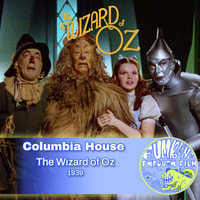
Columbia House: The Wizard of Oz (1939)
The Fumblers are taking shelter during a vicious thunderstorm. While they nervously wait for weather updates from their basement, they watch The Wizard of Oz to take their minds off of the chaos. One of us is actually from Kansas and it might surprise you to find out who.
Transcript
Gather together from the cosmic reaches of the universe. Here in this great screening room with comfortable recliners are the most powerful forces of good ever assembled. Keith.
Speaker B:Yeah, it's, um, it's a mighty miracle show of a thousand delights.
Speaker C:That's what it is.
Speaker A:Terry.
Speaker C:It's wearing this, like, the hooves of its fallen brethren, powdered up and delicious.
Speaker A:Derek. Is Dr. Fu Manchu a medical doctor? That's a good— that's the question we all need to know. And the power twins, Zap and Jordan, with their magical lemur snort dedicated Welcome back to Fumbling Their Way Through Movies, one forgotten gem at a time. This week we watch our oldest movie yet, with 1939's The Wizard of Oz. This is Fumbling Through Film. Silence, whippersnapper! The beneficent Oz has every intention of granting your requests. What's that?
Speaker C:What'd he say? Huh? What'd he say?
Speaker A:But first, you must prove yourselves worthy. By performing a very small task, bring me the broomstick of the Witch of the West. But but but but if we do that, we'll have to kill her to get it. Bring me her broomstick, and I'll grant your requests.
Speaker C:Now go.
Speaker A:But but what if she kills us first? I said go.
Speaker C:Hello, and.
Speaker A:And welcome to another one-of-a-kind, genre-defining, brand new episode of Fumbling Through Film. We are the only show that dares to bring together 3 dudes to talk about movies. These, however, however, dear listener, aren't just any movies.
Speaker C:That's right. We've decreed it and that's enough that we'll ever say about it. Let's just move the conversation on.
Speaker B:Silence!
Speaker A:These are the ones we've missed, overlooked, or feel are simply worth revisiting. Therefore, that really is it, a movie.
Speaker C:Well, I mean—
Speaker A:Silence.
Speaker C:Oh, okay.
Speaker A:My name is Derek and I am a fumbler. Joining me here in the Fumble Dome is the Prime Minister of Fumbling and Film, Keith.
Speaker B:Hey, hey, what's up everybody? KG, fumbler extraordinaire, and, um, Uh, unlike, uh, the popular rumor going around, I'm not a member of the Lollipop Guild.
Speaker C:A lot of people have been contemplating that perhaps he's a member, but official Fumbler stance, no one here would ever be associated with the Lollipop Guild.
Speaker A:No, no, heavens no. Too sweet for my tastes. Uh, is there one that's too sweet for my taste? Is the Secretary of Kansas, Terry.
Speaker C:That's true. I, I am a sweetie, but I'm not part of the Lollipop Guild. I can't stress that enough.
Speaker A:But he would melt If he got wet, because he's just made of sugar.
Speaker C:Oh, that's true. It's true. I'm actually— I'm not a Tin Man, I'm a Sugar Man.
Speaker A:And if you're out in the sun too long, you'd be Caramel Man, I guess. Candyman the rapper, or Candyman the, uh, the villain?
Speaker B:Oh well, I'm gonna guess that Terry doesn't know who Candyman the rapper is, so we'll go with Candyman the, uh, I don't know if I like these allegations either.
Speaker C:I do not have a hook for a hand. I do like honeybees.
Speaker A:Oh, who doesn't?
Speaker C:They're delicious.
Speaker A:The honeybees are delicious. You know what else is delicious?
Speaker C:What?
Speaker A:This podcast.
Speaker B:Oh.
Speaker A:And it's also chock-full of nutrients and vitamins.
Speaker C:Unlike a lollipop.
Speaker A:Unlike a lollipop. It's just empty calories.
Speaker C:Yeah, we're more like a carrot.
Speaker A:Much like a carrot or celery stalk. So We should tell people what is on our, that little nutrition panel on the back of our package. Every week we watch movies, but not just any movie. Nope, nope, nope. Every month, one of us chooses a theme, a genre, a guiding light. This week's a layup. Some sort of yellow brick road in which we follow.
Speaker C:Oh.
Speaker A:And then we choose movies that adhere to that yellow brick road or theme. And then on the 4th week, we truly fumble by letting the wheel give us a movie. But this month is DTF, Down to Fumble, Y2, Year 2, M10. That M stands for month, and it's a me month. And to keep it short and sweet, I have a fond memory of Columbia House, so I found an old Columbia House advert To sound British. And, uh, we're each choosing a movie off that advert so we can get our 3 LaserDiscs for a dollar each. And I started that off with number 0576042, The Day the Earth Stood Still from 1951. And that means this is dub 2, week 2, Keith week. So Keith, what did you choose off that flyer for us?
Speaker B:I went with, um, what can now be, you know, I, I wanted to pick something that I, I didn't think would fit in with— I just didn't think of a place that it could fit in, even though we, we watch any movie. And I also wanted to maybe secure that maybe the oldest thing we've ever watched, and I picked, uh, The Wizard of Oz.
Speaker C:He wants that record. He wants—
Speaker A:he did want that record.
Speaker B:It was, it was kind of, it was kind of after the fact, but You know, it wasn't what originally chose, but once I did, I was like, awesome. Now I got that locked in.
Speaker A:If you're scoring at home, that's number 2941082 on the Columbia House flyer.
Speaker C:A lot of people are, a lot of people are checking that off, crossing off of the Columbia House.
Speaker A:They're scoring at home. They're scratching it off.
Speaker B:Yeah.
Speaker A:It's good. Yeah. 1939, Keith.
Speaker B:Yep.
Speaker A:Now, before we talk about our viewing of The Wizard of Oz from The dreaded 1939. And before we deep dive and go closer to The Wizard of Oz from the dreaded 1939 than any of us could have ever imagined, did anyone have any previous knowledge, history, and/or experience with The Wizard of Oz from that god-awful year in 1939?
Speaker C:I've seen this before a few times, I'd say.
Speaker A:Uh-huh.
Speaker C:It's one of those movies that's just kind of in pop culture forever, I think.
Speaker A:Yes.
Speaker B:Well, since 1939. Yeah, it's been around a long time. It's true.
Speaker C:That's true.
Speaker A:Yeah, I'd seen it, and we'll get into my viewings later. Oh, I have thoughts and a history with this movie.
Speaker C:Oh, really?
Speaker A:Yes. Um, what about you, Keith? Had you seen it before?
Speaker B:I, I, I did. I've seen it a number of times probably over the years. Uh, one time my kids wanted to watch it So I have watched it recently, um, as far as like within the last decade. Yeah, I mean, it's, it's kind of one of those movies that it's really like you can't not know about it.
Speaker A:Well, I think you can not know about it, but it's difficult to not know about it, I think.
Speaker B:Yeah.
Speaker A:Well, Terry, we're gonna take what we know of The Wizard of Oz and throw it out the window because—
Speaker C:Get this stuff out of here.
Speaker A:Kit's gonna give us new information that we could never even imagine.
Speaker C:He's going to give us brains, brains filled with Wizard of Oz info.
Speaker A:And a heart that I can fill with love and be overwhelmed. It will give me the courage to go into that good night, sir.
Speaker C:And a home to go back to, the Fumble Dome.
Speaker A:Especially at night when it gets cold and drafty in this place.
Speaker B:There's no place like Dome. There's no place like Dome.
Speaker A:Oh yes. Uh, damn it.
Speaker B:Why didn't I think about that for my opening line?
Speaker A:You blew it.
Speaker C:Here, edit this in.
Speaker A:No, I'm going to not. I'm going to intentionally edit that out. Editing with malice. Keith is going to take us closer than we could have ever imagined to The Wizard of Oz with another patent-pending Fumbler's Deep Dive.
Speaker B:I'm going to try my best. A lot, a lot, a lot here. 100 and— oh, not 100 years, but 1939. That's when The Wizard of Oz came out.
Speaker A:So not just 100, you were ready to add on more years.
Speaker C:100 and 178 years later.
Speaker B:87 years. It's old.
Speaker C:If you'd said 149 confidently, I would have just went with it.
Speaker B:I probably would have believed you.
Speaker A:I wouldn't have. I would have called bullshit on that fast.
Speaker B:Uh, it is 1 hour and 42 minutes long, rated G. Yes. Young Dorothy Gale and her dog Toto are swept up by a tornado from their Kansas farm to the magical Land of Oz and embark on a quest with 3 new friends to see the Wizard who can return her to her home and fulfill the others' wishes.
Speaker A:Sounds right.
Speaker B:Taglines: The Mighty Miracle Show of a Thousand Delights.
Speaker A:That's a tagline?
Speaker C:That's amazing.
Speaker B:Amazing sights to see: the tornado, munchkin land, horse of a different color, startling balloon, startling balloon ascent, flying monkeys, trees that talk and throw apples.
Speaker C:Wow, that would lure me in.
Speaker A:Yeah, spoiler filled.
Speaker B:I mean, IMDb seems to taglines for them are anything I think that's on a movie poster.
Speaker C:Well, back then they didn't know how to advertise. People were just like they'd go they you know see anything. Everything was new. They're like whoa.
Speaker B:Well, apples. Terry, you're completely wrong there.
Speaker C:Oh.
Speaker B:Um, because I have a couple newspaper ad clips. Uh, one, uh, using the tagline said, songs you will sing and dance to. Another one was, uh, the book that 80 million read, the play that 941 cities saw, the greatest Technicolor Show World miracle since Snow White.
Speaker A:Okay. Wow.
Speaker B:If you enjoy Snow White, you'll go ecstasies over The Wizard of Oz.
Speaker A:Ecstasies?
Speaker C:Ecstasies.
Speaker B:Yeah, that was in the, uh, Saskatoon The Saskatoon Star-Phoenix in Saskatoon, Canada.
Speaker C:Classic Canadian headline.
Speaker B:And finally, uh, 9,200 living actors in the notable star-studded cast, 68 incredibly magnificent sets, augmented orchestra of 130 pieces, chorus of 300 rousing voices, 100 minutes of unforgettable entertainment.
Speaker C:That's a headline?
Speaker B:It's a newspaper ad, 1939. Oh, now There is 1 hour and 42 minutes. Uh, they're only accounting for 100 minutes, so I guess 2 of those, um, they didn't care much for, I guess.
Speaker C:Yeah, it's the credits.
Speaker A:Credits. Yeah, at the beginning.
Speaker B:Uh, this movie had, uh, an estimated budget of $2.8 million.
Speaker A:Okay, believe that.
Speaker B:Overall though, it only made, uh, $35.6 million.
Speaker C:That seems pretty good.
Speaker B:Which is good for 138th all time for G-rated movies.
Speaker C:That's not too bad.
Speaker A:But what's that adjusted for inflation though?
Speaker B:Still not all that huge compared to like a lot of the other ones that we end up, uh, reviewing here. This, uh, they actually didn't list the adjusted for inflation, uh, on this one on, um, the 2 sites I looked at. And, uh, I didn't bother to just do math myself.
Speaker A:So $580 million.
Speaker B:The way that it worked out is that this was kind of considered a a bust at the time.
Speaker C:Mm-hmm.
Speaker B:Um, cuz it didn't do very well at the box office, but then it was, uh, I think it was CBS paid for the rights to it and they paid the most money anybody had ever paid for a movie and they put it on, on Christmas Day. And that was a huge ratings giant. Uh, and so once it went to TV and more, like it suddenly, uh, became like one of the movies seen by more people than any other movie out there. Uh, this movie in 1940 was nominated for Best Picture, Best Art Direction, and Best Effects.
Speaker A:Okay.
Speaker B:Um, it also was nominated and won for Best Original Song for Over the Rainbow and Best Original Score.
Speaker C:Ah, makes sense.
Speaker B:Care to guess what it lost to for Best Picture?
Speaker C:Can I guess?
Speaker A:1939?
Speaker C:Oh man, let me think. Let's see. Um, what famous films from 1939? Is it something that we should know?
Speaker B:You don't, you don't have to. It'll come up in the deep dive later if you want.
Speaker C:But you're not going to say it now.
Speaker A:What do you mean the deep dive?
Speaker B:Well, it's part of another thing later on the deep dive.
Speaker C:Okay. It'll be a grand reveal as I'm pondering. If we can guess it before he says it, we get $500 from Keith.
Speaker B:Gone with the wind. No. Bingo. There you go.
Speaker A:Did I just ruin your deep dive, Keith?
Speaker B:No, no, you're fine. We're good.
Speaker C:You're going to send him $500.
Speaker B:No, look, I asked the question so you couldn't actually ruin it. I actually asked the question this time. Again, this came out in 1939. It's been rereleased a number of times over the years. That's actually where it makes most of its money. Most of the $35.6 million is in the rereleases.
Speaker C:Makes sense.
Speaker B:But in 1964, they put out a cartoon called Return to Oz. After her friends are robbed of their prizes by a revived Wicked Witch, Dorothy is sent back Uh, to set things straight once again.
Speaker C:Somehow the Wicked Witch returned.
Speaker B:Uh, a revived Wicked Witch. So one of—
Speaker A:one of my clones from their planet is my guess.
Speaker C:Yeah, yeah, that makes sense. She has like this like cult army she's been building.
Speaker A:Fit army unseen by anybody.
Speaker B:Yeah, maybe the one that was underneath the house wasn't actually dead and she just crawled away.
Speaker C:I see her legs all curled up.
Speaker B:Or they dug her out from there and they realized they had the technology and they could They could do it.
Speaker C:Rebuild her better.
Speaker B:Bigger, stronger, faster.
Speaker C:We'll have to watch it to find out.
Speaker B:You could, uh, skip past that though and just go to 1985 and you could watch Return to Oz.
Speaker C:Yes.
Speaker B:Dorothy.
Speaker A:Wasn't the last one you just said called Return to Oz too?
Speaker B:Yeah. Yeah. But that was in 1964.
Speaker C:Not to be confused.
Speaker B:Nope.
Speaker C:They're, they're very distinct, right? Mm-hmm.
Speaker B:Yeah. No. Return to Oz. Dorothy saved from a psychiatric experiment. By a mysterious girl is somehow called back to Oz when a vain witch and the gnome king destroy everything that makes the magical land beautiful.
Speaker C:I have seen this.
Speaker A:You have?
Speaker C:Way back in the day as a kid, I rented it and it was a very strange film.
Speaker B:Uh, it stars Fairuza Balk. If you've seen the movie The Craft, she plays Nancy Downs. In fact, when I saw her picture on IMDb, I was like, oh, that's the girl from The Craft. She also in Probably in like the greatest role of her entire life is Vicky Valencourt in Waterboy. Waterboy, yes.
Speaker C:That's the greatest role? Yep.
Speaker B:Okay. You can do it.
Speaker A:She doesn't say that. It's Roger Schneider says that.
Speaker C:What's her iconic line?
Speaker B:Anyway, um, also movie also stars Nicole, but it's a guy. It's Nicole. Williamson, uh, Dr. Worley slash the Gnome King.
Speaker A:Waterboy does?
Speaker B:No, uh, this Return to Oz movie from 1985.
Speaker C:The Gnome King was my favorite character from Waterboy.
Speaker B:Yeah. Nicole Williams plays Dr. Worley slash the Gnome King, but we know him much better as Merlin from Excalibur.
Speaker C:Wow.
Speaker A:Oh boy.
Speaker B:Now in between those 2 movies, 1978, we got The Wiz. When Harlem schoolteacher Dorothy is miraculously whisked away to an urban fantasyland called Oz, she goes in search of the Wiz, a wizard who can help her get back to Manhattan, along with the Scarecrow, the Tin Man, and the Cowardly Lion. Uh, it was written by Joel Schumacher, stars Diana Ross as Dorothy, Michael Jackson Scarecrow, Nipsey Russell as Tin Man, Ted Ross as the Lion, and Richard Pryor as the Wiz.
Speaker C:Yes, Michael Jackson is in a movie and he plays the Scarecrow. Yes. Wow.
Speaker A:Which one of these is the ones that has the weird wheelie monsters?
Speaker C:That's Return to Oz.
Speaker A:That's what I thought. Okay. I've seen that.
Speaker B:Yeah, that would be Return to Oz. Yeah, that's, it's very, it's a very odd looking trailer. Uh, in 2013, they did Oz the Great and Powerful. It's one of the origins of the wizard. Uh, Franco was, uh, James Franco. James Franco.
Speaker A:We all needed that wizard origin story.
Speaker C:Didn't you want to know where the wizard came from?
Speaker A:No, don't care.
Speaker C:No, no.
Speaker B:But also in 1972, there was a cartoon called Journey Back to Oz. Uh, Dorothy returns to Oz, discovers, uh, Witch Mombi's plan to conquer with monster green elephants.
Speaker A:Witch Mombi?
Speaker C:Did you say which zombie or which Mombi?
Speaker B:Witch Mombi.
Speaker C:Okay.
Speaker B:I didn't type, I copied and pasted. Witch Mombi's plan to conquer with monster green elephants. With help from Pumpkinhead and Woodenhead, she tries to stop Mombi's army and warn her friends in Emerald City, uh, about the threat.
Speaker C:She has Pumpkinhead's help.
Speaker A:I think it's a different Pumpkinhead.
Speaker C:The Spirit of Vengeance.
Speaker B:Uh, Margaret Hamilton, who plays the Wicked Witch in the original Wizard of Oz that we're talking about today, uh, she voices, uh, Aunt Em in Journey Back to Oz. Liza Minnelli plays Dorothy.
Speaker A:Liza Minnelli, huh?
Speaker B:Uh, Liza Minnelli is Judy Garland's daughter. Didn't know that.
Speaker A:Did not know that either.
Speaker C:Nope.
Speaker B:Milton Berle as the Cowardly Lion.
Speaker A:Milton Berle.
Speaker B:Mickey Rooney as the Scarecrow. Mel Blanc voices a crow.
Speaker A:That's it?
Speaker B:And Bill Cosby.
Speaker A:The man of a million voices.
Speaker C:They have Mel Blanc. He probably could have voiced every character in the show, but he just voices some random crow.
Speaker B:Is that a— no, is it a raven in The Munsters? Is that what it is? Or is he a crow there too? Because I like the idea of it's the same one from the monsters being in there.
Speaker C:Oh, they could be connected. Maybe it is.
Speaker A:That's terrible to think about.
Speaker C:The monsters first. Well, Pumpkinhead would fit right in then.
Speaker A:It's a different Pumpkinhead. I'm I'm quite yeah. I am having like weird memories of this cartoon. I feel like I've seen it.
Speaker B:Yeah, also see Pumpkinhead. Also with scary scary. options for the movie, Bill Cosby plays the Wizard. And I'm not even going to go into the fact that then we also got, you know, most recently we got Wicked.
Speaker C:Oh.
Speaker B:And Wicked for Good. And there's also Muppets Wizard of Oz that has Brandy in it. All types of good stuff coming off of this original movie. Ultimately, in order to bring this great thing and all the Technicolor and all to life, it took 14 writers and 5 directors to help get it all on the screen. Not gonna talk about all of them, but, uh, we'll, we'll talk about a few key ones. Directing this was Victor Fleming. He was born in 1889, died at the age of 59 in 1949. Some of the things he, uh, is known for, in 1934, he directed Treasure Island.
Speaker C:Okay.
Speaker B:Uh, he's uncredited as a director for A Star Is Born, uh, the very original one, not even the Barbra Streisand version. In 1937, he, uh, directed a movie called Captain Courageous. A spoiled brat who falls overboard from a steamship in the 1920s gets picked up by a New England fishing boat where he's made to earn his keep by joining the crew in their work. In 1941, he directed Dr. Jekyll and Mr. Hyde.
Speaker C:Oh, cool.
Speaker B:Uh, in 1939 though, same year as he's directing The Wizard of Oz, he directed and won the Oscar for Best Director for Gone with the Wind.
Speaker A:Hmm. Dang.
Speaker B:I know we've talked here about people having, you know, like A Most Powerful Decade. Yes, in the same year you did Wizard of Oz and Gone with the Wind, and they both got nominated, but he was only nominated for director for the one. Oh, and I think that's because of the fact that they had all these different directors involved and uncredited people. Uh, for those who don't know about Gone with the Wind, a sheltered and manipulative Southern belle and a roguish profiteer face off in a turbulent romance as the society around them crumbles with the end of slavery. And is rebuilt during the Civil War and Reconstruction periods. Stars Clark Gable, stars Vivien Leigh. I've seen this once; it was during seventh grade social studies.
Speaker C:I've never seen it.
Speaker A:It is long.
Speaker C:Mm-hmm.
Speaker B:It is long. Yeah, I think it took us a couple days to watch. I believe that teacher really didn't want to teach too much at that time. And then also, just to throw in here, there's an uncredited director for the Kansas scenes, and that's a guy named King Vidor.
Speaker C:King Vidor.
Speaker B:He's known for, uh, doing things such as, uh, The Crowd in 1920. 1930, he did Hallelujah. Uh, 1932, The Champ. 1939, The Citadel. And in 1957, uh, War and Peace. And those— all 5 of those were nominees for Best Picture, or for Best Director. He did not win in any of those, so.
Speaker C:Oh, that's too bad.
Speaker A:Isn't that the guy— he was painted in, and he's the painting in Ghostbusters 2?
Speaker C:What?
Speaker B:No.
Speaker C:King R— Rule, or what is his name?
Speaker A:What was his name?
Speaker B:Viggo.
Speaker A:Yeah, Viggo.
Speaker B:Viggo Mortensen, something like that?
Speaker A:No, Viggo Mortensen is, uh, is Aragorn.
Speaker B:Uh, Viggo the Impaler?
Speaker A:Viggo the— yeah, who— no, what's the name of this director?
Speaker B:Oh, this is King, King Vidor.
Speaker C:Vidor.
Speaker B:Yeah, it's not, yeah, it's not the same guy as, as King Jon Snow.
Speaker A:Yeah.
Speaker C:Yeah, I wish it was. That would be—
Speaker A:I wish it was too.
Speaker C:He comes back for revenge for he's never got a Best Director.
Speaker A:He enslaves all of humanity. Yeah, that makes sense.
Speaker C:To wreck the entire human race.
Speaker A:Mm-hmm.
Speaker B:I mentioned earlier, uh, it took 14, uh, writers getting credit, uh, for this story. Is originally from, uh, L. Frank Baum. Uh, I'm— again, I'm not gonna— I'm not gonna go through all of them. I'm gonna list off a few here. Noel Langley, Noel Langley, best known for writing a screenplay in 1951 for The Christmas Carol.
Speaker C:Oh, okay.
Speaker B:10 years later though, probably the masterpiece of their career, they wrote Snow White and the Three Stooges.
Speaker C:No.
Speaker B:An ice-skating Snow White finds refuge from the wicked queen and the Three Stooges, or with the Three Stooges.
Speaker C:Oh, I thought she found refuge from them as well.
Speaker B:Sorry. Sorry, you're you're grown of like uh they kind of made me think that people need take refuge from the Three Stooges, which is not true.
Speaker C:I think so. Back then, at that point, they were everywhere.
Speaker B:Yeah. And that's uh that's Larry, Moe, and Curly. There's no Shemp in that one.
Speaker A:Thank goodness.
Speaker C:Shemp? Is there four Stooges at some point?
Speaker B:Curly's cousin.
Speaker A:Yeah.
Speaker B:Florence Ryerson, no relation to Ned, helped write in 1930.
Speaker A:Helped write Who's Ned Ryerson?
Speaker C:I don't know who that is.
Speaker B:Uh, it's from uh. I think it's from Scrooged.
Speaker A:Oh my God.
Speaker C:This is not even an actor. This is a character's name.
Speaker A:Yes.
Speaker C:Oh my God.
Speaker B:And I'm pretty sure on YouTube you can find a clip with Ned Flanders.
Speaker A:I'm sure you can.
Speaker B:Have you guys ever seen Scrooged?
Speaker A:No.
Speaker C:No.
Speaker B:Oh man, that movie's great.
Speaker C:Maybe it is. It sounds very memorable. You remember this guy's name.
Speaker B:On YouTube, there's a 4-minute and 25-second video of Groundhog Day, all the Ned scenes.
Speaker A:I thought you said it was Scrooged.
Speaker C:Is he a recurring character?
Speaker B:No, it's in Groundhog Day. My bad. Not Scrooged.
Speaker A:Oh, Jesus Christ.
Speaker C:Oh my gosh.
Speaker A:I haven't seen that either.
Speaker B:You've never seen Groundhog Day either?
Speaker A:No.
Speaker C:I have seen that one.
Speaker B:I didn't like it very much. You should see that.
Speaker A:Maybe.
Speaker B:It's a Stephen—
Speaker A:I've gone this far without seeing it.
Speaker B:I don't— It's a good movie. Stephen Tobolowsky plays Ned Ryerson. It's a good movie. Anyway, Florence Ryerson, no relation, uh, in 1930 wrote The Return of Dr. Fu Manchu.
Speaker A:No relation.
Speaker B:The villainous master criminal— no, the villainous master criminal Dr. Fu Manchu sets out to destroy the people he holds responsible for the death of his family.
Speaker A:The Fu Manchus or the Manchus? Is he— is his first name Fu and his last name Manchu?
Speaker B:Dr. Fu Manchu. It's F.U. and then Manchu.
Speaker A:Uh-huh. It feels like a big F.U.
Speaker B:Yeah. The other main writer for this is Edgar Allan Woolf. Oh, it's W-O-O-L-F. Woolf. And, uh, I was looking through all the stuff on, on him, and the main thing I saw was in 1932 he, uh, is responsible for writing The Mask of Fu Manchu. Uh, Englishman. Englishman. Race to find the tomb of Genghis Khan before the sinister Fu Manchu does. Dr. Fu Manchu in this version is played by Boris Karloff. Oh, he's not in the other movie.
Speaker A:Is he a doctor in this one, or is this a pre— like pre-med Fu Manchu?
Speaker B:Uh, no, he's still Dr. Fu Manchu. Okay, Boris Karloff is Dr. Fu Manchu.
Speaker A:Is Dr. Fu Manchu a medical doctor? That's a good— that's the question we all need to know.
Speaker C:I bet he is. You can't just call yourself doctor.
Speaker A:Well, I mean, there's different kinds of doctors, right?
Speaker B:You got an honorary doctorate.
Speaker A:I mean, you get a doctorate, you can get to be a doctor of English studies or something like that, right?
Speaker B:I mean, if you're a villainous master criminal, I think you can probably toss doctor on no matter what.
Speaker C:Well, I, that, I don't wanna, you know, it's like stolen valor, but they're criminals. Yeah.
Speaker A:I don't wanna discredit evil villains that put the work in.
Speaker B:Yeah, yeah, like, I don't know, I earned the title.
Speaker C:Dr. Octavius did get his doctorate.
Speaker B:He did, yeah.
Speaker A:What about Doctor Doom?
Speaker C:He might have. I don't know if he graduated because his face blew up in school.
Speaker A:Oh, that's true.
Speaker C:Did he graduate after that? In his—
Speaker A:I wonder if there's like, like one of those like caveats where if you get blown up in school, they could give you the doctorate degree.
Speaker C:Well, he runs his own country. Surely like the college there was like, yeah, here you go. Who's that guy, the Jackal? You know, Spider-Man villain. He's got a doctor.
Speaker A:Is he a doctor too?
Speaker B:Oh, the Lizard is a doctor.
Speaker C:Dr. Curt Connors. That's true. Uh, Dr. Morbius.
Speaker A:There's so many doctors on the Marvel side.
Speaker B:So, uh, one of the, one of the issues in doing these deep dives and stuff here is like, on a movie this far back, is like, I don't recognize any of the names of movies that these people that are in this have also been in.
Speaker C:Mm-hmm.
Speaker B:Um, so you like Judy Garland, she plays Esther Smith in Meet Me in St. Louis. Uh, in 1950, she played Jane Falbury in Summer Stock.
Speaker A:Mm, classic.
Speaker B:And in 1954, she played Vicki Lester in A Star Is Born.
Speaker C:Oh, wow.
Speaker B:Which has been redone, uh, Barbra Streisand and the one that had Lady Gaga in it as well.
Speaker A:Is this different than the one you said before?
Speaker B:No, that's the same one.
Speaker A:Okay.
Speaker B:Yeah, uh, because the same guy directed that one.
Speaker A:Oh, gotcha.
Speaker B:Well, he was uncredited. Victor Fleming was uncredited for that one. But yeah, a lot of these people seem to kind of— they're in a lot of the same things together.
Speaker A:Don't you hate when directors do that? They put all the same people in movies.
Speaker B:Uh, the Wizard is played by Frank Morgan.
Speaker C:No relation to Morgan Freeman.
Speaker B:No. Uh, he's got an Oscar-nominated role of the pirate in Tortilla Flat. Oh, he plays the— the movie is called Tortilla Flat. He plays the pirate. Not the pirate in Tortilla Flat. I don't want people to think that's what it is.
Speaker A:Yeah, don't want to confuse anybody.
Speaker B:He plays, uh, Hugo Matusik in The Shop Around the Corner.
Speaker A:Classic.
Speaker B:Yep. Oh, as the pirate, that was for a Best Supporting nod. Uh, he later on was Oscar nominated for Best Actor in The Affair of Salini, where he played the Duke of Florence.
Speaker C:Oh, cool.
Speaker B:Margaret Hamilton, she plays the Wicked Witch of the West.
Speaker C:Oh, yes.
Speaker B:Uh, she plays Miss Harper in The Adventures of Tom Sawyer. She plays Miss Jackson, uh, in The Invisible Woman.
Speaker C:Oh, yes, of course, of course.
Speaker B:Uh, she is in 3 episodes of The Addams Family.
Speaker A:Classic.
Speaker B:Yep, yep. And, uh, she's in 1 episode of The Gale Storm Show. Oh, Susanna.
Speaker C:Oh, cool. I love that show.
Speaker B:The last person I want to talk about in this— I looked at the guy that, at, you know, the guys who played the Scarecrow and the Lion and the Tin Man. I just, I didn't recognize anything that they were in. But, uh, I did notice though that, uh, Terry the Dog is in this.
Speaker C:That's what they call me sometimes.
Speaker B:Well, yep.
Speaker A:I call you Terrier sometimes as well.
Speaker C:Oh, I like that too. Yeah.
Speaker A:Yeah.
Speaker B:Yeah. Well, uh, Terry the dog, she is listed in the end credits as being played, uh, as Toto.
Speaker C:Biggest role, probably.
Speaker B:Yes, her biggest role. Yes. Uh, as many as 100 dogs tested for the role of Toto.
Speaker C:Oh, wow.
Speaker A:Oh, boy.
Speaker B:Yeah. Now it says after The Wizard of Oz, Terry's name was, uh, permanently changed to Toto. Oh, but as I'm looking at things here, In 1938, Terry played Toto in Barefoot Boy.
Speaker C:Terry played Toto again?
Speaker B:In 1938. So this movie came out in 1939. So in 1938, Terry played Toto in, uh, The Barefoot Boy. Then in 1939, played Toto in The Wizard of Oz. 1940, played Toto in Son of the Navy.
Speaker C:Okay, they're just calling him—
Speaker B:Also, also in 1940, played Toto the dog in The Old Swimming Hole.
Speaker C:That's a movie title.
Speaker B:Yep. And in 1945, played Toto in Easy to Look At.
Speaker C:Okay. They're just milking it for all it's worth.
Speaker B:Now, uh, another little, uh, thing to know about, uh, Toto Terry. According to lead munchkin Jerry Marin, the little people on set were paid $50 per week for the 6-day work week, while Toto received $125 per week.
Speaker C:Toto got $125?
Speaker B:Per week. And this movie took 26 weeks to film.
Speaker C:Wow.
Speaker A:So the dog got like 3 grand.
Speaker B:More than any of the little people got.
Speaker A:I don't think all the little people there were for all 26 weeks, if I were to guess. And there's a lot more of them than there was of Toto.
Speaker B:We'll get into that as well as we go on here.
Speaker A:Jesus.
Speaker B:Not in the deep dive, just in our talk, in our overall talk of the movie. Uh, you guys ready for some, uh, trivia here? Some fun facts?
Speaker A:Oh yes. Felt like— all right, yes.
Speaker B:I'll knock them out quick here. Uh, only 2 shots, uh, the clouds in the opening and the end credits in the movie, were filmed outside. The rest was filmed on 65 sets constructed over 6 soundstages in Culver City.
Speaker C:Wow, that's cool.
Speaker B:Many shots were trimmed down or edited out of the film 'Cause they were too intense for families and children. In particular, one deleted shot shows the tornado completely enveloping the farmhouse.
Speaker A:Enveloping?
Speaker B:Enveloping.
Speaker C:Yes.
Speaker B:Thank you. Uh, also later in the film—
Speaker A:I'm leaving that in for sure. Enveloping.
Speaker B:Yeah. Thank you.
Speaker C:With benediction. See that we're a lot like this, uh, movie. We get pretty intense, but the opposite. We don't, we leave it in if it's too intense.
Speaker A:Yeah.
Speaker B:Later in the film, a lot of the Wicked Witch of the West scenes were either trimmed or deleted entirely, as Margaret Hamilton's performance was thought to be too frightening for audiences.
Speaker C:She was really evil in this.
Speaker A:Yes.
Speaker B:Mm-hmm. Uh, to compensate for the extreme makeup demands on this film, MGM recruited extra help from the studio mailroom and courier service.
Speaker C:They had them do makeup?
Speaker B:Yeah. All the Oz extras required prosthetic devices. Such as false ears.
Speaker A:So they got the mailman to like put makeup on people in the mailroom and the courier service.
Speaker B:Yeah. Since the application of prosthetics requires extensive training, the recruited makeup artists were each instructed in one area of application, and then they just kind of formed an assembly line.
Speaker C:Oh, all right. Interesting.
Speaker B:You know, person one, put your nose on. Next person, put, you know, whatever the next part is.
Speaker C:Yeah.
Speaker B:And they, and they just kind of, you know, maneuvered on down. On down the line. The horse of a different color in Emerald City.
Speaker C:Oh my God.
Speaker B:Most people thought it was achieved by dyeing 2 different horses' coats with Jell-O, and, but the horses kept licking it off. That is actually not correct. That's a myth. They used vegetable dye instead.
Speaker A:Most people thought that? I had no idea.
Speaker C:I thought that there was Jell-O.
Speaker B:That was, that was a rumor.
Speaker A:Yeah.
Speaker B:I'm sure that was Jell-O marketing is the one who thought that.
Speaker C:Oh yeah. It was so delicious that the horses would lick it off. Before it could get filmed.
Speaker B:Also, that's just kind of weird because isn't like gelatin made from like horses and stuff like that?
Speaker C:Yeah, that's kind of uncomfortable.
Speaker A:Yeah.
Speaker C:It's wearing this, like the hooves of its fallen brethren powdered up and crushed.
Speaker B:Actually though, vegetable dye was used instead.
Speaker A:No, thank goodness.
Speaker B:Now, uh, there actually exists 2 Wizard of Oz movies. The first though was from 1925, it was a silent film. Which puzzlingly had no magic.
Speaker C:You know what, I've seen this.
Speaker A:When you say it had no magic, was it just like boring or both?
Speaker B:Well, yeah, and the Tin Man was played by Oliver Hardy from Laurel and Hardy fame. So I think when you only have one of those 2 guys, there's no magic there either.
Speaker C:That's not very good. That's kind of weird.
Speaker B:Yeah, it's—
Speaker C:yeah, the plot's very different too. It's kind of crazy. And it's been like, I'm not kidding, like Probably half of the film, just like goofing around on the farm.
Speaker B:The Cowardly Lion costume was made from real lion pelts and weighed about 60 pounds.
Speaker C:Oh wow.
Speaker B:Margaret Hamilton's green face paint was so toxic that she and several other actors couldn't eat once it was, uh, applied and had to subsist on a liquid diet via straw during the day. Plus, her face stayed green for weeks after shooting because of the copper-based ingredients.
Speaker C:Yikes.
Speaker B:The Scarecrow, uh, had face prosthetics, uh, that Ray Bolger wore. Left a pattern of lines on his face that took more than a year to vanish.
Speaker C:Wow, these people suffered to make this film.
Speaker A:They did.
Speaker C:At least the Tin Man got out easy.
Speaker B:Well, no. So Ray, Ray Bolger was originally supposed to play the Tin Man, but he kind of liked the Scarecrow character more, so they let him play that. The guy that was You know, so him and the person who was supposed to play Tin Man, uh, swapped. Then like just a couple days into filming, that original guy who was playing the Tin Man, uh, started having like, um, allergic breakouts to the, the stuff that was, you know, the paint and stuff to make him the Tin Man, uh, and had to drop out.
Speaker C:Back in the day, they made a lot of weird and deadly costumes.
Speaker A:It was all lead-based.
Speaker B:Yeah.
Speaker A:Yeah.
Speaker C:Radioactive lead. Yeah, we got you radioactive green as we found this cool uranium. It'll make you really pop.
Speaker B:Yeah, yeah, it's not Jell-O. Uh, the ruby slippers were originally silver. In order to make the, you know, the Technicolor really pop, they, they switched it up to the ruby ones. Uh, the original ones that she— that the main ones that Judy Garland wore in the film, uh, were anonymously donated to the museum. In 1979.
Speaker A:By Julie G.
Speaker C:Yeah, could be anybody.
Speaker B:She wore several different pairs of these shoes though during filming. So another was on display in Grand Rapids, Minnesota at a museum honoring the actress. But in 2005, a thief broke in, smashed the plexiglass case, stole the famous slippers. And after a 13-year manhunt, officers finally received recovered the stolen shoes during an undercover operation in Minneapolis. However, there have been no arrests made. Law enforcement agency is still seeking information about the theft.
Speaker C:They never figured out who did it, but they found the shoes.
Speaker B:Yep.
Speaker A:Interesting.
Speaker B:And the last thing I have here is Over the Rainbow was ranked number 1 by the American Film Institute in 2004 for the 100 Greatest Songs in America Films list. I went to—
Speaker C:they have a list of that.
Speaker B:I went to their site. It is still number 1. Number 2 is Time Goes By from Casablanca.
Speaker A:Number 3 is Lose Yourself, or what is that? Eminem?
Speaker B:That is on the list.
Speaker C:It's not Eminem.
Speaker B:Lose Yourself and All That Jazz from 2002 are the 2 most recent ones.
Speaker C:Has like a shark fin.
Speaker B:Singing in the Rain. It's no wrong song. Singing in the Rain from Singing in the Rain is number 3. Moon River from Breakfast at Tiffany's is number 4. And White Christmas from the movie Holiday Inn is number 5.
Speaker A:Goddamn.
Speaker C:That was deep and very interesting. I learned a lot.
Speaker A:Ah, damn. I might have to— I don't know if I'm gonna have room for any other information inside my head now.
Speaker C:I'm gonna need a new brain. Yep.
Speaker A:I cleared out room for all that and now it's packed again. It's like clearing out space on my phone. It's like my phone's like full. It's like, Christ, I gotta delete pictures and stuff just so I can install an update.
Speaker B:I mean, yeah, look, I mean, this movie's super old. It's been around a long time. There's a lot of information about it out there.
Speaker C:Yeah, it's a historical marvel.
Speaker A:It is a historical marvel.
Speaker B:Yeah, it's, um, it's the, it's the Mighty Miracle Show of a Thousand Delights. That's what it is.
Speaker A:I've said that often about Wizard of Oz and about our show as well.
Speaker C:Podcasting. Yeah, exactly.
Speaker A:We're like the Wizard of Oz of podcasting.
Speaker C:We are. We record in Technicolor.
Speaker B:And don't, don't pull back the curtain.
Speaker A:I am very surprised, Keith, that you did not mention the famous suicidal munchkin hoax.
Speaker B:Um, yes. Yeah, because it's— well, because it's been disproven.
Speaker C:It's too dark.
Speaker A:Too dark for the show you're in.
Speaker C:But I have heard about this.
Speaker B:Plus it's been thoroughly disproven, so it's not like an urban legend that still floats around there. They've already taken care of it.
Speaker C:It's been taken care of. That munchkin's never gonna say another word again.
Speaker A:Yeah. Anyway, they, they said it was a, a crane, like the bird.
Speaker B:Yeah.
Speaker A:That was brought in from the zoo. I don't buy it.
Speaker C:You know what though? I was watching this and there was a moment where I was like, is there somebody moving around in the background of the frame? And it was like while they're out in the woods meeting the Tin Man. And, uh, I saw something like rummaging around while they were like watching the Tin Man like loosen up or whatever. So I like rewound it and it was a crane, one of those big birds walking around.
Speaker A:Oh, well, never mind. I guess there's nobody committing suicide on the set of Wizard of Oz.
Speaker C:That's a bummer. Dang it.
Speaker B:Yeah, that's why I wasn't part of the deep dive. Oh, that's, that's bone— that's bonus dive material, everybody.
Speaker C:Yeah, that's the, like, uh, what our side podcast, the, like, conspira, uh, dive.
Speaker A:Conspira dive bonus dive.
Speaker C:That's for our Patreon bonus dive.
Speaker A:Yes. All right, well, what we need to do now, boys, is we need to rev up our engines and we need to talk about The Wizard of Oz from 1939 and our viewing of it.
Speaker C:Uh, yep, I think we probably should talk about what we've seen and how we saw it.
Speaker A:Yes.
Speaker C:I saw it on DVD.
Speaker A:Me too.
Speaker B:I bought the DVD. It's streaming.
Speaker A:Oh, but you have the Blu-ray of it.
Speaker B:I didn't have access to the Blu-ray player.
Speaker C:Oh, well, shame.
Speaker A:That's That's unfortunate. I have a, I have a long, sordid history with this movie.
Speaker B:Do tell.
Speaker A:I, I never liked it. When I was a kid, I watched it every year and it used to scare the absolute shit out of me.
Speaker B:Oh, it's not one that your cousins would make you watch?
Speaker A:No, no, this is what it was like every year it came on CBS. It was like, well, we gotta gather around the TV to watch The Wizard of Oz. And every year it scared the crap out of me. Hated it as a kid. The witch is scary. The, the, the, the flying monkeys are scary.
Speaker C:When they rip the scarecrows, like, stuff. Yeah. Yuck.
Speaker A:The Oz head is scary.
Speaker B:Looks like the, um, looks a bit like, uh, the, the Leader from The Incredible Hulk.
Speaker C:I guess. Yeah, it does.
Speaker B:Yeah, it's not, not as, uh, I think Most times his head's like a little bit like taller, I guess. This is a little bit wider, but also that's, that's what I thought of when I saw, uh, that like hologram head there.
Speaker A:I never liked it when I was a kid, and because I didn't like it, I, I hadn't seen it since I was probably 8 or 9. Okay, right. Just didn't care, didn't want to watch it. I knew everything about it. Right? Because it's The Wizard of Oz. How do you not know it? And watching it today, first time I've probably seen it in 40 years, is my guess, maybe 35. I found it to be a very aggressive movie. A lot of screaming at people, a lot of really mean-spirited people. And just like, I don't know.
Speaker C:They're celebrating like a dead person as soon as she gets there.
Speaker B:Yes. I told my wife that. I was like, man, this munchkin stuff is like, is really, really weird. And she's like, what do you mean? And like, she's like, and she starts singing the, the, the song and stuff like that. It's like, yeah, but you're missing like the verse where they talk about we need to know if she's really super, super dead. And then the mortician comes up and says, yes, she's really, really super dead.
Speaker C:They have a whole 5-minute song about how happy they are someone died, which she was evil. There is— I'm led to believe that she's evil. You know, if you watch Wicked, I guess maybe there's some debate about that. I don't know, I've not seen those. But, you know, I, I thought that was odd too. There's a lot of like kind of darkness underneath the surface, I feel like, where it's like, sure, the wizard sends him off to go murder the other witch, basically.
Speaker A:Yeah, pretty much.
Speaker B:And that, I think, is that like part of the, the Wicked like movies is Dorothy's— the house is like dropped on that witch on purpose also.
Speaker C:Oh, is it all planned?
Speaker B:Like she has— yeah, like I think the—
Speaker C:that Dorothy's being—
Speaker B:no, no, they imply that the wizard made the tornado happen and drop, you know, to kill off the— I think maybe they're trying to kill, uh, the, the East Witch, the Wicked Witch of the West, and instead kill her sister.
Speaker C:I see.
Speaker B:Yeah.
Speaker C:It's the easiest way to do it is just to drop a giant house on her.
Speaker B:Yeah, but I think it's all set up like that just really kind of makes it even like creepier. But yeah, then like that's kind of why I wanted to play that— the clip that we opened with was like everyone remembers all the fun songs and stuff like that, like that last 30 minutes is, hey, we're sending you guys to go kill this other lady.
Speaker C:Yeah, why don't they just shoot the witch with their guns? They got guns.
Speaker A:Mm-hmm.
Speaker C:I thought that was odd. Scarecrow shows up with a gun at some point too. He's a pistol.
Speaker B:Oh, once, once they, uh, once they steal him from the—
Speaker C:No, but before that, when they're off to go kill, they have the pistol, I'm pretty sure. Am I crazy?
Speaker A:I don't remember, to be honest.
Speaker C:Okay, I just thought that was weird because everybody else had like kind of fantasy weapons, and then Scarecrow comes in strapped. Scarecrow's got a pistol. He's got dual pistols.
Speaker B:He's got a shotgun.
Speaker A:Yeah, Scarecrow goes diving and shooting them both Tomb Raider style.
Speaker B:Yeah, I mean, I mean, if any one of those was going to do it, it would be him, because I mean, the witch tries to set him on fire multiple times, the, the, the monkeys tearing him apart and stuff like that. Yeah, to start the movie, he's hung up as a normal scarecrow and can't get down, so somebody's obviously put him there. So I mean, this guy probably has a lot of, a lot of—
Speaker C:yeah, yeah. Because, okay, so yeah, Tin Man had the axe, of course, and then I think Lion had a big old hammer, and then Scarecrow had a pistol. Yeah, I just thought that was interesting. He never shoots it, as far as I'm aware. That would have been kind of awesome.
Speaker A:Not on screen, at least.
Speaker C:Oh yeah, off screen he does.
Speaker A:It wouldn't have got the approved rating back then if he shot it.
Speaker C:They cut that out. It was a little too intense, him blasting the flying monkeys out of the sky.
Speaker A:Yeah, just picking them up.
Speaker B:Yeah, that would be really cool.
Speaker A:I picture like a Dirty Harry type, like, yeah, it's got like a .357 Magnum and they're just— those fucking monkeys are just like disintegrating in the sky.
Speaker C:Turns to the witch, you feeling lucky? I don't know how many rounds I got left, I haven't been counting. How do you feel?
Speaker B:You feel lucky?
Speaker C:Clint Eastwood should have played the Scarecrow.
Speaker A:Clint Eastwood should have played every role in this movie, even Dorothy.
Speaker B:I mean, he's probably— he was probably like 15 at the time this came out anyway, so he could have.
Speaker A:You think Clint Eastwood was 15 in 1939?
Speaker B:The dude's like— oh, he's like 90-some years old right now.
Speaker A:Well, how old did we say this movie was?
Speaker C:140.
Speaker B:I messed that up.
Speaker C:I think it was like 80-something.
Speaker B:Uh, Clint— oh, Clint Eastwood would have been 9 years old in—
Speaker A:well, perfect, 1939.
Speaker B:Yeah, he would have just turned 9.
Speaker C:Yeah, I do agree though. I think this movie is pretty aggressive. Um, it's yeah, like the it's just kind of strange. Like in like it I think I don't think it necessarily I don't think it's in a bad way. It's just weird. It's just a weird movie sometimes.
Speaker B:The the lollipop guild munchkins especially are like like really creepy. Like the one's hair is like done up to look like horns.
Speaker C:Yes, he looks like the devil.
Speaker B:And they're all trying. They're all trying when they're singing. They like they got their like. I don't know, it's like that weird, like, smile to the side.
Speaker A:Like, they're singing on the side of their face like Popeye.
Speaker C:Yeah, yeah, like a '30s gangster.
Speaker B:Again, like, I really did not remember all, like, the follow-up of, like, oh yeah, she's definitely dead, you know, type stuff song into it. Or the fact that, like, they bring, like, that whole, like, I don't know, it's like the munchkin army and, like, the horse and carriage for her just to kind of, like, Go down the block, like halfway down the block to get to the mayor.
Speaker C:Yeah, it's a whole like production. It feels like a very, uh, planned— like you said, maybe they were waiting for this to happen. Dorothy's the fall girl and they're gonna like, they're like, oh yeah, we knew this was gonna happen. I don't know. You know, when I was a kid, I remember being very scared of what we were talking about earlier when the house lands on the witch and then her feet curl.
Speaker A:I hated that as a child. I still hate— I hated it today too.
Speaker C:It just makes me cringe. It's disturbing. That image is just disturbing.
Speaker A:The legs roll up and then just slide underneath the house.
Speaker C:Oh God. Oh, I just like— that gives me the willies. I don't know why. Something about that. It's like a primal, like something in my brain.
Speaker A:Yes. It like itches my, my brains in a way that I just don't like.
Speaker C:Like a caveman brain, like remembering some sort of deep primordial fear.
Speaker A:Yes. It's— yeah, it's some sort of like genetic memory that The witches that used to roam the land. Yes.
Speaker B:And I mean, it's very clear throughout this whole thing that the Good Witch is like also trying to aid Dorothy in this, uh, assassination type thing. 'Cause, you know, she shows up immediately and she's the one who gives her the ruby slippers. She then what makes it snow so that the, the poppies, uh, don't don't get her high and make her fall asleep again. And then she's there at the end when, you know, after the wizard, you know, starts floating away, like she's there and it's like, oh, you could have done this.
Speaker A:You could have just done this a long time ago, but I wanted to make sure you killed that witch first.
Speaker B:Yeah. I need to make sure that you took care of that for us. And then, uh, you know, so she seems to be kind of like in on it. So yeah, it's like, it's a lot of evil going on and, you know, especially then when you start looking at evil.
Speaker C:Yeah.
Speaker B:Yeah.
Speaker C:Machinations.
Speaker B:But then like when you look at like the other stuff that's made out of this, so like, you know, like that's the whole thing for like Wicked is that the Wicked Witch of the West wasn't actually evil. They, they made her into being this evil person.
Speaker C:She was pretty evil in this film.
Speaker B:Oh, she is in this 100%. But like that's the whole, the whole premise of the whole other, the whole musical and well the book that was written around it first of all is just to say that like no, she wasn't And she didn't start out that way. Yeah, they turned her this way.
Speaker C:They, they— society was against her, so she became what they wanted.
Speaker B:Yeah, they needed a villain, and that's who—
Speaker C:interesting—
Speaker B:who they got. And so they, you know, they kind of, you know, stick with that the whole time.
Speaker C:Wow.
Speaker B:Actually, I like Wicked. The second one I don't really care much for. I actually don't mind the first one of those two. As far as this goes though, like I like the last like 30-some minutes of this movie when they stop singing and, and, you know, like there's a song for the intro to every freaking character. Like, mm-hmm. And they're long too. Yeah. And, and, you know, it's, they're explaining a whole lot of stuff and yeah, it's like a nice— well, yeah. Once we got to the part, like right around where that clip is at, like, I don't think there's any singing and dancing after that clip. Wizard introduces, you know, is there, and he yells at all of them and gives them their assignment, and then they have to take off. And from there it kind of becomes like this like quick little like 30-minute action film. That's when the monkeys finally fly in. Also, I really didn't realize that for an hour and 42-minute movie like that, we weren't getting to that part until like the last 30 minutes. Like I kind of thought, because I hadn't seen this in quite a while still, is like I was kind of thinking like some of these things happened throughout the movie and not just all like crammed into the very end of it. But like, they just— like, you get the monkeys come through and like tear them apart and stuff, and then they have to sneak in. They dress up like the—
Speaker A:Yes.
Speaker B:Some of her royal guard, and then they get up there, and then the witch kind of knew what was going on the whole time. And then, you know, they melt her and everything, go back, and we get the classic thing of the wizard being, you know, just the dude behind the thing. And then he's like, okay, I'll fly you home back to Omaha. And then Omaha. That's what his, uh, that's what his balloon says. Oh, this is like the State Fair of Omaha on it, uh, and everything. But like the— like, again, like once they stop singing as they go along, like I was like, man, okay, this last part is actually really entertaining to me.
Speaker C:Yeah, I like the last chunk of it too. That's a lot of iconic stuff, I think. Um, I did think it— yeah, like the witch seems like she knows what's going on, but then she doesn't realize there's a giant bucket of water there. Yeah, why would you even risk it as a witch?
Speaker B:Yeah, why?
Speaker C:She's like the aliens from Signs.
Speaker A:Uh-huh.
Speaker C:I know. Why is that her weakness? That's so— they don't set that up at all.
Speaker A:Nope.
Speaker C:I mean, it just kind of comes out of nowhere. Um, it does. I mean, I know what happens because, you know, it's a cultural icon. Of course I know it melts her, but it's like audiences at the time, was anybody complaining? Like That doesn't make any sense. Why would that happen?
Speaker B:Was that like a normal thing, like with witches?
Speaker C:It's like, it could be witch lore that I don't know about.
Speaker A:That they melt?
Speaker C:Well, they do sink if you throw them in the river. They sink. So maybe that's part of it. Wait, hold on. I think if you sink, you're not a witch. If you swim, you're a witch. Isn't that how that works?
Speaker A:If you float, you're a witch. I think so.
Speaker C:I think if you drown—
Speaker A:Ducks are witches or something like that.
Speaker C:I can't remember. Yes, yes. Ducks are very witch-like, so it makes perfect sense. Um, and witches are made of wood. Which is also floating. So yeah, anyways, uh, I thought that was kind of weird. I guess why not? I don't know. I don't know how else they would kill her in a more satisfying way, but maybe Scarecrow's got that—
Speaker A:Scarecrow's got that get, man.
Speaker B:Or maybe that, uh, the Tin Man's got that axe and just bans her.
Speaker A:Yeah, I like the idea of the Scarecrow coming up right behind her, like whispers something into her ear and then like shoots her in the back of the head.
Speaker C:You never exactly hear what she— what he says.
Speaker B:Let's see your brains.
Speaker A:And before you die, I want you to know it was me.
Speaker C:She has a flashback of her like child.
Speaker A:Yep.
Speaker C:Scarecrow's pushing her in front of like a truck or something, sent her down this path. I do like this. There's a— when the— they are infiltrating the castle, the army's singing that song, the oh wee oh.
Speaker A:We hope.
Speaker C:Oh, sampled the Metallica song, which is pretty awesome. So that's nice.
Speaker B:I recognize it from something else too, and I don't— I don't— I couldn't figure out where. Not a Metallica thing, and I didn't remember from this one either. Yeah, I mean, I mean, we watched a lot of, uh, you know, I think recently we watched a decent amount of movies from a little bit further back.
Speaker A:Not 1939 though, man. This son of a bitch is old. Yeah, and our oldest yet, and it's gonna be hard to beat it too as far as old goes.
Speaker C:Yep.
Speaker B:I mean, if you feel the need to, to chase after that, I mean, you know.
Speaker A:No, never felt the need to do it, but I do. Yeah, kind of, kind of do now too.
Speaker C:I'm about to think of a new category.
Speaker A:This old-ass fucking movies.
Speaker B:I gotta find an older, uh, Columbia House ad.
Speaker A:From 1944.
Speaker B:It's like 3 movies.
Speaker C:Yeah, Train on the Rails, whatever that thing's called on there.
Speaker A:Moon Getting Blood to Eye.
Speaker C:I think Steiger shot that thing.
Speaker A:Yeah, probably. And then Birth of a Nation. That's it.
Speaker C:I'm not picking that one.
Speaker A:Yeah, nope.
Speaker C:I do, I do like the songs on this. I think sometimes they're a little long-winded, um, but I— they're very iconic. I'm like watching this, I'm like, oh yeah, I remember this song. Oh yeah, I remember this song. Um, I didn't remember the munchkins singing so much about death, but the whole Lollipop Guild thing, I was like, oh, there it is.
Speaker A:Remember the Lollipop Guild?
Speaker C:Yellow Brick Road.
Speaker A:But there's a lot of songs where I was like, I don't remember this. They actually do this? I'm like, I don't know. The lion with like, if he was the king or whatever song.
Speaker C:Yeah, that was kind of a random Lion was my favorite character. I liked Lion the best.
Speaker A:Sure.
Speaker C:He was the funniest.
Speaker B:Coward.
Speaker C:I'm Lion-coded. That's true. That's true.
Speaker A:And then I was surprised that the first 20 minutes was in black and white or sepia tone.
Speaker C:Oh yeah, that was cool.
Speaker A:But yeah, I didn't realize it was 20 minutes. It felt like too long.
Speaker B:You know, like, uh, I, I agree. I mean, if somebody tried to come and take my dog away from me, even the one I don't like.
Speaker A:Yeah.
Speaker B:Uh, I, I would threaten to bite them too.
Speaker A:Yeah, fuck you, old lady. And like, she's— everybody's like yelling at one another and that too.
Speaker C:It's a pretty dark setup if the dog's going to get put down.
Speaker A:Yeah, yeah, because destroyed, not just put down, destroyed.
Speaker C:What are they gonna do to that dog, throw them in the meat grinder?
Speaker B:Yeah, that lady's like super rich or whatever, so she can get the sheriff to do whatever she needs him to and Mm-hmm. Also, I would've been like, instead of just like handing the dog over, I'd be like, well, let's actually go to the sheriff and see if he actually did sign off on this thing. And not just look at whatever's scribbled on this little sheet of paper. Let's go talk to him directly.
Speaker A:Or just say, get the fuck out of my house.
Speaker C:Yeah. You're trespassing. Just blast her.
Speaker A:Yeah.
Speaker C:It's not your, it's not your job to come get the dog. It's the police.
Speaker A:Yeah, exactly. Who are you?
Speaker C:Scarecrow should just walked up behind her and shot her right then and there.
Speaker A:Yeah, Dorothy would have had even more terrible nightmares.
Speaker C:She probably still would have ran away.
Speaker A:She's got that old lady blood all over her face from the exit wound.
Speaker C:Yeah, it was literally right in front of her.
Speaker A:Yeah. Yep.
Speaker C:Derek was like, what?
Speaker B:I thought I was helping.
Speaker C:My bad.
Speaker A:Everybody just spits on the corpse and leaves.
Speaker C:Dorothy's like, I didn't hate her that much. Like, we were just looking for an excuse to not help me bury the body.
Speaker A:Feed her to the pigs. Yep, chop her up, feed her to the pigs.
Speaker C:The sheriff ain't coming around here anytime soon.
Speaker B:Yeah, yeah, the Bricktop from, uh, Snatch.
Speaker C:Yeah, I really, I really like the, the black and white to color transition was pretty cool. Yes, and it does— this movie does look good. It looks great. I think the colors pop. The set design is amazing. Like, yes, the wizard, like when he's like the floating head, the fire's exploding and stuff. That just— all of it looks really cool.
Speaker A:The visual effects in this for 1939 were out— were like really good. Like even the tornado, I like it. Did they get a video of a tornado? Why'd they do this?
Speaker C:Yeah, I have no idea.
Speaker B:I guess when they were, uh, to make it look like, um, the house was falling out of the sky, they took like a, a small miniature of the house and dropped it onto, uh, like, um Uh, like a drawing of like the sky, and then they played it backwards to make it seem like it was falling, uh, out of the sky.
Speaker C:Yeah, it looks great. The effects are awesome.
Speaker B:I mean, I guess it sounds like maybe I could have got this even closer in the deep dive, but okay.
Speaker A:Yeah, like, I, I love practical effects, and I love watching old movies that use practical effects and trying to figure out how they, they did it, right? And, and there used to be— totally unrelated, uh, when I was a kid, there used to be all the— after the Star Wars movies would come out or Indiana Jones, they'd always have the making-ofs that would be on PBS. And I loved watching those, like the, the matte painting backgrounds and stuff like that. I just think that stuff's fascinating as all hell.
Speaker B:Yeah.
Speaker A:And nobody does stuff like that anymore, unfortunately.
Speaker C:Nope. It's all like, here's how we wrote— yeah, CGI this thing.
Speaker A:Or do we do it, boyos?
Speaker B:I think so.
Speaker C:Yeah, I suppose we did.
Speaker A:I think we did too. It's difficult to tell.
Speaker C:Uh, who could say? You know, there's a lot— a lot of people have discussed this.
Speaker A:Did we get through— what is this movie called? Uh, The Wizard of Oz. From 1939?
Speaker B:We did.
Speaker A:Oh boy. Well, what did we think?
Speaker B:Uh, you know, I— it, it's, it's an okay film. I mean, it's, uh, I, I don't know, like, I, I— again, I really thought the last like 30 minutes was really solid. Um, I'm not gonna be rushing out to watch it again, but I mean, I mean, it's a like a historical thing that you kind of have to watch at some point. If you really enjoy movies, I guess.
Speaker C:Yeah, yeah, I liked it. I think it's good. It's, uh, yeah, like you said, I don't think I'd ever see it again because I know everything about, you know, it's so into pop culture that like I don't— it's not that, um, necessary I feel like to watch it. Um, but it's good. Like you should probably see at least once if you haven't. Um, there's some cool effects. Uh, the songs are pretty good. There's a good— they can go on a little long and there's a couple random ones that aren't as good as the rest, but it is iconic for a reason. I think it's a pretty good movie.
Speaker B:You know what I really recommend is if you have, uh, like a, a parent or grandparent and you find out that they really, really love this movie, maybe sit down and watch it with them and talk about it a bit as well.
Speaker C:Oh, there you go. Like some—
Speaker B:like somebody who was like around, like, you know, was much younger, you know, when it, when it actually came out.
Speaker C:Go find—
Speaker B:oh, just to get, just to get their take, because I think this is like my mother-in-law, it's like one of her favorite movies.
Speaker A:But she didn't like see it in the theaters though, did she?
Speaker B:No, no, no. But at the same time, just like somebody who, when movies weren't, I guess, as big as they are now, and would've experienced it then, or especially would've been a kid when it first came on television in the 1950s, when it finally hit TV, and that would've been a big point when like tons of people got to see it. So I, you know, I don't know, maybe if you had somebody who's around that age, maybe found out what their take on it was and then mail us it.
Speaker A:Okay. Yeah. Yeah. Do that.
Speaker C:Record an audio commentary over it and we'll watch it.
Speaker A:I actually debated on if I should watch it with Pink Floyd's Dark Side of the Moon.
Speaker C:Oh, we didn't even talk about that.
Speaker B:Yeah, sure did not. I didn't know that either.
Speaker C:Dang.
Speaker A:I thought about that. I'm like, 'cause I'm thinking to myself, I've seen this movie. I know what happens in it. Yeah, I've probably seen it. I saw a bunch when I was a kid, but I didn't like it as a kid. And so should I watch it now in a way that I might enjoy it? And I didn't.
Speaker B:Like, I'm sure, like, probably even on, like, YouTube, there's probably somebody already has it, like, actually synced up to watch on there.
Speaker A:I doubt— but I mean, sure, there's copyright from multiple directions on that one. I don't know. Uh, like, I watched it.
Speaker C:That was all right.
Speaker A:I'm not a big fan. Uh, it's just what it is. I do, I do think the, the practical effects and all that stuff are very impressive, and the production is impressive. I just think as a movie, it's just, I don't know, just too yelly. It yells at everybody.
Speaker C:Yeah, it's aggressive. It's got an aggressive energy.
Speaker A:Mm-hmm. I can't argue with that. Oh, but let's see if we, we know what we thought. Right? What did the internet have to say? There's lots of options to choose from. You want to know how many? 952 options to choose from.
Speaker C:Wow, that's a lot.
Speaker A:It is.
Speaker C:So 952 10 out of 10s or 952—
Speaker A:Just 952 in general. Wow. Okay. Let me try it this way. I've never done this. We know what we thought, but what did you have to say? Well, on October 5th, Of 1998.
Speaker C:Wow.
Speaker A:Johnny B had this to say, and I chose this because it is the oldest of the reviews possible.
Speaker B:No, so you're trying to get the oldest review possible for us to have here. I see what you're doing here.
Speaker A:This is not Kansas, baby. It's Hollywood.
Speaker C:Oh.
Speaker A:This is simply the best MGM musical, or at least it ranks with the very best. The use of Technicolor is amazing. The sets are breathtaking and Arlen's music is stunning. The only drawback this film has is that it has been released in the same year as MGM's other giant, Gone with the Wind.
Speaker B:Mm-hmm.
Speaker A:A big pity. Had it been released before or after, it would have won more Oscars. Nevertheless, it still will be remembered as the fulfillment of the movie musical, a must-see for everyone who likes movies. 2 found that helpful. This shit's been on the internet for almost 30 years and only 2 people found it helpful.
Speaker C:Only 2 people?
Speaker A:None. Not so much. 10 out of 10.
Speaker C:He was the only review on there for a long time, probably.
Speaker A:I find it odd that— for a month and 2 days he was. Yes.
Speaker B:I find it crazy that I don't think I even remembered IMDb being a thing 30 years ago.
Speaker A:In 1998. Yeah. Wow. And he was the first review on there and it was a 10.
Speaker C:So everybody had to have seen that and they just ignored it except for 2 people.
Speaker A:But not to be outdone, on January 1st, 2000, Elizabeth-328 had this to say. A classic. Okay, this is gonna be weird. The Wizard of Oz is great.
Speaker C:Wow.
Speaker A:My favorite thing about it is the color change from Kansas to Oz. I also love the Scarecrow and the Tin Man. Maybe I was the only one who noticed, but I always thought the Scarecrow had a crush on Dorothy.
Speaker C:I also love the lion. What about the lion?
Speaker A:I don't know.
Speaker B:The Scarecrow had a crush on the lion?
Speaker C:Maybe. I don't know.
Speaker A:I also love the little guy who follows Dorothy into Oz on her home colon, or from her home colon, Toto. The Wizard of Oz is such a classic. It has become a part of American culture. So if you've never seen this movie, you really have to. It's a definite must-see.
Speaker C:Okay.
Speaker A:19 found it helpful. 126, not so much. 1 out of 10. What?
Speaker C:160 people are like, why did she rate it a 1 out of 10? That's like the perfect troll move right there.
Speaker A:My guess is on January 1st of 2000, fresh. So Elizabeth-328 survived Y2K and said, holy shit, we're still here. Ran to the internet.
Speaker C:Yep.
Speaker A:To review The Wizard of Oz, but doesn't understand how reviews work, thinking that 1 means it's number 1.
Speaker C:Oh, 10 is the worst, 1's the best.
Speaker A:Yeah.
Speaker B:And never went back to change it.
Speaker A:Never went back to change it.
Speaker C:And nobody liked that she did that.
Speaker A:No, everybody hates it.
Speaker C:I kind of like it. I think that's hilarious.
Speaker A:Boys, we got to move on to dub 3.
Speaker C:Oh, wow.
Speaker A:M10. I'm staying here for a month. And that's a Terry dub. Terry, what, what are you gonna give us from this Columbia House order form?
Speaker C:Well, um, so for my pick, I think what I'm gonna pick is something a little different.
Speaker A:Okay.
Speaker C:I'm gonna go with, uh, I think we've mentioned this film before, probably, but I'm gonna pick 495. 5072, Dirty Dancing.
Speaker A:Dirty Dancing? I didn't pick— I didn't expect that at all.
Speaker C:Look, some— I had a lot of ideas of movies I might pick, and then I had to pivot, and I decided this is the one that stuck out in my head. So that's what we're going for, Dirty Dancing.
Speaker A:Wow, Dirty— I would have never guessed it. Would have never guessed Dirty Dancing.
Speaker C:Wow. Yep. That's what I'm going for. That's what I'm going for.
Speaker A:This is not the month I envisioned. This is—
Speaker C:look, is it kind of just like the first thing that caught my eye? Yeah, maybe. But it's something I've been meaning to watch. So there we go.
Speaker A:All right. Well, we did it. We got through the first 2 weeks of M10 and we're on to dub 3, which is Dirty Dancing, which is a total curveball I did not see coming at all.
Speaker C:Well, a lot of curveballs.
Speaker A:Yeah, especially when you're like, there's this movie I haven't seen and we've talked about it. And we talked about, uh, Die Hard 2 like 2 weeks ago. I think you hadn't seen— it's on the top of the sheet, I think.
Speaker C:Yeah, I could have picked the Bible. There's a lot of things I could have picked, but I think Dirty Dancing is the best pick that I could have possibly—
Speaker A:I think Dirty Dancing is equally— would— it's equally as shocking as if you would have picked the Bible. I think for me.
Speaker C:Well, keep you all on your toes today. That's what I want to do.
Speaker B:I took all of them. I sorted them by, uh, you know, best IMDb score to worst.
Speaker C:And by year, you looked it up by year.
Speaker A:Mm-hmm. Wanted to get the oldest movie, couldn't get the oldest movie anymore. Oh, I guess that leaves us with nothing to do but to end this the way we end everything, right?
Speaker B:Phil Connors?
Speaker A:Phil Connors, I thought that was you!
Speaker C:How you doing? Thanks for watching.
Speaker A:Hey, hey, now don't you tell me you don't remember me because I sure as heckfire remember you. Not a chance.
Speaker C:Ned Ryerson!
Speaker A:Needle-nose Ned, Ned the Head, come on, buddy, Case Western High! Ned Ryerson, I did the whistling belly button trick at the high school talent show. Ned Ryerson got the shingles real bad senior year, almost didn't graduate. Bing! Again! Ned Ryerson, I dated your sister Mary Pat a couple times till you told me not to anymore. Well?
Speaker C:Ned Ryerson?
Speaker B:Bing!
Speaker A:Bing! Thanks for listening to Fumbling Through Film. New episodes drop every Thursday. Got feedback or questions? Email us at [email protected]. You can see our films to fumble Before You Tumble into the Grave and Other Musings on Letterboxd at Fumble Through Film. The through is T-H-R-U. You can also follow Keith on Instagram @kg3030lives and on Letterboxd @kg3030. Terry is on Letterboxd @terry2099. Derek is on Letterboxd @derek9. All original music is done by the Dr. Dre of Kansas, Terry, so hit him up for them bangers. Our new podcast logo was done by the delightful and talented Sanjay Vicky Nayak. You can find her on Instagram @einkstein. That's Einstein with a K in there. We'll see you next week as we keep on fumbling!
Episode Theme: Columbia House Laser Disc Advertisement from 1992 Selections
The Fumblers are taking shelter during a vicious thunderstorm. While they nervously wait for weather updates from their basement, they watch The Wizard of Oz to take their minds off of the chaos. One of us is actually from Kansas and it might surprise you to find out who.
The Wizard of Oz 1939 - G- 1h42m
Young Dorothy Gale and her dog Toto are swept away by a tornado from their Kansas farm to the magical Land of Oz and embark on a quest with three new friends to see the Wizard, who can return her to her home and fulfill the others' wishes.
- Director: Victor Fleming, George Cukor, Norman Taurog
- Writer: Noel Langley, Florence Ryerson, Edgar Allan Woolf
- Stars: Judy Garland, Frank Morgan, Ray Bolger
Thanks for listening to Fumbling Through Film. New episodes drop every Thursday. Got feedback or questions, email us at [email protected]. You can see our Films to Fumble Before You Tumble (Into the Grave) and other musings on Letterboxd at FumbleThruFilm
You can also follow Keith on Instagram @kg3030lives and on Letterboxd at kg3030
Terry is on Letterboxd at terry2099
Derek is on Letterboxd at derek9nine
All original music is done by the Doctor Dre of Kansas, Terry
Our new podcast logo is done by @einkstein
See ya next week as we keep on Fumblin’!