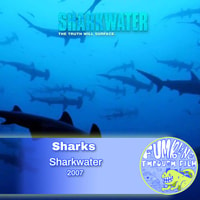
Sharks: Sharkwater (2007)
The Fumblers stumble upon illegal shark fishing operations while they were off looking at turtles in the Galapagos Islands. They've called the international shark police and while they wait for them to arrive they pass the time by watching Sharkwater. One of us has flesh eating bacteria and it might surprise you to find out who.
Transcript
Gather together from the cosmic reaches of the universe. Here in this great screening room with comfortable recliners are the most powerful forces of good ever assembled. Keith.
Speaker B:Being called Sharkwater, you would think that his videos would be like 90, 95%— he's got turtles, he's got other fish. It's called Sharkwater, not just the ocean.
Speaker A:Terry.
Speaker C:Somebody give me my harpoon gun. Derek.
Speaker A:You can't do that on America's 250th birthday. And the power twins, Zap and Jordan, with their magical lemur snort dedicated Back to fumbling their way through movies one forgotten gem at a time. This week, maybe we learn a little with 2007's Sharkwater. This is Fumbling Through Film.
Speaker B:The problem is, is that we're— we don't really understand what we are.
Speaker C:In essence, we're, uh, you know, just a conceited naked ape, but in our minds we're some sort of divine legend, and, uh, we see ourselves as some sort of god. That we, you know, we can walk around the earth deciding who will live and who will die and what will be destroyed and what will be saved.
Speaker B:But the fact is, is that we're just a bunch of primates out of control.
Speaker A:Hello and welcome to another one-of-a-kind, genre-defining, brand new episode of Fumbling Through Film, the only show that dares to bring together 3 dudes to talk about movies. However, these aren't just any movies.
Speaker C:No, they're not. They're, they're all unique in their own special way.
Speaker A:Every movie's unique, but they all are either the ones we've missed, overlooked, or feel are simply worth revisiting, which is any movie.
Speaker B:No, you know, there's gotta be something missing there.
Speaker C:Yeah, there isn't. If we fish long enough, we'll find something that's undiscovered from that category. No, we won't.
Speaker B:Yeah, yeah.
Speaker C:There's always a new species of movie out there.
Speaker A:There's a new species. You're right. I never even considered that. We know so little about movies. Yeah, there's just so many out there.
Speaker C:There's always a new species waiting.
Speaker A:We'll stumble upon a new species.
Speaker B:I mean, they always find stuff. I mean, they— you go to the deep depths of an ocean, they always find some kind of new, uh, new animal down there. I've always ever heard, and they give it a silly name.
Speaker A:And they have movies down there with them?
Speaker B:No, I'm just saying, like, I'm just saying, like, we just, we just haven't, we haven't dug deep enough yet to find out that there might be another type of animal, there might be another type of movie that doesn't fall into the any movie category yet.
Speaker C:We haven't covered fish cinema at all.
Speaker B:No. Isn't that what we're doing right? Is that what we're doing right now?
Speaker C:Cinema made by fish.
Speaker B:By fish.
Speaker C:For fish.
Speaker B:Oh, by fish for fish. So like the movie Shark Tale.
Speaker A:I want to see like an anglerfish, but instead of that little light hanging off of its head, there's a DVD at the end.
Speaker C:That would get us.
Speaker A:I would be eaten by one of those every time.
Speaker C:I'll dive as deep as I need to to get that little DVD off his face.
Speaker A:Don't be fooled by it, Terry. It's not real. Anyway, my name is Derek and I'm a fumbler. Joining me here in the Fumbledome is the Prime Minister of Fumbling and Film, Keith.
Speaker B:Hey, hey, what's up, KG? Fumbler extraordinaire. Uh, uh, not fishing extraordinaire. Wow.
Speaker A:Yeah. We do that already.
Speaker C:It's pretty obvious. Yeah.
Speaker A:Every year we go out deep sea fishing and Keith barely returns.
Speaker C:He barely returns.
Speaker A:Yes.
Speaker B:Yeah.
Speaker C:Wow. Every year it happens too.
Speaker B:I'm so sad about it. I think I would learn from one year to the next.
Speaker A:Every year he gets mysteriously cracked over the head with an oar and tossed overboard.
Speaker C:Tossed into the ocean and then he shows up on shore 2 weeks later.
Speaker A:It's just because he's a bad fisherman. Yeah, that other fisherman. It's a Dr. Dre of Kansas, Terry.
Speaker C:Hey everybody, Dr. Dre of Kansas, ore expert.
Speaker A:Expert of what? Kansas? Ores. Oh, ore expert.
Speaker B:Oh, sorry, I went right with that. You're ore expert what? You're an ore expert. Excellent.
Speaker C:O-A-R.
Speaker A:The band Ore?
Speaker C:Is that a band?
Speaker B:Yes.
Speaker C:Well, I'm an expert on them too, obviously. All things ores.
Speaker A:Iron ore. Rowing oars. The band OAR.
Speaker C:The grammatical word or?
Speaker A:The conjunction.
Speaker C:Thank you. Yep. I'm an expert.
Speaker A:So OAR is an acronym though. The band. Oh, it's O-A-R, but there's dots in between each one.
Speaker C:What does it stand for?
Speaker A:Ore is, it's of a revolution. Ore. That's my thought as soon as I saw it too.
Speaker B:I think I would think, I would think an ore expert would be able to name more of these.
Speaker C:Well, I don't need to say 5. I could go on forever, but I won't. To bore the listener? No. Bore? I'm also an expert on that. B-O-R-E.
Speaker A:There's all sorts of bores as well. I think we're being one right now. I think we should move along. You know what else we're being? We're being a podcast. This podcast.
Speaker C:Yes.
Speaker A:So we should tell people what it is we do here. Every week we watch movies, but not just any movie. Nope, nope, nope, nope. Every month one of us chooses a theme, a genre, a guiding light, some sort of international law.
Speaker B:Oh, yeah, yeah.
Speaker A:International law that cannot be applied on international waters.
Speaker C:How ironic.
Speaker A:I know, it's tough. And we each adhere to those international laws and themes and choose movies that, uh, fit that, right? And then on the 4th week, we fumble. Anyway, this is DTF, Down to Fumble. Y2, year 2. M9. The M stands for month. Thanks for reminding me. And that's a Terry month. So Terry, tell us what it is we're doing here.
Speaker C:We're doing sharks. Yep. Diving deep, diving deep into the ocean to find those shark movies, those gems. Yeah.
Speaker A:This is dub 2. So that means last week was dub 1. Terry, what'd you hit us up with to start us off?
Speaker C:I picked the movie Dangerous Animals from 2025. That's right.
Speaker A:Horror movie, Shudder original.
Speaker C:Serial killer mashed up with shark movie.
Speaker A:Yep. And this, the shark was not the villain.
Speaker C:No, no, not at all.
Speaker A:Wasn't even the day. I mean, it's a dangerous animal, but the truly dangerous animal was not the shark.
Speaker C:Man's always the most dangerous animal. Most Dangerous Game, man.
Speaker A:Boy, what a dichotomy.
Speaker B:Is it the movie with Ice-T, huh?
Speaker C:The Dangerous Game?
Speaker A:It's also a classic novel. Yeah, the most—
Speaker B:Oh, I'm thinking, I'm thinking Surviving the Game, which is where they drop a bunch of like convicts on an island and they're hunted down. Yeah, yeah, yeah. I think Nick Nolte is doing it, or—
Speaker A:I have no idea.
Speaker B:Yeah.
Speaker A:And that means this is Dub 2, Week 2. It's a me dub.
Speaker B:It's not Ignalty, it's somebody else.
Speaker A:Yeah, I don't know, I'm not gonna look it up. Uh, and I chose the documentary Sharkwater from 2007.
Speaker C:Yeah, our first documentary.
Speaker A:It took us, uh, Y2, M9Y2, almost 3 years.
Speaker B:What a better way to understand about the topic of the month than watching a documentary about the topic of the month.
Speaker A:Almost 100 movies in, we got a documentary, Sharkwater.
Speaker C:Finally learning stuff.
Speaker A:Finally. Now, before, before we talk about our viewing of Sharkwater, before we take a deep dive into Sharkwater, did any of us have any previous knowledge, history, and/or experience with Sharkwater?
Speaker B:No, sir.
Speaker C:No, not at all. Never heard of it until you told me about it.
Speaker A:Same. I didn't— I had no idea what it was. I just knew it was a documentary, well regarded, about sharks and illegal shark activities. Does that mean the sharks were doing things illegally or people? I'm assuming people, but we'll find out. Yeah, what we need to do though, boys, you need to relax.
Speaker C:Oh, I'm so relaxed right now.
Speaker A:But don't relax too much because there's justice in the world, and I'm going to tell you about it. I better get up with another—
Speaker B:not mostly though—
Speaker A:Fumbler's Deep Dive.
Speaker C:Somebody give me my harpoon gun.
Speaker A:Sharkwater. This son of a bitch premiered at the Toronto International Film Festival on September 11th, 2006.
Speaker C:Well, wow, I'll never forget that.
Speaker A:And then was released to the United States on September 28th, 2007. It's rated PG, comes in at a tidy 1 hour and 29 minutes. An investigation of sharks' importance to ecosystems and humankind's mass destruction of shark species worldwide. Gets a 7.8 on IMDb, an 81% certified Fresh on Rotten Tomatoes. It opened in the United States to $37,000, which was good for 55th that weekend.
Speaker C:55th?
Speaker A:55th. 54th was the Bratz movie. Oh, 53rd was Fantastic Four: Rise of the Silver Surfer.
Speaker C:Oh, now there we go. Okay.
Speaker A:But you're probably wondering what was in the top 10 that week that kept Sharkwater down in the depths. Well, and here's what's funny. I went down this list. I had to pull up everyone on IMDb to figure out what the hell they were.
Speaker B:What I like here is you're like, let me tell you, let's find out what the top 10 were so we can know what kept Sharkwater out of the top 40.
Speaker A:Pretty much.
Speaker B:Yeah.
Speaker A:Number 10, Across the Universe.
Speaker C:Oh, that's the Beatles movie.
Speaker A:The music of the Beatles, New York in the '60s, and the American youth's actions to protest the Vietnam War form the backdrop for the romance between an upper-class American girl and a poor Liverpudlian artist.
Speaker C:Supposed to be good.
Speaker A:Supposedly. Number 9, Sydney White.
Speaker C:Yeah, I don't know that one.
Speaker B:That's some kind of weird Snow White take.
Speaker A:After being banished from the most popular sorority on campus, Sydney White teams up with a group of socially awkward outcasts to outdo the queen at her own game. Stars Amanda Bynes. Oh, wow. Yeah.
Speaker C:Interesting.
Speaker B:She's all that.
Speaker A:Number 8, Eastern Promises.
Speaker C:That's a good movie.
Speaker A:Is it? I'd never heard of it, but it has Naomi Watts and Viggo Mortensen in it. A teenager who dies during childbirth leaves clues in her journal that could tie her child to a rape involving a violent Russian mob family. Sounds intense.
Speaker C:Yep. I watched it just last year, I believe.
Speaker A:Wow.
Speaker B:It's a bathroom fight scene that seems to be the highlight of it, I think.
Speaker C:It's a Cronenberg film.
Speaker A:Yeah, it is. You're right. It is a Cronenberg movie. Number 7, Mr. Woodcock.
Speaker B:Oh, Billy Bob.
Speaker A:Billy Bob Thornton. Yeah. Taken aback by his mother's wedding announcement, a young man returns home in an effort to stop her from marrying his old high school gym teacher. It's got Billy Bob Thornton on the COVID holding 2 basketballs in front of his groin.
Speaker C:You're like, oh, that's hilarious.
Speaker A:Billy Bob Thornton, Seann William Scott, Susan Sarandon.
Speaker C:Wow, what a cast.
Speaker A:And 6th was The Brave One.
Speaker C:The Brave One?
Speaker B:Yeah, all right, I'm out on that one.
Speaker A:It stars Jodie Foster, Terrence Howard. Struggling to recover emotionally from a brutal assault that killed her fiancé and left her in a coma, a radio personality begins a quest for vengeance against the perpetrators that leaves a bloody trail across New York's City. Huh.
Speaker C:And it's called The Brave One.
Speaker A:The Brave One. Number 5, I knew this one, 3:10 to Yuma.
Speaker B:Oh, good movie.
Speaker A:Number 4, Good Luck Chuck.
Speaker B:Oh, I think that's Dane Cook.
Speaker A:Yep.
Speaker C:Oh, never mind.
Speaker A:Number 3, Resident Evil: Extinction.
Speaker C:Oh, horrible. That's the first one, I think.
Speaker A:I, I do not know or care. Number 2, The Kingdom. It opened to $17 million that weekend.
Speaker C:That's pretty good.
Speaker B:Uh, does that got Legolas?
Speaker A:Jamie Foxx, Chris Cooper, Jennifer Garner. A team of U.S. government agents are sent to investigate the bombing of an American facility in the Middle East.
Speaker C:Never heard of that.
Speaker A:Me neither. And then number one—
Speaker B:I'm thinking, I was thinking the other one that's based on the Crusades. It's something that— yeah, something kingdom.
Speaker A:Yep. Okay, it isn't that one. And then number one, opening to $22 million, The Game Plan. Oh, an NFL quarterback living the bachelor life discovers that he has an 8-year-old daughter from a previous relationship. Stars The Rock, Kira Sedgwick, and Madison Pettis. That's the one where Keith talked about that he's got like cinnamon. Yeah, he's allergic to cinnamon.
Speaker C:Oh, that's that movie?
Speaker B:Yeah, that's actually a very good movie.
Speaker A:It made me chuckle when I saw that was number one. Sharkwater finished with $850,000 domestic.
Speaker C:That's not too shabby.
Speaker A:No. Uh, November 1st, 2007, Mark Zoller Seitz from the New York Times said, this beautiful and horrifying debut feature by the underwater cameraman Rob Stewart of Toronto characterizes the depletion of the world's shark population as an ecological catastrophe with dire consequences for humanity. And he gave it a very good review.
Speaker C:Nice.
Speaker A:But, uh, October 30th of that same year, Aaron Hillis of the Village Voice said, Stewart is his own star, a would-be Speedo model and voodoo narrator whose drowning reflections get in the way of his stunning underwater cinematography.
Speaker C:Interesting. I, yeah, we'll see if I agree or not.
Speaker A:Yeah, we will see. This movie is written, directed, and stars Rob Stewart. He was an award-winning biologist, photographer, conservationist, and filmmaker from Toronto. He is not to be mistaken with Rob Stewart, actor, writer, director with 123 acting credits in TV, games, and films going back to '86, including an episode of Nash Bridges.
Speaker C:Whoa!
Speaker A:9 episodes of Majority Rules, 23 episodes of Nikita. And such movies as he played Dennis in a 2011 TV movie called Metal Tornado.
Speaker C:Whoa, whoa.
Speaker A:In 2018, he played Keith in Falls Around Her.
Speaker B:I thought I was gonna say in Fumblers the movie.
Speaker A:But in 2001, he played Nick Slaughter in Criss Cross. C-R-I-S-S-C-R-O. Not like they'll make you jump.
Speaker B:Yeah.
Speaker A:Maverick detective Nick Slaughter accepts a case.
Speaker C:He's a maverick, you say?
Speaker A:Yeah. With a name like Nick Slaughter, you figure he's by the books. Yeah. Nope. He's a maverick detective and he accepts a case from alluring Leora probing a life insurance claim that leads him down a perilous path of sexual scandals and deception.
Speaker C:Oh my.
Speaker A:Stars Rob Stewart, Carolyn Dunn, and Ari Sarko-Ram.
Speaker C:Interesting.
Speaker B:I love the fact that, uh, Nick Slaughter is— everyone would think he's a maverick, but it'd be funny if he turned out he's like very by the books.
Speaker A:Yeah, exactly.
Speaker B:Like on the, on the straight, like, yeah, you know, there was no, dude, you gotta be more like, more maverick-like, man. No, I'm— we're doing this this way.
Speaker A:With a name like Nick Slaughter, you expect him to do whatever it takes.
Speaker C:He only does an okay job after that.
Speaker B:Yeah.
Speaker C:It's like, I don't know, guys, it's 5 o'clock. It's time to clock out. Let's just take it home.
Speaker A:Let's do it. Or he does that like, you can't spell slaughter without laughter.
Speaker C:And he's just like, oh, he's hilarious.
Speaker A:Yeah.
Speaker C:Yes. He's, he's the clown prince of policing.
Speaker A:Back to Rob Stewart.
Speaker C:Not Rod, the real one.
Speaker A:Not Rod Stewart.
Speaker C:I mean, they're both real, I guess.
Speaker A:Famous magician. But yeah, all these people I've mentioned so far are real. But Rob Stewart the conservationist. He began underwater photography at the age of 13, became a scuba instructor at 18, and earned a Bachelor of Science in Biology studying in Canada, Jamaica, and Kenya.
Speaker C:Wow, that's pretty cool.
Speaker A:Yeah. Before filmmaking, he spent 4 years as chief photographer of the Canadian Wildlife Federation. While photographing sharks in the Galápagos Islands, he discovered the illegal longlining That was killing sharks inside a marine reserve, which is in the movie. At age 22— he was 22 when he made this movie— he left photography to make Sharkwater. Yes, spent 4 years making it.
Speaker C:Wow, he looks older than that to me.
Speaker A:Stewart also authored Sharkwater: An Odyssey to Save the Planet and continued promoting conservation through public speaking, education, and environmental organizations. He served on the boards of groups including WildAid, Shark Savers, and the Shark Research Institute, and founded his own charity, United Conservationists. Canadian filmmaker and conservationist Rob Stewart died on January 31st, 2017, at the age of 37.
Speaker C:Oh.
Speaker A:From drowning due to hypoxia. He was missing after surfacing from a deep technical dive while filming Sharkwater Extinction. Near the Queen of Nassau wreck off Isla Morada in the Florida Keys. His body was recovered 3 days later.
Speaker C:Wow, that's too bad.
Speaker A:If you're like me and you're like, what's hypoxia? It can happen while diving when your body or brain does not get enough oxygen. It can cause sudden blackouts, confusion, and drowning. It affects both scuba divers and breath-hold freedivers through different physical triggers. But if you're doing it on deep dive like he was, it's caused in scuba diving by bad gas mixes, breathing a tank with the wrong mix of gases or too little oxygen, or equipment failure, running out of air or getting a compromised gas supply.
Speaker C:Huh.
Speaker A:So that's what happened to him.
Speaker C:Yeah.
Speaker A:Uh, you guys want some shark facts?
Speaker C:Can I just say that this guy looks just like Christopher Walken?
Speaker A:You think he looks like Christopher Walken? Yeah, like a super young one maybe.
Speaker C:Yep, yep, yep, with his hair.
Speaker A:Yeah, maybe he does.
Speaker C:Everyone can admit it. Everyone was thinking about watching this, right?
Speaker A:Yeah, that's—
Speaker B:yeah, I was very distracting.
Speaker A:Yeah, couldn't stop thinking it. How about some shark fun facts? These are from the World Wildlife Federation, uh, the UK branch apparently.
Speaker C:Cool. Let's hear it.
Speaker A:There are over 500 species of sharks.
Speaker C:That's a lot.
Speaker A:143 of those are under threat.
Speaker C:Oh.
Speaker A:Sharks, this is fun fact, are apex predators.
Speaker C:Okay. Okay.
Speaker A:They can vary dramatically in size. These are shark fun facts now.
Speaker C:That's fun.
Speaker B:Wow.
Speaker C:I would never have thought.
Speaker A:There's big sharks. There's little sharks.
Speaker C:They're the biggest predators in the ocean. Wow.
Speaker B:Yeah. Baby sharks?
Speaker A:Yeah.
Speaker C:Oh, no.
Speaker A:Sharks live in most ocean habitats. They can be found in beautiful tropical coral reefs to the deep sea and even under the Arctic sea ice.
Speaker C:Really? They're in the Arctic?
Speaker A:I guess so.
Speaker C:That's cool.
Speaker A:Fun fact, they can be weird and wonderful.
Speaker C:They can be weird and wonderful?
Speaker A:Goblin sharks can be bright pink color and hammerhead sharks have hammer-shaped heads.
Speaker C:Yeah, wait, okay, come on.
Speaker A:Which they've been known to use to pin stingrays against the sea There's even a cookiecutter shark, which are named for the round cookie bite marks they leave.
Speaker B:What?
Speaker A:I don't know.
Speaker C:I'm looking this up.
Speaker A:Most sharks are cold-blooded.
Speaker C:Most sharks are.
Speaker A:But like most sharks, great white sharks are partially warm-blooded, allowing them to move faster when hunting prey.
Speaker C:Wow. Okay. Well, I didn't know that. That's kind of cool. Yep.
Speaker A:This is why this is a UK, WWF.org.uk. We get sharks around the UK. Fun fact.
Speaker C:Well, I did just say that they live in every ocean underneath. Yep. Makes sense.
Speaker A:Sharks have a 6th sense.
Speaker C:That's what I saw in this documentary.
Speaker A:Oh, all sharks see dead people.
Speaker C:They can see the dead?
Speaker A:No, all sharks have a 6th sense that helps them hone in on prey during the final phase of attack. The ampullae of Lorenzini are found on shark snouts and can sense the electric fields emitted by animals in the surrounding water.
Speaker C:There's got to be a lot of ghost fish in the ocean.
Speaker A:You would think. Oh God, there's so many fish in the sea. And imagine all of them that died in the past.
Speaker C:And how many die every day? Like, come on.
Speaker A:So many ghost fish.
Speaker C:So that's why they need that little snout organ that lets them sense like real life heartbeats, because otherwise they'd be eating ghosts all the time. They'd just be eating ghosts, and that's not nutritious at all.
Speaker A:But I bet you there is a shark that has evolved to sustain off of ghosts. Well, because there's so many different types of sharks.
Speaker B:Oh yeah, I would think the goblin shark can sustain off ghosts.
Speaker C:It's G-O-B-B-L-I-N. Goblin sharks can gobble up anything.
Speaker B:It's goblin time.
Speaker C:Mm-hmm.
Speaker A:It's goblin time.
Speaker C:Yeah.
Speaker A:Sharks, another fun fact, they've been around for a long time.
Speaker C:Oh, that's fun.
Speaker A:Sharks have been around for over 400 million years, long before dinosaurs.
Speaker C:Yeah, I've heard this.
Speaker A:The only reason we don't have like shark fossils is because they don't have bones. They don't leave fossils.
Speaker C:And after 400 million years, they haven't evolved to have bones? Come on.
Speaker A:Nope. Well, maybe that's our next evolution is just to have cartilage bones.
Speaker C:Humans, we're going to become more shark-like.
Speaker A:Well, if we need to be.
Speaker C:Well, if all the sharks disappear, someone's got to take over.
Speaker A:Yeah. Yes. And the final fun fact, and it's not that fun, they're under threat. Oh, many sharks are accidentally caught in fishing gear as well as caught deliberately for their fins, which are a delicacy in Asia.
Speaker B:Yep.
Speaker C:I learned all about that today.
Speaker A:Yep. Their ocean home is also in danger, uh, just because we suck as a species. Really? Yeah, we're just stupid primates.
Speaker C:We're just the most dangerous animal.
Speaker B:There's a, uh, they've tracked this, uh, Greenland shark and it's like almost 400 years old.
Speaker A:That's awesome.
Speaker B:Yeah. And it still just kind of roams around the ocean and, you know, pops up every now and then. They, but they've tagged it so they can, you know, keep track of it and stuff like that. But they're like, all the stuff that it's been around for, like, like America just turned 250 and things like whatever.
Speaker C:The stories this thing could tell us.
Speaker B:Yeah.
Speaker A:Mm-hmm. I'm sure we wouldn't want to hear 'em though.
Speaker C:You let me tell you about George Washington, what he's really like. No.
Speaker A:Oh, the 400-year-old Greenland shark has the real story about young Washington.
Speaker C:Yes. Let me tell you about young Washington. No, that's sense. Silence him. The truth can't come out.
Speaker A:You can't do that on America's 250th birthday.
Speaker C:He comes up to the podium. He's like, it's time to finally reveal the truth. Silence. Shut his mic off quick, quick. We told him anything but young Washington. He can't talk about that.
Speaker A:Oh, and then somebody assassinates the 400-year-old shark. At the podium before he can spill the beans.
Speaker C:Uh huh. That's one of America's darkest secrets.
Speaker B:It's one of the near 200-year-old tortoises they take them on.
Speaker C:Yes.
Speaker A:To think like a 400-year-old shark, they got a 200-year-old tortoise.
Speaker C:It's the only way they can have his age.
Speaker A:Yep.
Speaker C:Dang, that's sad. But he shouldn't try to spill the beans. Like what you?
Speaker A:I like how Terry. That's sad. This. Fictionalized world in which Barney Gurl's Greenland shark—
Speaker C:He comes up to the United States celebration, the 250th birthday. He's invited to give a speech.
Speaker B:Well, he walked up, he walked up on his legs. He's got the legs.
Speaker A:He's invited. So he actually had a speech that he prepared. He says that, I originally had a speech that was prepared and approved, and he just throws that in the air.
Speaker C:Yeah, that's when the security, you see him like, we gotta stop him.
Speaker A:It's like, and that's like, let's see where this goes.
Speaker C:You hear any of these keywords, fire.
Speaker A:Young Washington was a sham.
Speaker C:He was a sham.
Speaker A:What?
Speaker C:The crowd just erupts. Panic in the streets. Young Washington was a sham. What did he mean by that?
Speaker A:They killed him before he could expound upon it. Damn, was he talking about the movie or the real young Washington?
Speaker B:Washington, Washington didn't sing as well as Hamilton makes him sound like.
Speaker C:What?
Speaker A:Take him out. America ceases to exist because the Greenland shark knows things.
Speaker C:Let me tell you about what happened really at Roswell. Whoa, whoa, take him out, take him out. How does the Greenland shark know about this?
Speaker A:I killed JFK.
Speaker B:Yeah. Oh yeah, it was the other— it was the second shooter.
Speaker C:300-something-year-old sharks laying on the grassy knoll. Yeah, fin popping out, people don't even notice. That was good. That was good. I learned a lot.
Speaker A:I did too. I learned a lot this movie. Yeah, there's lots of To see and, and to hear as well.
Speaker C:That's true. This is the audiovisual medium.
Speaker A:Thank goodness. Thank goodness. Well, we should do it. We should talk about our viewing of Sharkwater from 2006 or 2007, depending on where you're at when it released.
Speaker C:Let's do it. Let's jump into the water.
Speaker A:I didn't like Rob Stewart a whole lot.
Speaker C:I, I get what that reviewer was saying, the negative. I think they might be a little too harsh, but I do understand, like, the— his narration is very dry.
Speaker A:It's— yeah, it's tough.
Speaker C:And I feel like I sometimes— I have issues when it's like the documentary, it's, you know, directed, star, written by— you're like, it's like you're making yourself the main character of your documentary. I don't know, I feel like it kind of goes off on a tangent at some point.
Speaker A:Yes.
Speaker B:Also, then you have weird musical that seemed like really kind of out of place.
Speaker A:Well, there was the one music at towards the end that felt like the ASPCA commercials with the Sarah McLachlan music.
Speaker C:Yeah.
Speaker A:As you see poor abused animals.
Speaker C:Yes.
Speaker B:Was that when they, they focused on the one turtle that they were like hitting?
Speaker A:There was that.
Speaker C:Yeah. That was brutal. They gouged his eyes out. Yeah.
Speaker B:I don't— first of all, that's a, that's another thing here. And just a quick side track. There's a lot of, let's see, things other than sharks going on in this and being called Sharkwater. You would think that his videos would be like—
Speaker A:It was mostly sharks.
Speaker B:95%. No, but like, he would like, he's got turtles, he's got other fish that are popping up and stuff like that.
Speaker C:They're like, they're side characters. They're not the main—
Speaker B:Yeah. Like, let's say it is called Sharkwater, not just the ocean.
Speaker C:You can't film the ocean without having a few Extra like faces pop up.
Speaker B:Well, that's what the editing room was for.
Speaker C:Yeah, you want to cut out the turtle getting his eyes gouged out?
Speaker B:Yeah, let's AI it up, turn into a shark instead.
Speaker C:I would like to cut turtle getting his eyes. I don't like all the. I mean, I get that it's showcasing all the horrific violence that these sharks and also other sea animals are going through, but it is tough to watch that happen.
Speaker B:Yes, that was yeah, that's probably the roughest part of. Of the whole thing.
Speaker C:It's like, I believe you. I do. You don't have to show me it in gruesome detail.
Speaker B:But there's like a, like a really up-tempo bit of music, like near the, like in like the first 15 minutes of the movie that just kind of jumps at, at you and like seems like it's a little outta place. And then they've also got like, uh, they picked the one song for when they're trying to outrun, uh, the Coast Guard at the end. That I'm like, yeah, I'm like, like, all right, well, you made this, this thing here, but like, I don't know, it's almost like you're trying to put together like an official soundtrack as well.
Speaker A:Well, I mean, yeah, it has to have a soundtrack.
Speaker B:Well, no, no, whatever the, the song at the end where like when they're being chased by the, by the Coast Guard folks, it almost seems like something you would see in like a normal movie while somebody's being chased, like a chase scene. Plus he kept, he kept showing like clips of like other fish that sharks were like— What is he so upset about?
Speaker C:Seeing other sharks in the ocean? No, no, no, no, no, no. They're allowed to have other fish in the movie.
Speaker B:No, that other— no, the— what I'm saying is the other one when they were— no, 'cause there's still sharks in those clips.
Speaker A:See, but that was, that was, oh, when that parrotfish was getting chased by the sharks?
Speaker B:Yes. While the music is playing and they're being chased by the Coast Guard.
Speaker A:Yeah.
Speaker B:It, it almost seemed like Symbolic.
Speaker A:Yeah.
Speaker B:But like he was trying like a little too hard at that part.
Speaker C:I like that.
Speaker A:I like that part too.
Speaker B:Because I mean it was fun, but like at the same time you're like I don't.
Speaker C:You just didn't like seeing those other fish.
Speaker B:No, it took me.
Speaker A:No, it's like shark on the title and water the title.
Speaker C:What the hell is Big Una doing in here?
Speaker B:They go on a whole thing about sea cucumbers. Like there's ten minutes of the movie just talking about sea cucumbers.
Speaker A:I swear to God, ten minutes.
Speaker C:If I see one sea cucumber in this film, I'm shutting it up.
Speaker A:These fucking sea cucumbers. They had that really cool shot of whatever that seahorse was.
Speaker C:That looked cool.
Speaker B:Yeah, yeah, that's a sea dragon.
Speaker A:Oh, oh, look at you, Mr. I only want sharks in my shark tank.
Speaker C:I hate all other fish, but yet I know so much about other fish. Interesting.
Speaker A:Whatever that was, it was really cool. The, the parts of this movie that I loved— I loved The underwater photography, that hammerhead shark collection.
Speaker C:They all get together and party and they're all DTF or whatever, pushing each other around.
Speaker B:Yeah, down a fumble.
Speaker A:Yeah, that— those sharks, that was, that was very cool to see. I've never seen something like that before. It's like, that's awesome.
Speaker C:Top-tier cinematography throughout the film, I feel like, at least the underwater stuff.
Speaker B:Yeah, yeah, yeah. I mean, he's— he is very good at the filming part of this.
Speaker A:Where he's behind the camera.
Speaker C:Yes. Yeah.
Speaker B:Where he's behind the camera and it's almost kind of like, man, you shot all this stuff and we get that it's about him and his love for sharks, but he does spend a lot of time focusing on that other guy and the ship that he— the Seawolf ship and how they go and they do all this stuff. It's almost like he could have done all the filming and maybe got somebody else to do the voiceovers.
Speaker A:Yeah.
Speaker B:Somebody that maybe a little more life in their, their voice, it may have helped out a little more. But yeah, his, his, uh, photography and filming is top-notch.
Speaker A:Yeah, that other guy's name was Paul Watson, and I could have watched a series of movies about that guy.
Speaker C:Could I just get a documentary about him?
Speaker A:Yeah.
Speaker C:Yes, interesting.
Speaker A:That's what I wanted.
Speaker C:Get the main guy, whatever his name was, out of the, out of the way of being the main character.
Speaker A:Rob Stewart.
Speaker C:Get Rob Stewart out of there. Like, I mean, I love his cinematography. Keep him as the director of the film, obviously. But like, get this other— this, this like renegade Greenpeace guy. Like, yeah, he's the main character. He's very cool.
Speaker A:He was awesome. Like eco-warrior Paul Watson.
Speaker C:I mean, he had so many cool props.
Speaker A:Things to ram your boat and sink it.
Speaker C:Yeah, I call it the can opener. Yeah, yeah, he's ramming into other boats.
Speaker B:Do you have any weapons on board?
Speaker A:Shotgun. They have to repaint and rename their boat every time they go up because they don't want to be spotted and recognized until they're ramming your ass and sinking you.
Speaker B:They paint a flag over every single boat. The only thing they don't paint over is they show every single one that they've taken down.
Speaker A:Yeah.
Speaker B:Yeah, I agree. Like, that should have been like the lead-up of, hey, I want to learn more about sharks. I want to just— like, should have been like, okay, here's the lead-up, and now we're just gonna focus on this guy and his His efforts and what he's doing.
Speaker A:Yeah. And well, I also appreciate the bringing of attention to the finning and the long— I had no idea about that kind of stuff.
Speaker C:I didn't know about the long lines at all.
Speaker B:Shark fin mafia.
Speaker A:Yeah, I had no idea. And it's such a lucrative cartel-based system for these shark fins, and they're just brutal. And they fin them and then dump them back in the ocean. God, what a Bunch of savage assholes, man.
Speaker B:Yeah. That whole thing when, when they first approached that one ship and they're like, stop doing that. And the guys are just, they look at 'em and they're like, yep. Slice. Boom. Drop another one. No, no. We said stop that. All right. Slice. Boom. And they keep just moving on and it's like they're doing it just to spite them as well.
Speaker A:Hell yeah. They're untouchable. They're like, the Costa Rican government called 'em down there and then they made a call to their part of the Costa Rican government, and then they were gonna get 'em all arrested.
Speaker B:Yeah.
Speaker A:It's wild.
Speaker B:And he's like, you know what? While we're waiting to find out about our trial, let me go see if I can find something about the fin game. And it uncovers like just so much more where he is like, we gotta get the hell outta here.
Speaker A:Yeah. I thought they were all gonna get killed. I was like, Jesus.
Speaker B:Yeah. Meet me on the boat. We gotta roll.
Speaker A:They get the one guy who, the Chinese guy that runs the shark fin company. You could almost do a documentary on his company to bring him down, right? Because he seemed like a, I don't know, smug guy.
Speaker C:Yeah.
Speaker B:That's the guy sitting in like the office, uh, glasses on, and every time they bring up something, he was like always pitching how bad like sharks were.
Speaker A:Sharks are.
Speaker C:Yeah, yeah, yeah, yeah, yeah.
Speaker A:Do you ever see a shark? He'd do everything he could to eat you sort of thing. But then if we go back to Rob Stewart or whatever his name is, right? Yeah, and then he gets flesh-eating bacteria disease.
Speaker C:Yeah, well, that was kind of a weird—
Speaker A:like, yeah, but it didn't amount to anything.
Speaker C:Did that need to be in the documentary? Like, it's the problem is because he became the main character, it's like that's why he had to do it. He should have kept himself a little more separated because that part doesn't play out— pay off at all.
Speaker B:No.
Speaker A:Well, thankfully he didn't have to get his leg cut off, or he didn't end up dying.
Speaker B:Well, right, and but that's the part I think, like, since he didn't Since he didn't die or need to get it cut off, like, maybe we just don't cover that part.
Speaker A:Yeah, exactly.
Speaker C:I mean, it's probably— it's a big deal for him, sure, but it's not the story he's trying to tell.
Speaker A:So I did what I could. I got back to Costa Rica, and then I freedove with sharks.
Speaker B:Yep.
Speaker A:That's the only thing I can do. I'm like, all right. And then we get to see him in a Speedo swimming around sharks.
Speaker C:It did look cool.
Speaker A:Anything underwater in this movie was awesome. The story there, like the, the, the terrible of this that they're exposing was terrible and needs to be exposed. And Paul Watson is a superstar. The movie should have been about him.
Speaker C:Yeah, it's just— and it's all— I don't think it's a bad movie at all. I like every— I like all— almost every aspect they cover, and I think it's interesting and it is important what they're talking about. It's just a little disorganized and a little cluttered and doesn't feel focused sometimes.
Speaker A:Yeah.
Speaker B:No, it's— I mean, that's the guy's first documentary, you know, and so, you know, he probably had, you know, been learning curves as well.
Speaker A:Now he's cutting them slick.
Speaker C:No, I'm saying like, he let a couple extras come into this frame here and now. Yeah.
Speaker A:Just get rid of these other fucking fish, all right?
Speaker B:Yeah, I'm sure, as I'm sure Sharkwater Extinction, there's only sharks and no other fish in these You know, he cuts right to the point of what he's doing.
Speaker C:I do think that the— I like— it's kind of— it, it kind of takes some turns. Like, I like the, the way it kind of— it starts off kind of just like, oh, this is going to be like, you know, shark facts or something, you know, like, and swimming. But no, it gets really deep into, yeah, like the way they're treated and the stuff. Like, we talked about it last week a little bit where like sharks have been kind of villainized by humanity and they're not that bad. Like, what does it say? Like 5 sharks are killed, or humans are killed by sharks, like 5 of them a year.
Speaker A:And then— Yeah, something like that.
Speaker C:It does hammer home maybe a little too much where it's like, it lists off a million things that do maybe more damage to humans. And then it's like, even soda machines kill people.
Speaker B:Yeah. Even soda machines.
Speaker C:Okay, we get it. We get it. It's probably true, but it's like, yeah, it's, I think it's a cool like side to take, you know? Like, yeah, it's like, guys, chill out on the sharks. Like, they're not that bad.
Speaker A:The movie could have been several different things if they would have just been 100% about the finning, right, and stopping that and following Paul Watson. Or it could have been 100% about educating people about sharks.
Speaker C:Yeah, like they're not that dangerous, right?
Speaker A:Because they did that, like, that interview with those girls on the beach, and it's like, oh yeah, sharks will kill you for real, you know?
Speaker C:Yeah.
Speaker A:Okay.
Speaker C:Um, and he's talking about how the sharks are like just actually like horrified of us. Like, they can tell if our heartbeats are going fast, and if they can sense it, they just swim off. Like, that's all really cool. I never knew that they were like that.
Speaker A:No, I know they're kind of smart.
Speaker C:I didn't know.
Speaker A:I thought there was a sixth sense thing. Yeah, yeah, sharks are smart, man. Smart sharks.
Speaker C:No, I didn't know. I thought they were dumb.
Speaker A:And then, then of course there's the Shark Tank sharks.
Speaker C:Oh, the smartest of all sharks.
Speaker B:It's also street, street sharks.
Speaker A:And street sharks too.
Speaker C:Well, it's like street sharks versus, uh, street sharks. Wait, I said the same thing twice.
Speaker A:You did.
Speaker C:But you know what I mean.
Speaker A:I don't.
Speaker C:Book sharks versus street sharks. Who's gonna win? You know?
Speaker A:Book sharks?
Speaker C:Yeah.
Speaker A:What's a book shark?
Speaker C:I've never heard that phrase before. Well-studied shark, but doesn't go out in the streets all that often. Doesn't really learn like how actual people operate.
Speaker A:Gotcha. Yeah.
Speaker B:Doesn't have a lot of common sense.
Speaker A:Yeah, they are street-smart sharks.
Speaker C:Yeah, book sharks and street sharks.
Speaker A:Gotcha, gotcha, gotcha. Boy, I felt stupid now. That's because I, I'm more of a book shark.
Speaker C:Yeah, you know me, I'm more of a street shark.
Speaker A:So you are—
Speaker B:watch out for those, uh, you know, the, the land sharks also.
Speaker A:And the land sharks as well. And then remember that Master of the Universe shark?
Speaker B:Nope.
Speaker A:You don't remember that?
Speaker B:No.
Speaker C:You don't? Is he in the newest one?
Speaker A:It was a vehicle.
Speaker C:No.
Speaker A:Masters of the Universe.
Speaker C:Are you sure that thing was in the newest film? The newest film that came out?
Speaker A:It was called the Land Shark.
Speaker B:Oh, oh, I'm sorry. Yes, that I'm familiar with.
Speaker A:Yes. Masters of the Universe Land Shark. I got one right here. Let me—
Speaker C:That thing looks cool.
Speaker A:Yeah, torture of it. Yeah, apparently so. I remember wanting one as a kid and I never got one. What a crock.
Speaker C:We can get you one.
Speaker A:My birthday is coming up.
Speaker C:It'll just doable, I think. Hopefully the sequel to Master of the Universe will have Land Shark.
Speaker A:No, he better. Yeah, I bet you it would be awesome.
Speaker C:Yeah, yeah, yeah. That film, it deserved better than it got.
Speaker A:Yeah, they already did. They already announced they have a sequel, so And that scene that happened right before opening clip, he's sitting in the, in the hospital bed and it's, it's like edited where they, they layered him shaking his head no, like about the, uh, over one. It's all slow mode and it was done in such an overly dramatic way.
Speaker C:Sometimes it's all over the top where he's like standing on the edge of the boat and he's like staring at a bird who happened to have landed next to him and they're like It's like this weird moment. I'm like, that's just very staged.
Speaker B:Don't they list off like how many sharks have died while he was in the hospital and then how many sharks have died since you watched this movie?
Speaker A:Yeah, well, I mean, those are important numbers.
Speaker C:The—
Speaker A:like, they help drive home the fact— it's just like, I don't know, he, he interjected himself into the shark story.
Speaker C:Yep. Yes. No, brought to light a lot of important things. But yeah, he also—
Speaker A:he did.
Speaker C:He got it. He got— he went in too deep.
Speaker A:And his work is commendable.
Speaker C:Yeah, I think he's a good, good guy for doing what he's doing.
Speaker A:Yeah, I mean, he did a lot of good things, just, you know, just put himself in the movie a little bit too much.
Speaker C:Yep, yep.
Speaker A:All right, well, did we do it, boyos? Did we get through Sharkwater?
Speaker B:I believe so.
Speaker A:2006 or '07, the documentary, our first documentary. And it's about sharks.
Speaker B:Took ourselves a nice little swim in the shark water.
Speaker C:I want to go down there and hug a shark. I do.
Speaker A:I want to go swim with sharks.
Speaker C:Go tell them I'm sorry.
Speaker A:The last 2 movies we watched have made me a believer in getting in a cage and going and seeing sharks.
Speaker B:I would ask—
Speaker C:maybe convince you to do that too.
Speaker A:What's that?
Speaker C:The last one did too.
Speaker A:Yeah, at the very beginning of the movie, they're down there in the cage and they're like, oh, this is beautiful.
Speaker C:And they come out.
Speaker A:And they're all excited and then the guy gets shanked to toss. That's true.
Speaker C:It did look really nice.
Speaker A:Yeah.
Speaker B:I mean, plus the odds are you're not going to run into a serial killer who uses sharks as his way of killing people.
Speaker C:I think that's pretty low chance.
Speaker B:Yeah. So I think we're, you know, gotta be pretty good with that. But yeah, I would love to do that sometime.
Speaker C:Yep.
Speaker B:I agree.
Speaker C:That would be kind of interesting. As long as they don't chum up the water too much.
Speaker A:Yeah. I don't need like frenzied sharks. No. I just want to go down and see them. We went to a place that had like one of those like, uh, touch the shark aquariums. Have you ever seen those? Like the kiddie tide pool sorts of things? I touched the shark. It wasn't very big.
Speaker C:Well, that's too bad.
Speaker A:I felt so bad for those animals. They just swam in circles while kids poked them.
Speaker C:Yeah, it's like the stingrays. I remember there's a zoo near me that has like stingrays swim in circles. I'm like, I've I don't want to touch them really. And also I just feel bad because they kind of just don't do anything.
Speaker A:Their life, their whole existence is swimming in a circle over and over again while kids poke them.
Speaker C:Yes. And I kind of feel that way about most animals in the zoo where I'm like, I know like this is kind of cool, but also like if you really think about it, it's kind of depressing. So they just sit there all day bored.
Speaker A:There is, there is that. Zoos are a tricky one because I like the zoo and I like the conservation efforts that go into the zoo.
Speaker C:Yes. Yes.
Speaker A:And all that stuff. Now that's modern zoos. Could you imagine going back in time when zoos were just like, there's an animal crammed into a little box, look at it sort of thing?
Speaker C:It's like a gorilla, pay extra $5, you can throw tomatoes at him or something.
Speaker A:Yes. Yeah. Come electrocute a gorilla for $3. It's like, no.
Speaker C:Cool.
Speaker A:I can't wait.
Speaker C:Yeah.
Speaker A:That's what zoos used to be.
Speaker C:Yeah.
Speaker A:Now they're like—
Speaker C:And I mean, they do good work. It's just like, I feel like you just think about it too much. It's kind of just, I mean, it's sad to keep anything in a cage like that, you know?
Speaker A:Yes.
Speaker B:So, uh, one time my family and I, we were— we went to an aquarium, uh, the Chattanooga Aquarium. It's a nice little place. They had one of those little pools where you could reach in and touch the sharks.
Speaker A:Yep.
Speaker B:And, uh, while we're there, uh, some little girl stretched too far and fell in. Fell right in.
Speaker C:No!
Speaker B:Her parents had to like grab her back out.
Speaker A:Did the shark get her?
Speaker B:No, no. They all kind of scattered, but she was like just Soaked.
Speaker A:Well, yeah, she fell into the water.
Speaker B:Yeah. And, and me and my family were just trying not to laugh.
Speaker A:Oh, she's going through laughing, throwing tomatoes at her.
Speaker B:My, my kids were still young enough that they weren't gonna laugh at it, but like me and my wife, like, were both like stifling our, our laughs. That was just ridiculous that that happened.
Speaker A:I already feel bad for that little kid. She's probably traumatized by it. If she's like me, she'll think about it when she's 51.
Speaker B:And doing a podcast about it.
Speaker A:Yep.
Speaker C:Brings it up every week on the podcast.
Speaker B:Yes.
Speaker A:Try to forget it, but somebody won't let me.
Speaker C:And it's myself.
Speaker A:Yep. That's somebody. Me.
Speaker C:Wake up every day thinking about that.
Speaker B:Yep.
Speaker A:You know who had a cool aquarium? I was surprised. Was the Mall of America. If you ever make your way to Minnesota.
Speaker C:Really?
Speaker A:They had, they had like this, uh, tunnel you could walk through that was under the water, so you watch the fish swim over you and stuff.
Speaker B:Yeah.
Speaker C:Oh, that was cool.
Speaker B:Yeah, yeah, they got one of those in, um, they got one here at the, the Georgia Aquarium, which may be the, the best aquarium I've ever— that I've ever been to. Um, it's awesome because not only they have that, but then like as you get past that part, you end up in this other room and it's just the giant wall is, you know, just one giant glass thing. And it's the huge thing that you just walked under as well. And they've got, um, the whale sharks that are swimming through there. They've got a couple of the, the giant, like, uh, manta rays that go through there, plus just all other stuff. And you just sit there. It's like a perfect middle point. So like when we used to go and take the kids, that's where you'd stop, you know, everyone sit down, maybe have some fruit snacks, stuff. You just sit there and watch these, these things These fish go through.
Speaker A:I like the hyper-specificity of it. You stop, you eat fruit snacks.
Speaker B:Well, or any kind of, any other kind of snack you got.
Speaker A:No, fruit snacks only.
Speaker B:Yeah. But you sit there and you watch all these fish in this giant thing. It's awesome. There's a big sea turtle that swims through every now and then. Its name is Tank. And also you can, they have things. I mean, if you don't pay enough money, you go dive into this as well. let you go diving into it.
Speaker A:Oh, I don't want to do that.
Speaker B:No. Um, but yeah, that's, that's, uh, little scuba diving thing you can do there. Um, which I've also been scuba diving. I didn't see any sharks when I did that, but, uh, I would, I would have enjoyed that. But yeah, the aquariums are, are, depending which ones you find, they're like— the Georgia one's really, really cool.
Speaker C:Nice.
Speaker A:But what we think about Sharkwater?
Speaker B:Uh, I think those 2 reviews that you gave at the beginning Uh, I think it falls someplace right between the two of them. I think those were— yeah, I think those were two, uh, well, uh, picked, uh, newspaper reviews or online reviews from back in 2007, and they both have some truths to them, and, and it falls right in the middle of those two things.
Speaker C:Yep, both are right. I would say both are right. It's not bad. I actually liked it. Um, it's just— yeah, I just think that it could have been a lot better, and I just think that he fell into the trap of inserting himself too deeply into the topic at hand. I know he's a passionate guy about it, So it's probably hard to resist because he's also kind of an expert on them. So it's like, it makes sense how it had happened. And the stuff he gets, he gets himself into is interesting. It's just, it becomes another movie at that point, I feel like. Yeah.
Speaker A:Yeah.
Speaker B:I know there's some intense stuff, but it, it made for a nice— I, I think also part of my enjoyment today was like, I was having a nice chill, relaxed day. And in there, there are some intense like things that are going on with, you know, all the, the Finn, uh, mafia and everything like that. It's still just like, it is a nice just sit back, watch, especially any, like we've mentioned before, any of the stuff of the camera work and stuff under, uh, under the water. It's just so pleasant to see. Just a good movie to watch. Like, it was in a good mind, uh, headspace for it today as well.
Speaker A:Mm-hmm. Yep. I wanted one of the 3 movies this movie could have been, and oh well. Uh, it was fine. It was good. Like, I didn't, didn't dislike it. I just wished he had a different, uh, narrating voice or a different person to do the narration. And I wanted more Paul Watson and him ramming pirates and stuff.
Speaker C:Yeah, that was cool.
Speaker A:Illegal finners.
Speaker B:Yeah, I want to see him. I want to see him use that, the can opener on somebody.
Speaker A:Yeah, I want to see that too. Rip open some little shit boat full of illegal shark fins. That'd have been sweet. Well, we know what we thought. What did the internet have to say? Well, on September 6th, 2012, LamHoon33, or I Am Hoon, I don't know if it's an L or an I, uh, 33 had this to say: Finally, someone has done something right To Sharks. Sharks is capital S.
Speaker C:Oh yeah.
Speaker A:So it's, it's, it's the proverbial shark, the proper noun Sharks. Rob Stewart and his team, parentheses, Paul Watson, Patrick Moore, etc., close parentheses, has the courage to expose the ugly side of mankind, i.e., greed, mindless, and selfishness. For those who hunt sharks for fins are greed and selfish as the ecosystem in the ocean are upside down. Clips showing human cutting fins from live sharks and throwing back into the water and left to die. Rob and his team has did the right thing by speaking for the sharks and protecting the ocean. If this goes unchecked, One day this world will end not because of God, but ourselves. Even if we stop this practice now, it may be a little too late, but at least something has been done. A lot of people take things for granted, and one of the reasons is the lack of such eye and mind-opening movie available. This show goes hand in hand with another movie titled The COVID Please watch it and think about it. Time to change our habits for the better. One found it helpful. None, not so much. 10 out of 10.
Speaker C:Okay. Yeah, sure.
Speaker A:I think there's a chance that English might not have been that person's first language.
Speaker C:It's possible. Yeah.
Speaker A:Or maybe it is and just poorly written.
Speaker C:Possible as well, but that's okay. They obviously appreciated the message of the movie, which is great.
Speaker A:Not to be outdone, on December 3rd, 2013, James IDF had this to say: Liberal propaganda, horrible film, but a good cause. For one, I would like to explain how I like animal life, etc., and I care for sharks and so forth.
Speaker C:Oh, good. Okay, cool.
Speaker A:For two, I disagree with this film totally. So basically, this film is directed by Rob Stewart. Dot dot dot. A middle-aged man fighting a decent cause. Dot dot dot. With a very simple-minded, idiotic reality. The reason why I disagree with this film completely is because 85% of this film was supposed to be about sharks and life in the water. and about few industries that are killing off all the sharks, yet there are so many in our waters still.
Speaker C:I thought there were so many sharks still.
Speaker A:Is that what he's saying? Yes. I thought there were so many sharks still. If we're killing off sharks, why are there still sharks? How can he know exactly how many sharks we have on our Earth if we haven't even discovered around 75% of our oceans?
Speaker C:Oh, good point.
Speaker B:Or because there were so many other fish in that movie, it's really hard to get a judge of how many there are. Oh, it's distracting because there's so many other fish.
Speaker C:I'm looking at.
Speaker B:Yeah.
Speaker C:Is that a shark? No. Oh, is that a shark?
Speaker A:No.
Speaker C:Is that one? No.
Speaker A:So anyways, Rob Stewart goes on with his little posse of vigilantes to fight the government because, you know, dot dot, the government definitely is the problem here. Princey sarcastic. And by little posse, I mean little posse of innocent schoolchildren who are brainfed liberal logic to start a riot. On the government.
Speaker C:Relax, dude.
Speaker A:Oh man, I'm gonna read this whole thing now. Instead of Rob Stewart doing something to help the environment, he just goes on with his ridiculous attitude in Mexico to start attacking government officials. Dot dot dot. Physically, he wasn't in Mexico. With 85% of the film being right. What? So with 85% of the film being riots toward the government, this was an absolutely waste of time. I was tricked by my biology teacher.
Speaker C:Oh Lord.
Speaker A:Probably not her fault. I am sorry. End parentheses. That it was supposed to be about sharks and other water life, fish, not government rioting. I find it pretty crazy how liberals want to keep the world a greener, Place, yet they keep spending green to force big windmills in beside the shore.
Speaker C:Uh-huh.
Speaker A:Probably around 500 mills, end parentheses, which takes up a huge amount of our countries, C-O-U-N-T-R-I-E-S, plural, budget. Did I mention that those windmills kill animals too? And don't forget about how many birds die per year because of it.
Speaker C:Let's not forget about all those poor birds.
Speaker A:Oh my God, I could go on and on about this horrible film, but I would rather watch some more Sons of Anarchy and get some food to eat. Maybe I'll order Chinese tonight. Dot dot dot. Oh, right. Dot dot dot. They feed us with amazing food from shrimps, squid, etc.
Speaker C:Oh my God!
Speaker A:Remember, don't trust a liberal. What? I found that helpful. Seven, not so.
Speaker C:Geez.
Speaker B:I gotta say that I don't know if this is gonna change the algorithm of our show.
Speaker A:I'm glad I read that.
Speaker C:That's an entertaining review, but insane.
Speaker B:Yeah.
Speaker A:How could—
Speaker C:how do you know how many— how do you know that an animal's endangered if they haven't been immediately wiped off the planet?
Speaker A:Yeah. Yeah.
Speaker B:There's still sharks in the wild. That's a good question from like a kid.
Speaker C:Yeah.
Speaker B:And then the scientist explains how they've— okay, well, based on this population, we're, you know, now we're aware of it, etc., etc. Like, We've done the work, people.
Speaker C:Yeah.
Speaker B:And this—
Speaker C:yeah, this person is a kid apparently because they're in biology class and their teacher made them watch it.
Speaker A:I'm assuming it's a college kid, and that's what makes me sad. Uh, it has the same sort of argument as like, if we evolved from monkeys, how come there's still monkeys, right? Like, the idea is like all the monkeys suddenly Turned into humans one day, right?
Speaker C:We all transformed at once.
Speaker A:Yes. Oh God.
Speaker C:Yeah, that was a very interesting review, even though I don't feel like he got the point of it at all.
Speaker A:No, and he didn't watch it if he said 85% of it is rioting against the government.
Speaker C:That was like a 10%, and it also was—
Speaker A:it wasn't even 10%, it was at the end, and they weren't rioting, they were just marching the streets holding up like, don't kill sharks signs.
Speaker C:And it was about sharks, it was still related to this, the shark. And like, he's going on like it's our government.
Speaker B:They weren't protesting our government. They protested the Costa Rican government.
Speaker A:Yeah. Well, he thought it was either our government or the Mexican government, and it was neither of those.
Speaker B:No.
Speaker C:All right.
Speaker A:Well, we did it, boys. We got through dub 2 of Shark Month with Sharkwater.
Speaker B:Yep. Yep.
Speaker A:That means we're on to dub 3, and that's Keith dub.
Speaker B:It is.
Speaker C:It is.
Speaker A:So Keith, what are we looking for?
Speaker B:Oh man. Well, I, there's so many shark movies out there. So many different ones that could be chosen. Um, but I, uh, I, I think it's just very obvious what I'm gonna be picking.
Speaker A:I have a hunch.
Speaker C:Is it what I think it is?
Speaker A:I think it is.
Speaker C:Hold on.
Speaker B:Do you guys—
Speaker A:Don't say it. Let me put it in chat to Terry here. And don't look at the chat, Keith.
Speaker C:Uh, I'm cheating.
Speaker A:Don't cheat.
Speaker B:I'm closing the—
Speaker A:Oh, I hope, I hope Terry's right. I think I'm right though. Go ahead, Keith.
Speaker B:Well, I am picking neither of those. And I am going to go with, uh, from 2010, a half shark, half octopus creature created for the military creates a whole lot of terror in Mexico while the scientist who helped to create it tries to either capture it or kill it. We're watching Sharktopus.
Speaker C:Oh, all right. You had to pick this one.
Speaker A:I like— it's like, you know what I have to do.
Speaker C:We're like Jaws, right?
Speaker A:I thought it was gonna be Jaws 3 since you talked about seeing Jaws 3.
Speaker C:You locked— you talk about just 3 a lot.
Speaker B:Uh, Jaws 2 was a consideration.
Speaker A:Okay, Sharktopus. Half shark, half octopus, all terror. I'm assuming that's what the tagline is.
Speaker C:We'll find out.
Speaker A:8 times the— oh God, it's got 8 legs. You're right. And thousands of teeth.
Speaker C:This is not what I was thinking of when sharks evolved to have legs.
Speaker B:Well, these ones didn't evolve. This was military-based.
Speaker A:Yeah.
Speaker C:All right. Yep, this should be good.
Speaker A:It should be something.
Speaker C:I'm sure Sharktopus will be a very sympathetic villain. You know, kind of like how our movies were, Derek. Very sympathetic to the shark.
Speaker B:Kind of.
Speaker A:Yeah, I have a feeling we'll all come away from this movie with a better understanding of sharktopuses and a newer appreciation for their existence.
Speaker C:Yeah, you know sharktopuses are endangered, right?
Speaker A:And there's only one that I know of.
Speaker C:Hmm, we gotta keep— we gotta take care of this thing as best we can.
Speaker A:I've never seen the movie though, so Either way, they could—
Speaker C:Sharktopus 2: The Spawning.
Speaker A:Oh God.
Speaker B:Hey, let's not spoil things. I got a deep dive to do still.
Speaker A:The first 30 minutes of Sharktopus: The Spawning is just like a bunch of sharktopuses just getting it on.
Speaker C:Oh, it's like those hammerheads circling, but instead of tentacles, those are—
Speaker B:Oh, okay.
Speaker C:Yeah, no, they're not. They're just tentacles.
Speaker A:All right, well, that's, that's it. We're on to Sharktopus next week. And so I guess that leaves us with nothing to do but to end this the way we end everything.
Speaker C:Yep, I think so.
Speaker B:Land Shark!
Speaker A:The mighty Land Shark will have Mekanek for lunch! Yikes! And He-Man for dessert! Land Shark vehicle Skeletor, Mekanek, and He-Man figures, each sold separately.
Speaker C:Help! Help!
Speaker A:Land Shark! Land Shark!
Speaker B:Help!
Speaker C:He-Man!
Speaker B:Land Shark!
Speaker A:Land Shark!
Speaker B:Abraham Lockjaw!
Speaker C:Land Shark!
Speaker B:Land Shark! Land Shark vehicle, new from the Masters of the Universe collection.
Speaker A:Not for use with some figures. Action figures, each sold separately. From Mattel. Thanks for listening to Fumbling Through Film. New episodes drop every Thursday. Got feedback or questions? Email us at [email protected]. You can see our films, The Fumble Before You Tumble, Into the Grave, and other musings on Letterboxd at Fumble Through Film. The through is T-H-R-U. You can also follow Keith on Instagram @kg3030lives and on Letterboxd @kg3030. Terry is on Letterboxd @terry2099. Derek is on Letterboxd @derek9. All original music is done by the Dr. Dre of Kansas, Terry, so hit him up for them bangers. Our new podcast logo is done by the delightful and talented Sanjay Vicky Nayak. You can find her on Instagram @einkstein. That's Einstein with a K in there. We'll see you next week as we keep on fumbling.
Episode Theme: Sharks
The Fumblers stumble upon illegal shark fishing operations while they were off looking at turtles in the Galapagos Islands. They've called the international shark police and while they wait for them to arrive they pass the time by watching Sharkwater. One of us has flesh eating bacteria and it might surprise you to find out who.
Sharkwater 2007 - PG - 1h29m
An investigation of sharks' importance to ecosystems and humankind's mass destruction of shark species worldwide.
- Director: Rob Stewart
- Writer: Rob Stewart
- Stars: Rob Stewart, Paul Watson, Erich Ritter
Thanks for listening to Fumbling Through Film. New episodes drop every Thursday. Got feedback or questions, email us at [email protected]. You can see our Films to Fumble Before You Tumble (Into the Grave) and other musings on Letterboxd at FumbleThruFilm
You can also follow Keith on Instagram @kg3030lives and on Letterboxd at kg3030
Terry is on Letterboxd at terry2099
Derek is on Letterboxd at derek9nine
All original music is done by the Doctor Dre of Kansas, Terry
Our new podcast logo is done by @einkstein
See ya next week as we keep on Fumblin’!